


Latin Music article
The History of Latin Music
This is a story of collision and reinvention, spanning oceans, empires and centuries - from colonial ports to New York dancehalls to the biggest stages on earth.
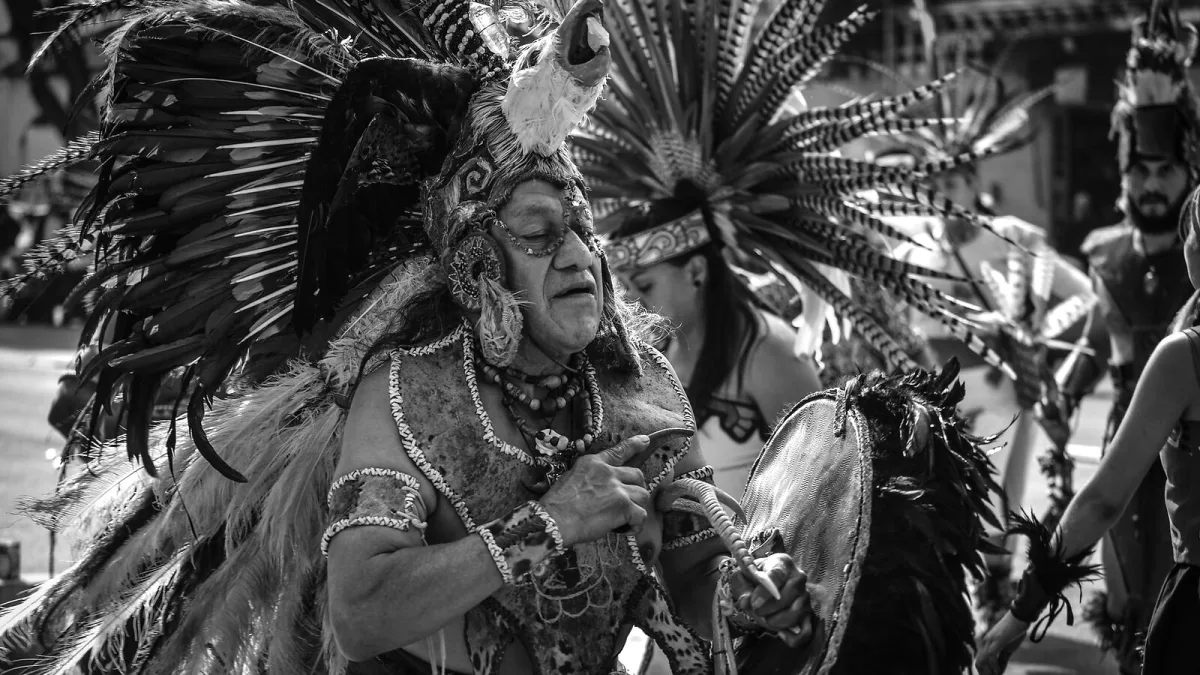
Every great tradition within Latin music has an origin story worth telling properly, and this one spans oceans, empires and centuries of people making something new out of what they'd been given. From colonial ports to New York dancehalls to the biggest stages on earth, here's how it actually happened.
Three Worlds Colliding
The story starts with collision, not invention. European colonisation brought guitars, violins, harps, pianos and brass instruments to the Americas. Enslaved Africans brought complex rhythmic systems, percussion traditions and call-and-response singing, carried through unimaginable hardship into every corner of the region. Indigenous communities contributed their own instruments, melodies and musical systems, some of which still survive largely intact in Andean and Mexican traditions today. None of these traditions simply sat side by side — they fused, region by region, into something genuinely new.
Cuba: Where So Much of This Sound Was Born
In Cuba, African rhythmic traditions and Spanish song forms combined into son cubano, the guitar-and-percussion style that would go on to reshape popular music far beyond the island. Decades later, that foundation travelled with Cuban and Puerto Rican musicians into New York, where it collided with big-band jazz arrangements and a booming immigrant community to become salsa.
The New York scene of the 1960s and 70s produced some of the genre's most important names: Celia Cruz, whose voice became inseparable from the sound itself; Héctor Lavoe, whose phrasing defined a generation of salsa singers; and Willie Colón, a trombonist, bandleader and producer who helped shape its arrangement and attitude. Much of this activity centred on Fania Records, and the label's touring supergroup, the Fania All-Stars, carried salsa to international audiences who'd never have found it otherwise.
Mexico Built Its Own Parallel Latin Music Story
While Cuba's rhythms were spreading north, Mexico was developing entirely separate traditions from broadly similar raw materials. Mariachi grew from ceremonial and popular song into the ensemble sound most people picture today — violins, trumpets, guitars, vihuela and guitarrón working together. Ranchera gave that tradition its emotional, often melancholic songwriting core, while norteño and banda built their own regional identities around accordion and brass respectively. Ritchie Valens, working just across the border in the late 1950s, became an important early bridge between Mexican musical identity and mainstream American rock and roll.
Brazil Took a Different Route Entirely
Brazil's story runs on its own timeline, shaped by Portuguese rather than Spanish colonial history. Samba emerged from Afro-Brazilian communities and became inseparable from Carnival itself, built on layered percussion — surdo, tamborim, pandeiro — and unmistakable syncopation. By the late 1950s, a quieter, harmonically sophisticated offshoot appeared: bossa nova, largely shaped by João Gilberto's understated guitar style and Antônio Carlos Jobim's songwriting, which went on to seduce jazz audiences worldwide.
Tango's Urban Drama
Down in the Río de la Plata region, Buenos Aires and Montevideo produced tango — urban, dramatic and built for both dancing and listening. Composer and bandoneonist Astor Piazzolla later pushed the form into genuinely modern harmonic territory, dragging tango out of strict dance-hall convention and into the concert hall without ever losing its emotional weight.
Crossing Into the Mainstream
By the late 1990s, a wave of artists brought Latin music to genuinely global mainstream audiences through Spanish-language pop: Shakira, Ricky Martin and Enrique Iglesias among the most prominent. It wasn't a replacement for the traditions before it, but an expansion — proof this music could dominate pop charts on its own terms rather than existing at the margins.
The Reggaeton and Streaming Era
The 21st century brought reggaeton into the mainstream, built on the repeating dembow groove and driven early on by figures like Daddy Yankee and Tego Calderón. Streaming has only accelerated that momentum, with contemporary música urbana artists like Bad Bunny drawing on reggaeton, Latin trap, rock and Caribbean influence all at once. Today's Recording Academy even splits its Latin categories into Latin pop, música urbana, Latin rock or alternative, música mexicana and tropical Latin music — a sign of just how much this once-narrow label has had to stretch. Our guide to the subgenres unpacks each of those categories properly.
The Bottom Line
This history of Latin music is built from collision and reinvention, not a straight line from one point to another. Cuba, Mexico, Brazil, Argentina and the wider Caribbean each produced genuinely distinct traditions from broadly similar starting materials, and that diversity is exactly what makes the label "Latin music" both useful and slightly misleading at the same time. For the names behind these stories, our guide to essential artists is the natural next read, and our picks for essential albums let you hear this history for yourself.




Comments