


Cassette Player article
Cassette Player Explained: Features, Types and Tips
Portable, deck or boombox — this overview explains how tape playback works, the differences between tape types and the key features to look for on a quality unit.

What Is a Cassette Player?
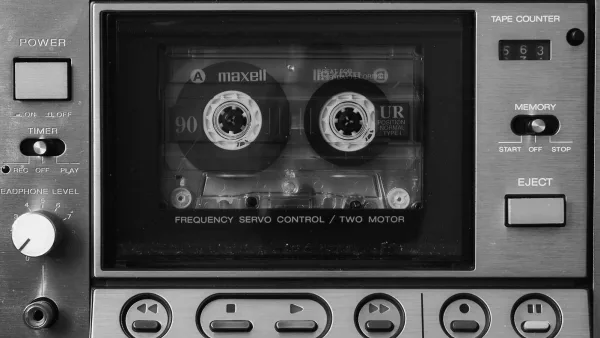
A cassette player is a device that reads audio stored on magnetic tape housed in a compact cassette shell. It works by passing the tape at a fixed speed — 4.76 centimetres per second — over a stationary playback head that converts the magnetic flux variations in the tape coating into an electrical signal. That signal is then amplified and sent to speakers or headphones. Machines designed for home use are often called cassette decks and connect to a separate hi-fi amplifier, while portable units include their own amplification and headphone output.
Types of Cassette Machine
The main categories are portable players (battery-powered, with headphone output), home decks (mains-powered, designed for hi-fi rack systems), and boomboxes (self-contained systems with built-in speakers and amplifier). Car tape units are a fourth category, though these have largely disappeared from new vehicles. Each type shares the same fundamental tape mechanism, differing primarily in size, power source and output stage.
Tape Formats and Compatibility
Standard compact cassettes come in several types: Type I (ferric), Type II (chrome), and the less common Type IV (metal). Most machines handle Type I and Type II; Type IV support requires a higher-specification unit. The type selector on a deck adjusts the bias and equalisation settings to match the tape formulation. Using the wrong type setting for a tape produces noticeably poorer sound, particularly in the high-frequency range.
Key Features
Auto-reverse plays both sides of a cassette without manual intervention by reversing the head or transport direction at the end of side A. Dolby noise reduction — available in B, C and S variants — reduces the hiss inherent in the tape format by applying a complementary encode/decode process. Higher-specification decks include a three-head design, where separate record and playback heads allow off-tape monitoring during recording. These features are associated with higher-quality cassette player models designed for serious hi-fi use.
The Cassette Revival
Sales of blank tape and pre-recorded cassette albums have grown steadily since the early 2010s, supported by independent music releases and collector interest in vintage audio formats. The appeal is partly tactile — the physical format, artwork and mechanical action of the tape transport — and partly sonic, as the format's warmth and saturation characteristics are considered desirable in some listening contexts. See our buyer's guide for what to look for when choosing a unit.





Comments