


Fender Blues Junior Amplifier article
A Guide to Fender Blues Junior Amplifier
Fifteen watts, two EL84 valves and a lot of character — here's what's actually happening inside a Fender Blues Junior, and why it still holds up.
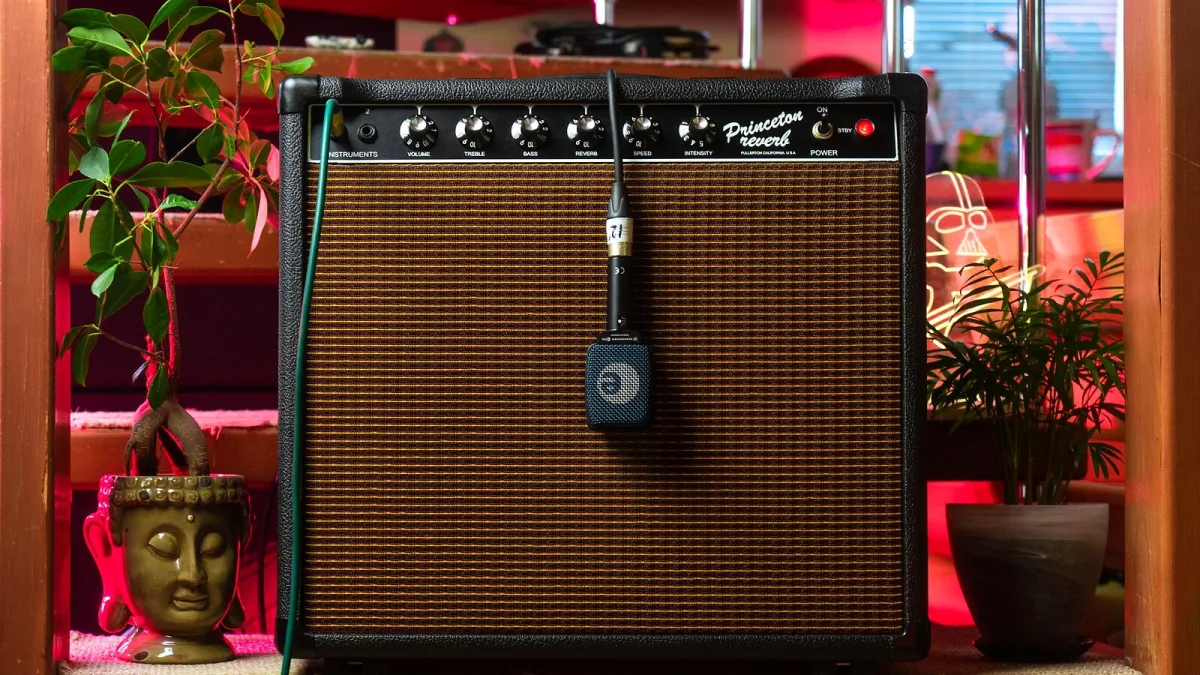
There’s a reason so many gigging guitarists keep a Fender Blues Junior amplifier by the door, ready to grab on the way to a rehearsal. It’s small, it’s honest, and once you understand what’s actually happening inside the cabinet, its mix of simplicity and character makes a lot more sense. Here’s how it actually works, what’s changed across its lifetime, and where it sits in Fender’s wider valve amp range.
What Is the Fender Blues Junior?
It is a single-channel, 15-watt valve combo, part of Fender’s long-running Hot Rod family alongside the smaller Pro Junior and the larger Hot Rod Deluxe. Despite the name, it isn’t a specialist blues-only tool — its clean-to-edge-of-breakup range works just as well for indie rock, country, roots music, punk and pedal-driven setups of almost any stripe. The current production model, the Blues Junior IV, is built in Ensenada, Mexico, and remains Fender’s principal EL84-powered compact combo.
Under the Bonnet: Valves, Speaker and Circuit
The Valve Complement
Inside sit three 12AX7 preamp valves and two EL84 power valves, feeding a solid-state rectifier rather than a valve one. That EL84 pairing is worth pausing on: it’s the same power valve found in many British-voiced amplifiers, and it’s a large part of why this amp breaks up earlier and carries more upper-midrange bite than Fender’s larger 6L6- or 6V6-based combos.
| Stage | Component | What it does |
|---|---|---|
| Preamp | 3× 12AX7 | Gain and tone shaping, including the phase inverter |
| Power amp | 2× EL84 | 15 watts RMS output, with a British-leaning midrange |
| Rectifier | Solid-state | A firmer, more consistent response under load |
| Speaker | 1× 12-inch, 8-ohm Celestion A-Type | Current IV-generation driver; earlier models used Jensen or Fender Special Design units |
The Speaker Story
The move to the Celestion A-Type was the single biggest change in the Blues Junior IV. Reviewers generally describe it as clearer and less congested when pushed hard than the speakers fitted to earlier standard versions. It’s an 8-ohm, 12-inch driver, and matching that impedance matters if you ever swap it — get it wrong and you risk the output transformer, not just the tone.
The Control Panel, Explained
The front panel is deliberately uncluttered: Volume, Treble, Middle, Bass, Master, Reverb, and a footswitchable Fat switch. There’s a single quarter-inch instrument input and no effects loop on the commonly documented versions, which keeps the signal path short and predictable.
- Volume — sets preamp gain and how quickly the amp moves toward breakup.
- Treble, Middle, Bass — a conventional three-band tone stack.
- Master — overall output level after the preamp, so you can balance gain against loudness.
- Reverb — onboard spring reverb, handy for blues phrasing and rockabilly slap-back.
- Fat switch — a footswitchable boost that thickens the existing channel; it is not a second channel.
Clean Tones, Breakup and the Fat Switch
At low Volume settings, the amp stays clear and focused, then compresses and starts to overdrive as you push it — raise the Master afterwards to keep the loudness manageable while holding onto that breakup. Compared with a black-panel Fender circuit, expect earlier breakup, more upper-midrange presence and less low-end authority; it trades some headroom for character. If you want the practical, buying-focused version of this, our complete buyer’s guide covers it, and if valve amps are new to you altogether, the beginner’s guide walks through it more gently.
A Brief History: From Original to IV
The Blues Junior arrived in the 1990s as part of Fender’s push for affordable, compact valve combos. Early production ran in the United States before shifting to Mexico, and the amp has passed through several revisions — original, II, III and the current IV — each changing the speaker, cosmetics or circuit details along the way. Fender has also released variant editions, including a lacquered-tweed-covered version and a 30th Anniversary model fitted with a Celestion G12M-65 Creamback and a distinctive “Black Western” covering. Because so much has changed under one badge, a used amp from one era shouldn’t be assumed to sound or behave like a current IV; our round-up of the different Blues Junior editions goes through what actually separates them.
Who It Actually Suits
The single-channel layout makes this a natural pedal platform: low-gain overdrive for edge-of-breakup tones, a mid-focused drive for solos, and delay or tremolo after the dirt. It suits players who’d rather shape their tone with pedals and picking dynamics than hunt through amp channels, and at around 14.3kg it’s genuinely portable enough to gig with. It isn’t the amp for anyone who needs two independently voiced channels, and it does need occasional valve amp maintenance from a competent technician; we cover the pitfalls worth avoiding in our common mistakes guide.
The Bottom Line
The Fender Blues Junior earns its long production run honestly: a simple, EL84-driven combo that’s loud enough to gig, light enough to carry, and characterful enough to reward the pedals and playing dynamics you bring to it. Understand its single channel, its speaker history and its EL84 voicing, and the rest — settings, buying decisions, upkeep — falls into place.




Comments