


Lap Steel Guitar article
Lap Steel Guitar for Beginners: A Complete Guide
No frets, a metal bar, strings facing the sky — here's the calm, genuine first-steps plan for anyone nervous about starting lap steel guitar.
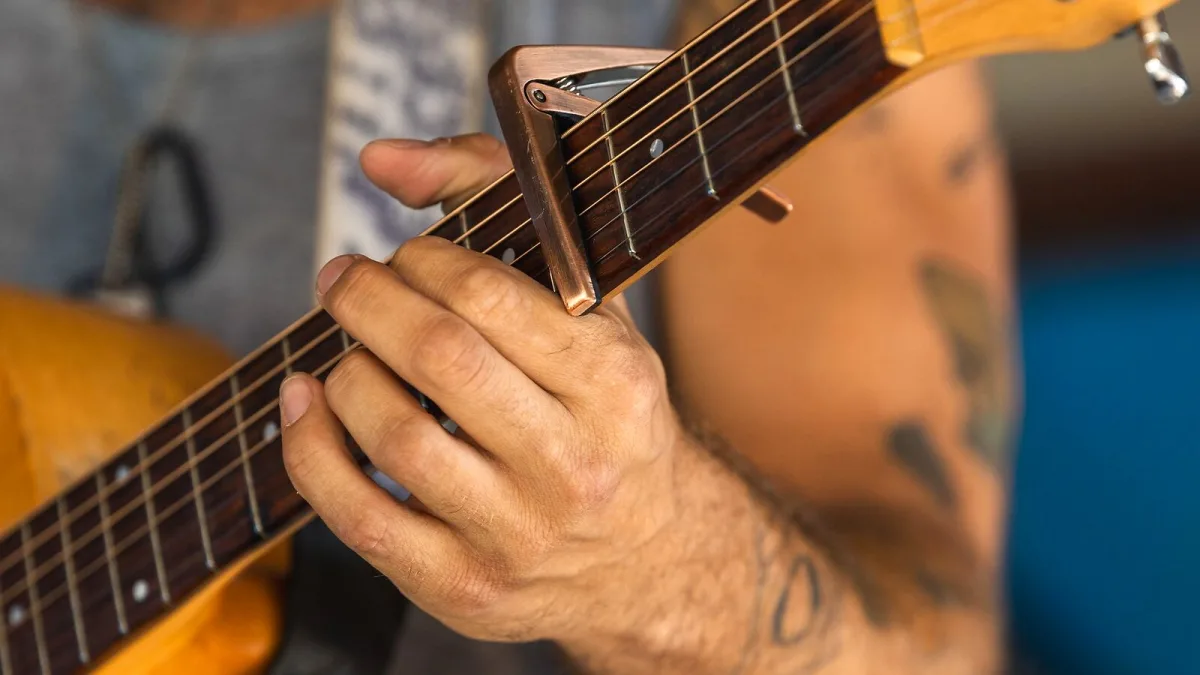
Right, deep breath — the lap steel guitar looks strange the first time you sit down with one, and it feels stranger still. No frets to press, a metal bar you're meant to slide around instead, strings staring straight up at you. Every single player who's any good at this started exactly where you are now, and the honest truth is the basics click faster than you'd expect. Here's your genuine first-steps plan.
You Don't Need Much to Start
This is a refreshingly cheap instrument to get going on, gear-wise. You need:
- The lap steel itself, ideally already set up with the action checked
- A tone bar — a rounded bullet-nose shape is the easiest to control as a beginner
- A small practice amp, if yours is electric
- A clip-on or pedal tuner
- A thumbpick, if you want to start fingerstyle rather than flatpicking
That's genuinely it. No need for pedals, elaborate effects or a second guitar to compare against — a beginner lap steel guitar setup really is that simple, and that stuff can wait months.
Pick One Tuning and Ignore the Rest For Now
Beginners often panic here because there seem to be endless tuning options. Don't overthink it: Open D (D–A–D–F♯–A–D) is widely considered the friendliest entry point, because the open strings already form a major chord and simple major-key blues and folk phrases fall under the bar naturally. Save C6, with its richer but more complex chord shapes, for once your ear and your bar hand are properly warmed up. Switching tunings every week will just slow you down — pick one and live in it.
Learning to Hold the Bar
Your instinct, coming from a normal guitar, will be to place the bar just behind the fret, the way you'd fret a note. Fight that instinct. On a lap steel guitar, the bar sits directly above the fret marker, not behind it, because there's no fret to push against — the bar itself is doing all the work of setting the pitch. Start with single, slow notes and a tuner running, and really listen. Straight-bar accuracy before anything fancier: no vibrato, no slants, just clean, in-tune single notes until that feels boring.
The Other Half of the Job: Muting
Here's the bit nobody warns beginners about enough: a lap steel guitar has no frets to stop strings ringing on their own, so an unmuted string will buzz and clash under whatever you're actually trying to play. Your picking hand needs to learn blocking — muting the strings you're not using, either with the edge of your palm or with your spare fingers immediately after you pluck. It feels fiddly for the first couple of weeks and then becomes completely automatic.
Your First Month, Roughly
- Learn where every note sits in your chosen tuning, with the tuner as your judge, not your ear yet.
- Play slow single-note melodies, focusing entirely on landing the bar accurately over each fret.
- Introduce palm or pick blocking so only the string you want is ever ringing.
- Add a small, even vibrato once single notes are reliably in tune.
- Start combining two or three strings into simple major-chord shapes.
- Only then bring in a real song, playing it slowly enough that accuracy never slips.
What Feels Wrong at First (and Is Completely Normal)
A few things trip up nearly every beginner, so don't read them as a sign you're doing it wrong:
- Notes sound slightly flat or sharp even when the bar looks right — your ear needs time to calibrate, this is completely normal early on.
- Strings buzz behind the bar until your blocking technique catches up with your bar hand.
- Vibrato sounds seasick, not smooth at first — it settles down with slow, deliberate practice, not by trying to speed it up.
Where to Go From Here
Once you're comfortable with one tuning and clean single notes, it's worth reading our list of common lap steel mistakes to avoid before any bad habits set in properly. If you're still choosing your first instrument, our buyer's guide covers exactly what to check. And if you want the fuller picture — where this instrument came from and how it fits alongside pedal steel and resonator guitars — our overview guide has the whole story.






Comments