


Cort Guitar Company article
A Guide to Cort Guitar Company
You've probably played a Cort without knowing it. Here's the full story of the Korean-founded manufacturer behind its own guitars and several bigger names besides.

Chances are you've played a Cort without knowing it. The Cort Guitar Company is one of the biggest names in the guitar world that most players have never heard of — a Korean-founded manufacturer that builds instruments under its own name and, quietly, under several others too. Here's the full story: where it came from, what it makes, and why its factories matter far beyond its own logo.
From Piano Imports to a Guitar Powerhouse
Cort's roots aren't even in guitars. The company grew out of Soo Doh Piano, a Korean piano importer, before founder Jung-gyu Park pivoted the business towards guitar manufacturing. In 1973, working with American distributor Jack Westheimer, Park set up the Yoo-Ah Company — the operation that would eventually become Cort as we know it.
That partnership mattered. Westheimer wasn't just an investor; he was a route into the American market at a time when Asian-built guitars were still finding their feet with Western players. It's a pattern you'll see again and again in this industry — a sharp domestic manufacturer paired with a distributor who already has the contacts.
Cor-Tek: The Manufacturer Behind the Brand
These days, the Cort Guitar Company operates under the corporate umbrella of Cor-Tek Corporation, headquartered in South Korea. Cor-Tek is the engine room; Cort is the badge you see on the headstock. On its own site, the company states that it owns its factories outright and that, between them, production runs to more than one million guitars a year — a company claim worth noting as such, rather than an independently audited figure, but a useful sense of scale all the same.
Not Just a Brand — a Major OEM Player
Here's the bit that surprises most players: a huge amount of Cort's business isn't selling guitars with "Cort" on the headstock at all. It's OEM — original equipment manufacturing — building instruments to another company's spec, which that company then sells under its own name.
Public sources link Cor-Tek's factories to production for brands including Ibanez, Squier, Sterling by Music Man, G&L Tribute, PRS SE and .strandberg*. A word of caution: these relationships shift over time and aren't disclosed model-by-model, so it's wrong to assume every guitar from any of those ranges comes off a Cort line. What it does tell you is that the woodworking, fretwork and finishing skills built up on Cort-branded guitars are the same skills being used, in some cases, on guitars wearing a more famous name.
Where Cort Guitars Are Made
Country of origin is one of the most-asked questions about this brand, and the honest answer is: it's complicated, and it's changed over time.
| Period | Manufacturing emphasis | Notes |
|---|---|---|
| 1970s–1990s | South Korea | Original home of Cort/Cor-Tek production and the base of its reputation for skilled finishing. |
| 1990s onward | Indonesia | Grew into a central hub for Cort's own-brand and OEM output as the company expanded capacity. |
| 2000s onward | China | Added for entry-level and high-volume lines; exact model allocation varies. |
Sources genuinely disagree on whether Korean production continues at any scale today, with some describing it as historic and others as ongoing in a reduced form. What's clear is that Indonesia is central to current output. The sensible approach, if you're trying to work out where your own guitar was built, is to check the specific model and, where possible, its serial number — "Cort" alone doesn't tell you the factory.
The Modern Range
Under the Cort name today you'll find a genuinely broad catalogue:
- Electric guitars — families including the G Series, X Series, KX Series, CR Series, M Series, Classic Rock, Garage, EVL and Yorktown, spanning traditional single- and double-cut shapes through to metal-oriented superstrats.
- Acoustic and classical guitars — steel-string and nylon-string models with solid or laminated tops, some with onboard electronics for stage use.
- Bass guitars — the Action and GB ranges for everyday players, plus the more specialist Artisan and Curbow lines.
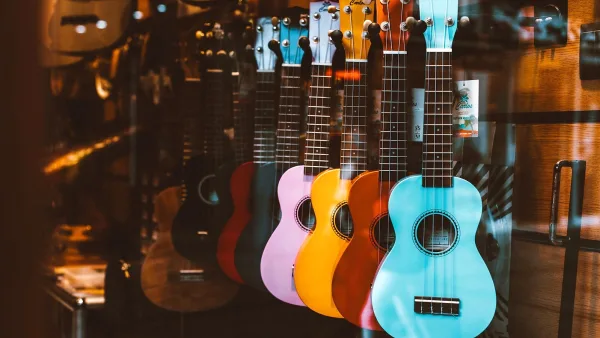
- Ukuleles — a smaller but present part of the catalogue.
If you're weighing up a specific electric or acoustic model, our Cort Guitar Company buyer's guide goes through what to check before you commit, and our beginner's guide to the brand is the better starting point if this is your first electric or acoustic.
Fifty Years and a Headless Bass
Cort marked its 50th anniversary in 2023, and it used the milestone to push its more ambitious gear forward — including the Artisan Space 4, a headless bass aimed at players who want a modern, compact instrument with active electronics. It's a fair snapshot of where the brand's higher-end ambitions sit: not chasing vintage nostalgia, but building for players who want something current.
A Complicated Legacy
No honest account of this company skips its labour history. Cort's Korean manufacturing operations were the subject of a long-running, well-documented dispute involving factory closures and allegations over worker treatment, which drew attention from labour organisations through the 2000s and 2010s. It's a serious chapter that deserves its own properly sourced coverage rather than a paragraph here, but it's worth knowing that the instrument and the company's industrial history are two separate conversations worth having honestly.
The Bottom Line
The Cort Guitar Company is best understood as two things at once: a consumer brand with a genuinely wide catalogue, and one of the guitar world's biggest behind-the-scenes manufacturers. Its own roots run through Korea, its current production leans heavily on Indonesia, and its factories have quietly shaped instruments carrying far bigger names. Whatever badge ends up on the headstock, there's a decent chance Cort had a hand in it. Before you buy, it's worth reading up on the common mistakes buyers make with this brand so you know exactly what you're looking at.





Comments