


Gibson LP Custom roundup
The Best Gibson Lp Customs for the Money
No invented lab tests — just an honest tier list of where the real value sits across the Les Paul Custom family.
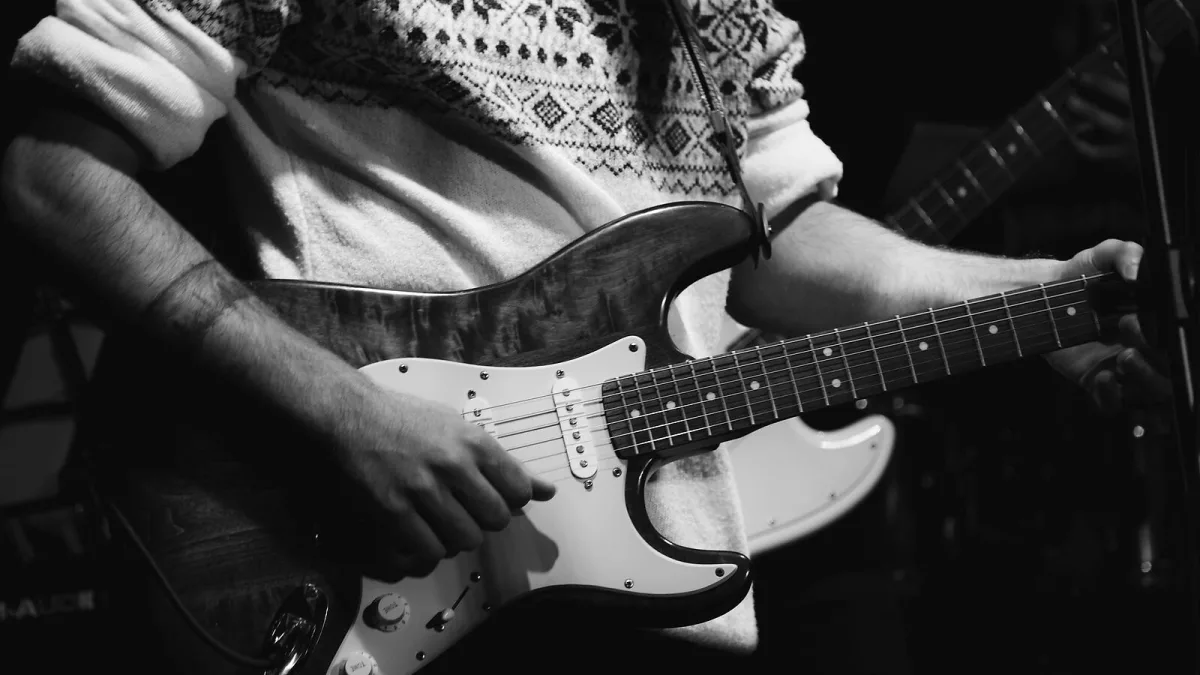
No invented "we A/B tested every model in a soundproof bunker" nonsense here — just an honest breakdown of where the real value sits across the Les Paul Custom family, tier by tier, so you're not overpaying for a badge or underspending on something that won't do the job.
Best Entry Point: Epiphone Les Paul Custom
Let's not pretend the Gibson name isn't part of the appeal, but if your budget doesn't stretch that far yet, Epiphone's version delivers the same black-and-gold formula — the binding, the block inlays, the general silhouette — at a genuinely accessible price. It's the smart move if you want to know whether the Custom's whole vibe actually suits you before committing serious money to the real thing.
Best Standard Production Les Paul Custom: Gibson USA
This is where most serious buyers should be looking. A production-run Gibson gets you the authentic mahogany body and maple top, ebony fingerboard, gold hardware and a set of humbuckers that'll cover blues through hard rock without breaking a sweat. You're not paying Custom Shop money for period-correct details you might not even care about — you're paying for the real formula, properly built.
| Tier | Best for | What you're paying for |
|---|---|---|
| Epiphone | First-timers, trying the format | The look and general feel, affordably |
| Gibson USA | Most serious players | The genuine build and pickup formula |
| Gibson Custom Shop | Collectors, tone purists | Period-correct detail, premium construction |
| '70s-inspired models | T-Type pickup tonal character | A specific decade's sound and look |
Best for Vintage Tone Chasers: Custom Shop with Custombuckers
If what you're actually after is that classic PAF-style humbucker character rather than a modern, hotter output, a Custom Shop model loaded with Custombuckers is the honest answer. Yes, it costs more. But you're getting Gibson's most historically faithful attempt at recreating the tone that made three-pickup Customs legendary in the hands of players like Clapton and Page in the first place.
Best for a Specific Decade's Sound: '70s Tobacco Burst-Style Models
Fancy chasing a particular era rather than the generic "vintage" idea? Gibson's '70s-inspired Customs use T-Type humbuckers and multi-ply bound bodies to nail that specific decade's character, rather than the earlier PAF-chasing approach. It's a genuinely different flavour, and a good reminder that "Les Paul Custom" covers a much wider tonal range than people assume.
Best for Heavier Playing: Modern Humbucker-Loaded Production Models
Speaking as someone who came up on riffs, not jazz chords — a Custom loaded with 490R/498T-style humbuckers handles hard rock and metal properly. That dense mahogany body and set-neck construction give you serious sustain, and the higher-output humbuckers reject noise well under gain. Pair one with a decent amp and you've got a guitar that can genuinely go from a clean chime to a wall of gain without sounding thin at either end.
Best for Collectors: Genuine Vintage Examples
This is a different game entirely, and not one to walk into casually. A real vintage Custom — properly documented, original electronics intact — is a serious financial and historical proposition, closer to buying art than buying a tool to gig with. Only go here with your eyes open, provenance paperwork in hand, and ideally an expert's opinion alongside your own.
Best for Gigging Reliability
Here's a tier nobody talks about enough: which one survives a van full of gear and a sweaty Tuesday-night pub gig. A production Gibson USA or Epiphone model, both with a Tune-o-matic bridge and stopbar tailpiece, tends to hold tuning well and doesn't need constant fussing between sets. I wouldn't take a documented vintage collector's piece anywhere near a gig — that's a studio or display instrument, not a stage warrior, and the risk to its value simply isn't worth it for a Tuesday-night set.
So Which One's Actually Best?
Honestly, there isn't one universal answer, which is exactly why this is a tier list and not a single recommendation. If you want the full history and construction breakdown before you pick a tier, our Gibson LP Custom guide covers that properly, and if you're weighing up the practical buying decisions in more depth, the complete buyer's guide is the next stop.
Match the tier to what you actually play and how much history matters to you, not to what looks most impressive in a shop window. Every option above is a genuinely good guitar in its own lane — the only mistake is buying the wrong lane for you.
A Few Things Not Worth Overpaying For
- A "signature" label with no documented history behind it — check the paperwork, not just the story
- Cosmetic relic-ing on a new instrument, if genuine vintage wear is what you're actually chasing
- A three-pickup layout purely for looks, if you'll only ever use two of them in practice
- Extra binding or fancier inlays alone, if tone and playability matter more to you than appearance






Comments