


Marshall Studios article
The Ultimate Guide to Marshall Studios
Marshall Studios bring the classic Plexi, JCM800 and JTM45 circuits into compact, switchable-wattage heads. Here's how they work, which model is which, and why they exist.
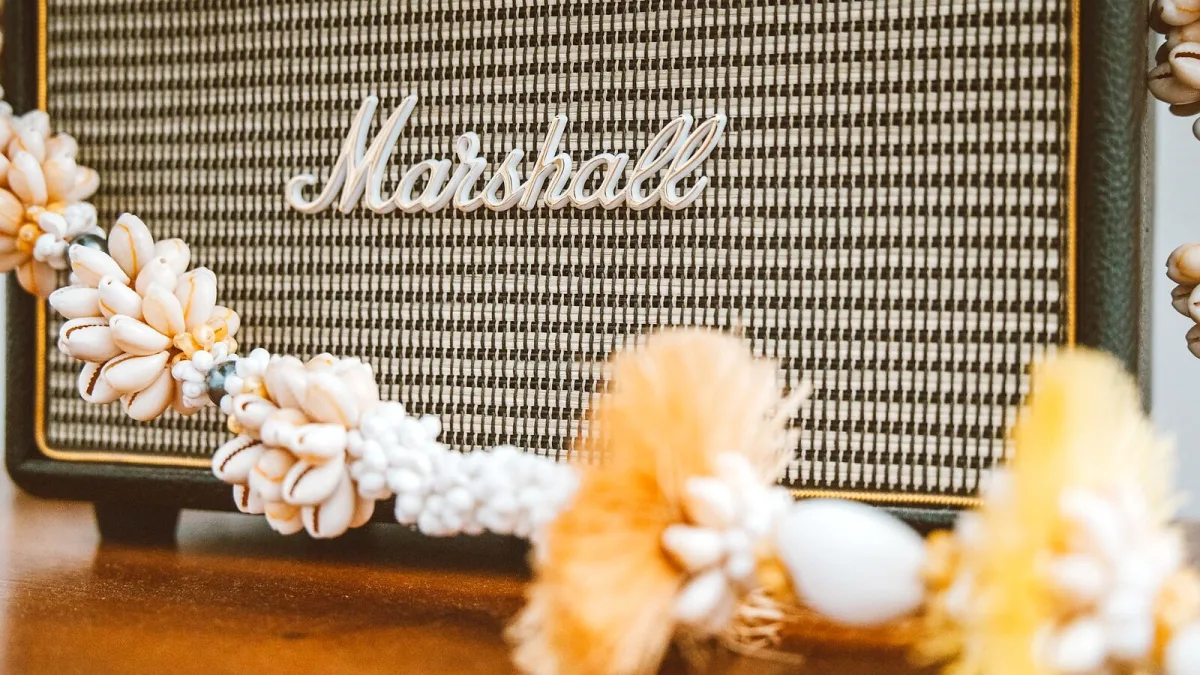
Marshall Studios are the brand's answer to a question players have been asking for decades: how do you get genuine Marshall valve amp tones at a volume that won't rattle the windows? The Studio range, launched in 2018, brings Marshall's classic circuit designs — the Plexi, the JTM45, and the JCM800 — into smaller, lower-wattage heads with switchable power, making authentic valve tones practical in a flat, a practice room, or a recording session without a sound engineer down the corridor.
What Makes a Marshall Studio Amp Different
The core idea is straightforward: take the circuit from a landmark Marshall amp that shaped decades of rock guitar, build it at a fraction of the original wattage, and add a power-reduction switch so the player can dial down from full volume to something the neighbours will tolerate. The Studio models run at 20 watts as a base, with switching options for 5 watts and 1 watt — enough to push the output valves hard at manageable levels.
The key to why this matters is the nature of valve amp distortion. Traditional Marshall tones — from the controlled crunch of a Plexi to the tighter, more aggressive character of the JCM800 — come from driving the output stage. That's difficult to replicate at low volume. The wattage-reduction switching on the Studio range doesn't simply cut the signal level; it reconfigures the circuit so the output valves are working harder relative to their maximum, allowing genuine power-valve saturation at lower volumes.
The Main Models in the Studio Range
Studio Vintage SV20H
Based on the Super Lead 1959 circuit — the late 1960s "Plexi" that became foundational to British rock guitar. The SV20H delivers the warm, dynamic clean tones and responsive breakup that made Jimi Hendrix, Eric Clapton, and countless others famous. It uses EL34 output valves and runs at 20W/5W/1W. The Plexi circuit is deceptively touch-sensitive: playing softly gives a clean, open tone; digging in produces natural breakup without a pedal.
Studio Classic SC20H
Based on the JCM800 — one of the most influential amplifier circuits in rock history, the amp that defined 1980s British rock and remains a studio staple. The SC20H has two channels: a clean channel and a lead channel with additional gain. Output valves are EL34. At 20W/10W/5W/1W, it covers clean rhythm tones to the kind of sustained lead gain associated with countless classic rock recordings.
Studio JTM SJ20H
Based on the JTM45 — Marshall's earliest production amplifier from the early 1960s, which itself drew from the Fender Bassman circuit. The JTM45 sound is warmer and less aggressive than later Marshall circuits: big, round, and slightly compressed with KT66 output valves (the Studio version uses 6V6 in some configurations). This is the model for players interested in early British blues-rock and classic roots tones.
Origin Series
The Origin ORI20H and ORI50H are companion models with a similar philosophy: a single-channel British voice with switchable wattage. The Origin is its own circuit rather than a reproduction of a specific classic model, and offers a more versatile spread of tones at an accessible price point.
The Wattage Switching System
This is the feature that makes the Studio range practically useful. At 20 watts, the amps perform like traditional valve heads and require a proper speaker cabinet and a room that can handle some volume. At 5 watts, the output section works into genuine saturation at a much lower total volume — useful for rehearsal spaces, recording, and home use. At 1 watt, the amp can be pushed to its limits at bedroom levels. This makes the Studio range a genuinely different proposition from the vintage originals it references.
The wattage switching is not a simple level cut. It involves changing the operating configuration of the output valves, which means the character of the amp shifts slightly at lower wattage settings — a little more compressed, with a different feel in the low end. Players who want the exact character of 20 watts flat-out will notice the difference, but for most practical purposes the tonal family remains consistent across settings.
What the Studio Amps Require
All Marshall Studio models are head units — they need an external speaker cabinet. Marshall offers a range of companion cabinets; the 1936 (2×12) and 1960 (4×12) are classic choices, though any appropriate cab with the correct impedance will work. The speaker choice has a significant effect on the final tone: the standard Celestion speakers in Marshall cabs are voiced to complement the amp's character.
These are all-valve (all-tube) amplifiers. They require a warm-up period of a few minutes before heavy use, and the valves will need replacement periodically — typically every few years of moderate use, though this varies significantly with playing frequency and volume levels.
The Studio Range and Recording
One of the primary use cases for Marshall Studios is recording. A 100-watt Marshall head needs significant volume to drive the output valves into their sweet spot — achievable in a live venue but not in most home or small studio recording setups. A Studio head at 1 or 5 watts can be recorded at much more manageable levels while retaining genuine valve character. Direct recording options (some Studio models have speaker-emulated direct outputs) extend this further.
If you're deciding which Studio model is right for you, the Marshall Studios buyer's guide covers the practical purchasing decisions in detail. For an honest look at which offers the best value, the best Marshall Studios for the money ranks the options clearly. New to valve amps? The beginner's guide is the right starting point. And before buying, check common Marshall Studios mistakes for the pitfalls worth knowing about.
The Bottom Line
Marshall Studios succeed at what they set out to do: deliver authentic, all-valve Marshall circuit tones at volumes and power levels that are genuinely practical outside a concert stage. The SV20H for vintage Plexi character, the SC20H for JCM800 crunch, the SJ20H for early British warmth. Each is a faithful interpretation of its source circuit in a compact, switchable package. They don't replace the vintage originals — the feel is different, and the head-plus-cab format still requires some space — but for players who want real Marshall tones without a full-size 100-watt rig, they're the most practical option on the market.





Comments