


Marshall Studios article
Marshall Studios for Beginners: A Complete Guide
Marshall Studios are all-valve amps with real tonal character — but they work differently from solid-state amps. Here's what every beginner needs to know before buying one.

If you're thinking about a Marshall Studio amp as your first serious all-valve guitar amplifier, there are a few things to get clear before you buy — not because they're complicated, but because valve amps work differently from solid-state amps, and the Marshall Studio range has some specific characteristics that are worth understanding upfront. This is the guide that saves you the trip back to the shop.
What "All-Valve" Means and Why It Matters
A valve amp (also called a tube amp in American English) uses thermionic valves — glass tubes that glow orange when warm — to amplify the guitar signal rather than transistors. The result is an amplifier that responds differently to playing dynamics: dig in harder and the amp naturally produces more harmonic distortion; play lightly and it cleans up. This interactivity is what players describe as "feel" or "touch sensitivity" and it's the main reason serious guitarists continue to use valve amps despite solid-state options being cheaper and more reliable in some respects.
Marshall Studios are all-valve designs. They need a few minutes to warm up after switching on, they run warm, and their valves eventually wear out and need replacing. None of this is a problem — it's just different from plugging in a solid-state practice amp.
Which Model Should a Beginner Choose?
Of the three main Studio models, the SV20H is the most forgiving starting point for new players. Here's why:
- It has a single channel — no switching to understand — with a clear, simple set of controls.
- Its Plexi-based circuit has a wide dynamic range: it sounds good from near-clean through to crunchy, without jumping into extreme high-gain territory that can be hard to control.
- It teaches players to use guitar volume and picking dynamics to shape their tone, which builds better habits than relying on a gain knob.
The SC20H (JCM800) is a strong second choice if you specifically want to play classic rock and want a dedicated lead channel. The SJ20H (JTM45) is the most specialist of the three and better suited to players who already know they want its specific warm, early-British character.
You Need a Cabinet Too
This catches beginners off guard more often than it should. Marshall Studio models are amp heads — they produce the amplified signal but have no speaker of their own. You must connect them to a speaker cabinet before you play, and running a valve head without a connected speaker (or a proper load box) can damage the output transformer. This is not optional: heads need cabs.
The Marshall Studio cabinets — the Studio Classic SC212 and others — are designed to match the Studios' volume and character. A single 1×12 or 2×12 cabinet is the most practical choice for home and studio use; a 4×12 is large and heavy and suits venues rather than practice rooms.
Understanding Wattage Switching
All Studio models have a wattage selector: 20W, 5W, and usually 1W. Here's what this actually means:
- 20W: Full power. Clearest headroom, most dynamic response. Requires a reasonably high volume to drive the output valves into their characteristic range. Suitable for rehearsal rooms and small venues.
- 5W: Reduced power. The output valves saturate earlier, so you get the characteristic valve compression and crunch at a lower volume. Still needs to be louder than you'd run in a flat.
- 1W: Lowest power. Valve saturation and natural breakup at something closer to bedroom volume — though "bedroom volume" with an all-valve amp is still louder than many beginners expect. Use a speaker with controlled efficiency at this setting.
Don't be disappointed if the amp still sounds quite loud at 1W. All-valve amplifiers at 1 watt are genuinely louder than the same number from a solid-state practice amp. A reactive load box or the direct output (if the model has one) helps if you need truly silent practice.
Basic Valve Amp Maintenance for Beginners
You don't need to be an engineer, but you should know these things:
- Always let the amp warm up for a few minutes on standby before switching to play mode.
- Don't move the amp while it's on — glass valves are delicate when hot.
- Don't block the ventilation — valve amps run warm and need airflow.
- The valves will eventually need replacing — plan for this as a maintenance cost every few years.
- Never run the amp without a speaker connected (or a proper load). This can damage the transformer.
Setting the Controls
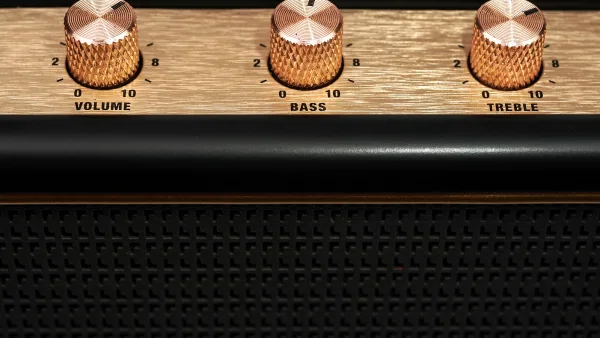
Classic Marshall controls can seem sparse compared to a modern multi-channel amp: volume, tone controls (bass, mid, treble, and sometimes presence), maybe a master volume. Start with everything at halfway. Adjust the tone stack from there — boosting the mids is often the secret to cutting through in a band mix. The volume interacts with the valve saturation: lower master volume with higher gain on input, or vice versa, gives very different characters from the same amp.
For a full understanding of how the Studio range works and what each model is, read the ultimate guide to Marshall Studios. When you're ready to buy, the buyer's guide covers the technical specifications clearly. For an honest comparison of which model is worth the money, see the best Marshall Studios for the money.
The Bottom Line for Beginners
Start with the SV20H if you want the most forgiving entry point. Get a matching cabinet before you buy the head. Understand that 1W is still genuinely loud. Let the amp warm up. Look after the valves. And don't be put off by the relative simplicity of the controls — the Marshall Studio range rewards players who learn to use the amp itself, not players who expect a menu of presets.





Comments