


Folk & World Instruments How-to
Ukulele Tuning for Guitar Players
Standard ukulele tuning is G, C, E, A, and every one of those notes can be found on a guitar. A practical guide to getting a ukulele in tune and keeping it there.
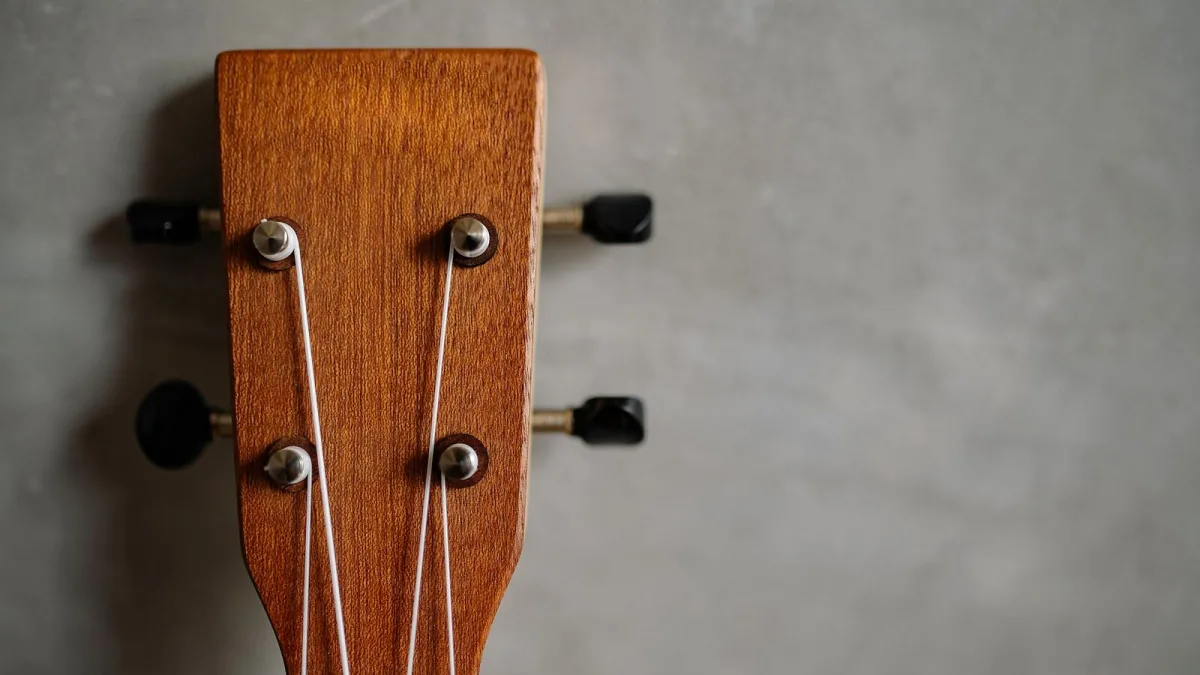
Standard ukulele tuning is G, C, E, A, reading from the string nearest your face down to the one nearest the floor. Soprano, concert and tenor ukuleles all share it. If you already own a guitar, you have everything you need to tune one, and the relationship between the two instruments is worth understanding for more than just tuning.
The notes, with octaves
Written precisely, the standard tuning is G4, C4, E4 and A4. The detail that surprises newcomers is the G: on most soprano and concert ukuleles it is tuned above the C and E strings rather than below them. The pitches therefore run high, low, middle, high across the instrument. This is called re-entrant tuning, and it is the source of the ukulele's bright, chiming character.
Tuning a ukulele from a guitar
Because the pitches overlap, a guitar in standard tuning gives you every reference note you need on its top two strings:
- Ukulele G matches the guitar's high E string at the third fret.
- Ukulele C matches the guitar's B string at the first fret.
- Ukulele E matches the guitar's high E string played open.
- Ukulele A matches the guitar's high E string at the fifth fret.
Play the guitar note, let it ring, and turn the ukulele's peg until the two sound as one. The point at which the wobbling between the two notes slows and disappears is the point at which they match, and learning to hear that is a genuinely useful skill.
If you have fitted a low-G string, that string should match the guitar's open G string instead.
The capo shortcut
Put a capo at the fifth fret of a guitar and its top four strings sound G, C, E and A: standard ukulele tuning exactly. That is the whole relationship between the instruments in one image, and it explains why guitar chord shapes transfer to a ukulele but come out with different names.
Using a tuner instead
A clip-on chromatic tuner is the fastest and most reliable option, and it reads the instrument's vibration rather than the sound of the room. Check that it is in chromatic mode rather than a guitar-specific mode, which may not recognise the ukulele's notes. Tune each string up to pitch rather than down onto it, so the slack in the tuning machine is taken up.
Re-entrant or low G?
Neither is more correct. Re-entrant, high-G tuning is traditional and gives the close, shimmering voicings the instrument is known for, with every chord sitting in a narrow band of pitch. A low-G set replaces that string with a thicker one tuned an octave down, adding a bass note and extending the range downwards, which suits fingerstyle arrangements and melody playing. Many players keep one of each.
Note that low-G strings are often wound and may need a wider nut slot, so it is not always a straight swap.
The baritone exception
A baritone ukulele is tuned D, G, B and E, which is identical to the guitar's top four strings. Guitar chord shapes keep their names on it, and no transposition is needed at all.
Why a new ukulele will not stay in tune
This is the most common complaint from new owners, and it is almost never a fault. Nylon strings stretch considerably before they settle, and a brand new set can take several days of playing and retuning before it holds. Help it along by gently pulling each string away from the fretboard and retuning, repeatedly, rather than waiting it out.
Beyond that, the usual suspects are friction pegs that need tightening at the screw, strings wound untidily around the post, or the instrument being moved between very different temperatures. Ukuleles are small and light, and they react quickly to their surroundings.
Make it a habit
Tune before you play, every time. It takes half a minute with a clip-on tuner and it is the difference between an instrument that sounds like a toy and one that sounds like an instrument.




Comments