


Tenor Banjo article
Tenor Banjo for Beginners: A Complete Guide
The tenor banjo is genuinely accessible for beginners with some musical background — this guide helps you choose your tuning tradition, get your first sounds and build a practice approach that works.
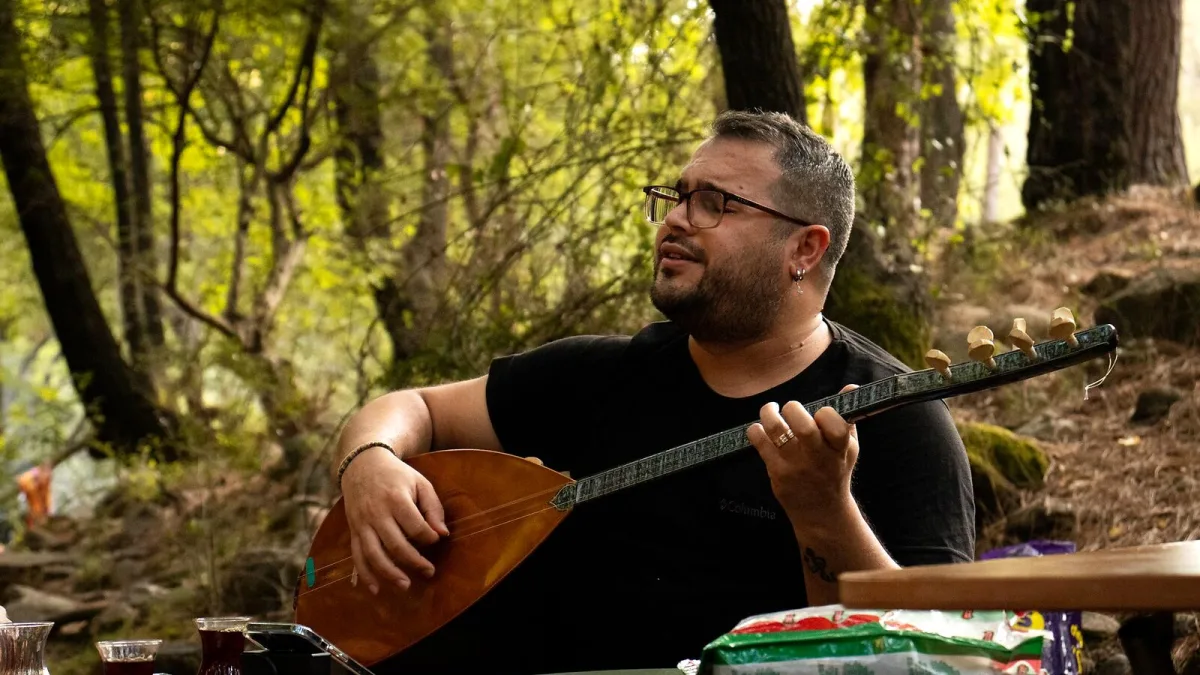
There is something enormously encouraging about the tenor banjo as a first instrument — and also something that trips beginners up if nobody warns them. The encouragement is real: if you already play fiddle or mandolin, or even guitar, the transition to tenor banjo is more straightforward than you might expect. The tuning system maps neatly onto what you already know, and the instrument rewards play from the very beginning. The difficulty is that the tenor banjo has its own physical demands and, crucially, its own musical context that will shape how you practise and what you work toward. This guide helps you navigate both.
Which Tuning for You?
The first thing a new tenor banjo player needs to settle is which tuning tradition they are following. This is not a technical question — it is a musical one.
- GDAE tuning — the same as a fiddle, mandolin and octave mandolin, from the lowest string upward. This is the standard for Irish traditional music. If you want to play jigs, reels and hornpipes at sessions, GDAE is your tuning. The intervals are in fourths and fifths, and fiddle players will find the left-hand shapes familiar almost immediately.
- CGDA tuning — tuned in fifths from the lowest string, the same as a viola. This is the jazz and Dixieland standard. Chord shapes for CGDA cover a wide range harmonically and suit accompaniment playing in swing and Dixieland contexts.
You do not have to choose permanently, but learning one tradition properly before trying the other is strongly recommended. Switching tunings in the early stages tends to fragment progress rather than accelerate it.
Getting Your First Sounds
The banjo is easier to get a first note from than many instruments. The plectrum technique — holding a flat pick between thumb and index finger and striking the strings with a downward, or alternating down-up, motion — is closely related to what guitarists already do. The challenge is producing a consistent, clean attack across all four strings without clanging the pick against adjacent strings, and developing the rhythmic precision that drives either a session or a jazz band.
Start with single notes on the highest string. Play a simple scale — G major on GDAE, or C major on CGDA — slowly and with attention to tone quality. The banjo should ring clearly on each note without buzzing (if it does buzz, check your action) and without the note dying too quickly. Building tone first, before speed, is the most efficient path forward.
Learning for Irish Traditional Music
If your goal is Irish sessions, your learning path looks different from that of a jazz player. Irish traditional music is primarily a melody-playing tradition. The banjo in GDAE tuning is used to play tune after tune at tempo, often in unison or octave unison with fiddles, flutes and pipes. The key skills are:
- Single-note melody playing with a plectrum, usually alternating down-up stroke for fast passages
- Ornamentation — cuts, rolls and triplets that give Irish melody its characteristic rhythmic life
- Tune knowledge — learning a large repertoire of jigs, reels, hornpipes, polkas and slides by ear
- Session etiquette — when to play, when to listen, how to follow an unfamiliar tune
Many Irish traditional musicians learn primarily by ear, and that approach is built into the tradition. Find recordings, listen repeatedly and learn tunes phrase by phrase rather than from notation wherever possible. The Slow Session recordings widely available online are an invaluable resource for learning at a learnable pace before trying live sessions.
Learning for Jazz and Dixieland
In CGDA tuning, the banjo in jazz contexts is principally a rhythm and chord instrument. Classic four-to-the-bar chord comping in Dixieland and traditional jazz requires strong rhythmic accuracy, clean chord voicings and an ability to follow a chord chart at tempo. Key starting points:
- Learn the common CGDA chord shapes — major, minor and dominant seventh voicings across the neck
- Work on four-to-the-bar strumming with rhythmic evenness and attack
- Learn the chord sequences of standard Dixieland tunes — After You've Gone, St James Infirmary, When the Saints Go Marching In — and work through them with a recording or other musicians
- Listen to original recordings from the 1920s and 1930s to hear the instrument in its natural habitat
Practice Habits That Help
A few habits make a significant difference at the beginner stage of banjo, regardless of which tradition you are working in:
- Short, focused sessions are more effective than long, unfocused ones. Twenty minutes of deliberate practice beats an hour of noodling.
- Use a metronome or drum track to develop rhythmic precision. Banjo playing is fundamentally rhythmic and sloppy timing becomes a hard habit to break.
- Record yourself and listen back. The banjo sounds different from a distance than it does under your chin.
- Play with other people as early as you can. Nothing accelerates progress like the social pressure and musical inspiration of an ensemble.
For practical help getting the instrument properly set up before you play, the banjo setup guide covers everything from stringing to bridge position. If you are still choosing your instrument, the banjo buyer's guide explains the key decisions at each price point. And the complete guide to the banjo gives you the full picture of the instrument's history and traditions.
A Word About Patience
The banjo is a gratifying instrument to learn because progress comes relatively quickly in the early stages — a handful of tunes or chord patterns are enough to begin playing with others. The deeper skill — tone control, rhythmic precision, fluid ornamentation — takes much longer and rewards sustained attention over months and years. That longer arc is not a warning; it is what makes the instrument interesting to keep playing. Get started, find other players to practise with, and let the music do what it has always done: pull you further in.



Comments