


Tenor Banjo article
Tenor Banjo: A Complete Guide
Four strings, two tuning traditions and a history that spans jazz, Dixieland and Irish sessions — the tenor banjo is one of the most versatile and distinctive instruments in folk and traditional music.
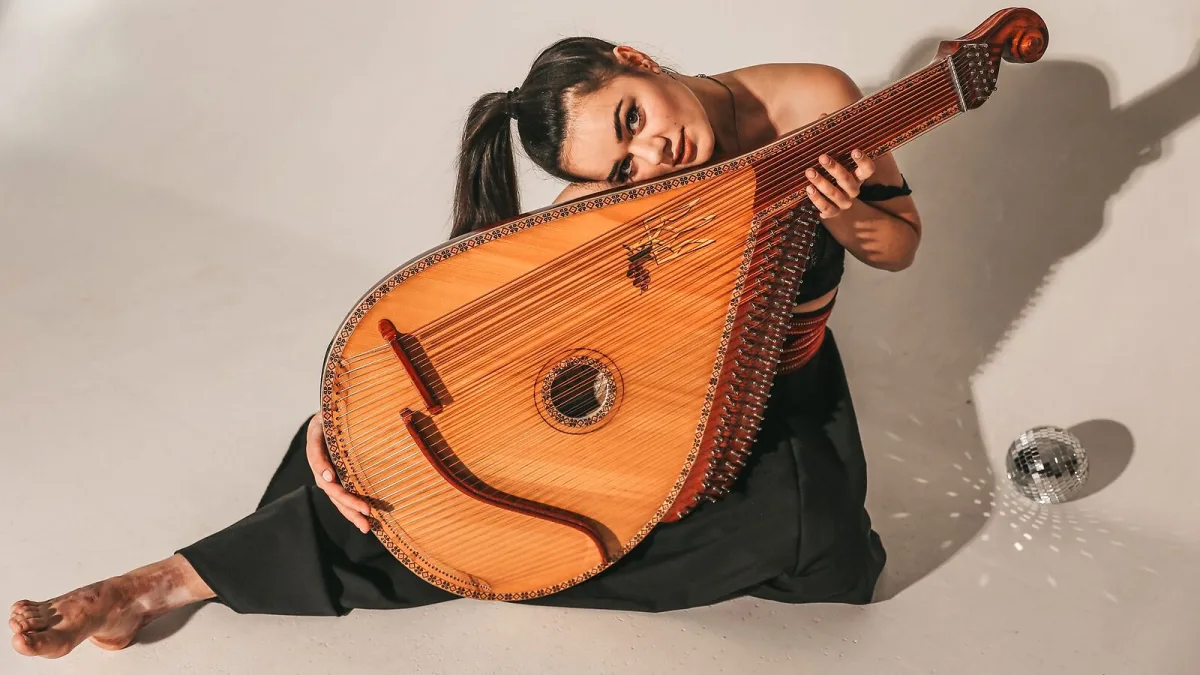
The tenor banjo arrived in the world at just the right moment. In the early twentieth century, when jazz was finding its feet in the dance halls and clubs of New Orleans, Chicago and New York, ensemble musicians needed an instrument that could cut through a crowd without amplification, hold a chord in a driving rhythm section and be played by players already familiar with stringed instruments. The tenor banjo — four strings, plectrum-played, tuned in fifths — answered that call precisely, and left a mark on popular music that its current quiet reputation somewhat undersells.
What the Tenor Banjo Is
A four-stringed, fretted instrument with equal-length strings running the full length of the neck — unlike the five-string variant, closely associated with bluegrass and old-time Appalachian music, which has a shorter drone string attached at the fifth fret. It is played with a flat plectrum rather than the fingerpicking or clawhammer techniques of that tradition.
The instrument consists of a circular resonating pot — a metal rim with a tensioned head, traditionally of calfskin but now more commonly synthetic — attached to a neck with a headstock and four tuning pegs. Most modern instruments of this type have a resonator: a wooden back fitted to the pot that projects the sound forward and increases volume. Open-back models, without the resonator, have a softer, rounder sound and are lighter in hand.
Tuning Traditions: CGDA and GDAE
Two distinct tuning traditions are associated with quite different musical worlds.
- CGDA tuning — tuned in fifths from the lowest string upward, the same intervals as a viola or cello. This is the jazz and Dixieland standard. It gives the instrument a wide chordal range and makes it familiar to players of bowed string instruments. The chord shapes are logical and span the full neck comfortably.
- GDAE tuning — the same as a fiddle, mandolin or octave mandolin, from the lowest string upward. This tuning is the backbone of Irish traditional music, where it is used primarily as a melody instrument. The identical intervals mean a fiddle player can transfer most of their left-hand knowledge directly to the neck.
The choice of tuning effectively determines which musical tradition the instrument is being used in. Irish session players almost universally use GDAE; jazz, Dixieland and swing players use CGDA. Players who move between the two traditions sometimes own two instruments, or re-tune as needed.
Scale Lengths
Scale length — the distance between the nut and the bridge — is available in two standard options.
- Short-scale (Irish): typically 17 frets, around 19 inches. Developed in response to the demands of Irish traditional music, the shorter scale reduces string tension and makes fast single-note work easier. It is also more comfortable for players with smaller hands.
- Standard-scale: typically 19 frets, around 22–23 inches. Slightly higher string tension, a fuller and louder tone, and a wider range of notes. This is the standard for jazz and American traditional styles.
Some players use a standard-scale instrument for Irish music, tuned GDAE; others find the shorter scale more comfortable for rapid ornamentation. The right choice depends partly on hand size, partly on the music you play and partly on which instrument feels right when you pick it up.
Construction and Materials
The tenor banjo's distinctive sound comes from the interaction of its circular drum head, the resonating pot and the neck. Several elements affect the instrument's character.
- The head: the drumhead stretched across the pot is the primary vibrating surface. Synthetic Remo-style heads are the standard today: consistent, stable and unaffected by humidity. Traditional calfskin heads have a warmer, more complex sound but are sensitive to changes in temperature and humidity.
- The rim and pot: most rims are metal (usually steel or brass), which contributes brightness and projection. Some instruments use wooden rims for a softer tone.
- The resonator: a fitted back, typically of maple or mahogany, that directs the sound outward. A resonator increases volume significantly. Open-back instruments suit quieter, intimate settings.
- The neck: commonly maple, mahogany or walnut, with a rosewood or ebony fingerboard. The neck joint is usually a coordinator rod system, which allows the angle and geometry of the neck to be adjusted.
The Tenor Banjo in Music
The instrument's place in music history crosses several distinct scenes.
In early jazz and Dixieland — from roughly 1910 to the 1930s — it was a rhythm-section staple. Its cutting, percussive attack drove dance bands before amplification was available. As jazz developed in the swing era and amplified guitar became standard, the instrument gradually retreated from mainstream popular music.
In Irish traditional music, the story is different. The tenor banjo arrived in Ireland in the mid-twentieth century, was adopted enthusiastically by traditional players and is now thoroughly embedded in the session tradition. Players such as Barney McKenna of the Dubliners gave the instrument a distinctive identity in Irish folk and helped establish GDAE tuning as the session standard.
Beyond jazz and Irish traditional music, the instrument appears in folk revival settings, skiffle, vaudeville repertoire and, increasingly, in experimental and crossover contexts where its tonal character stands out.
How It Compares to Related Instruments
| Instrument | Strings | Tuning | Scale | Primary use |
|---|---|---|---|---|
| Tenor banjo | 4 | CGDA or GDAE | Short or standard | Jazz, Irish trad |
| Five-string banjo | 5 (inc. drone) | gDGBD | Standard | Bluegrass, old-time |
| Plectrum banjo | 4 | CGBD | Longer | Jazz, Dixieland |
| Banjo ukulele | 4 | GCEA | Very short | Popular music |
If you are starting out and want to understand what to look for before buying, the tenor banjo buyer's guide covers each price tier and the key decisions to make. New players will also find useful starting points in the beginner's guide to the tenor banjo.
A Final Note
It is one of those instruments that carries its history visibly — in the architecture of the pot and head, in the sound that rings out with a clarity no guitar can quite match, and in the two distinct musical traditions that continue to sustain it. Whether you hear it driving a New Orleans revival band through a fast rag or cutting through the noise of a packed Irish session on a Friday night, it sounds like itself: bright, insistent and unmistakable.





Comments