


Piano Accordion roundup
Piano Accordion: A Complete Buyer's Guide
These instruments last for decades and the difference between a well-chosen one and a wrong one affects every practice session. Here is what you actually need to know before buying.
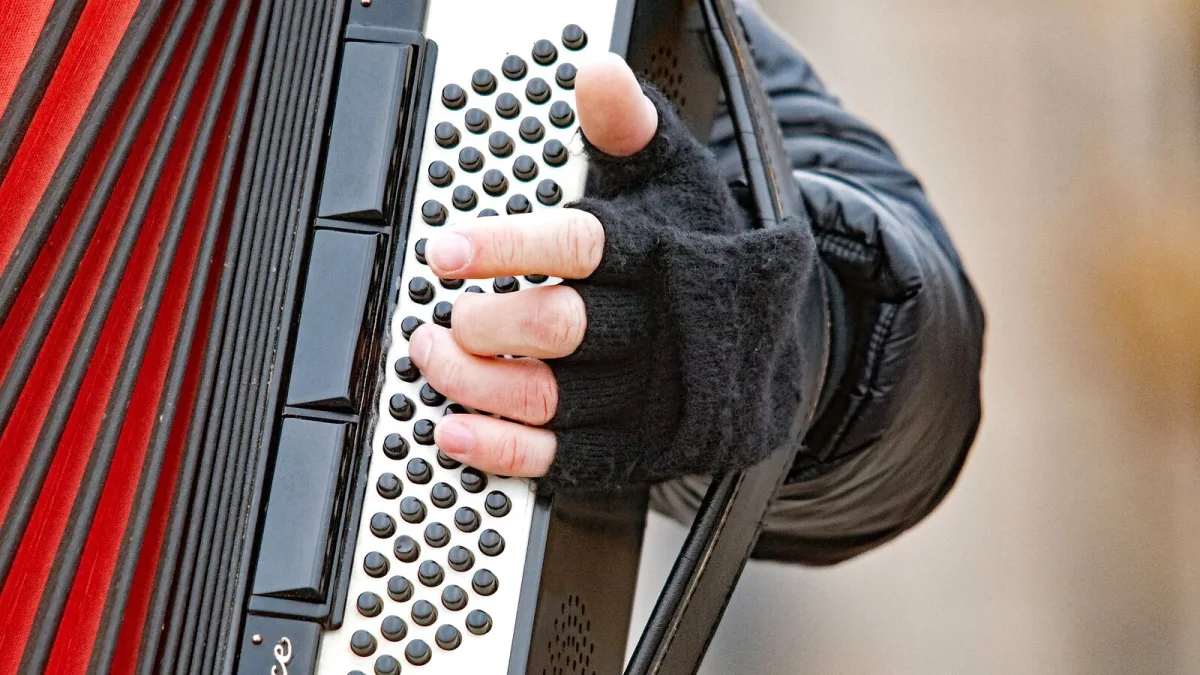
Buying a piano accordion is a bigger decision than buying most instruments. These are not cheap, they last for decades when properly maintained, and the difference between a well-chosen instrument and a wrong one affects your playing experience every time you practise. Here is the information you need to make the choice well.
Decide on Keyboard and Bass Size First
The most fundamental decision when buying a piano accordion is size. The treble keyboard ranges from around 26 keys on compact student instruments to 41 keys on a full professional model. The bass side goes from 8 buttons at the smallest to 120 on a full layout.
For most folk, dance and popular music, a 72-bass instrument with 37 or 41 treble keys is adequate. The 72-bass Stradella layout provides all the commonly needed chord qualities, and the weight saving over a 120-bass model can be substantial — which matters for players who will practise for extended sessions or perform standing. A full 120-bass layout becomes relevant when a player needs the complete harmonic range of the bass section, which primarily means advanced classical or free-bass repertoire.
For a beginner: start smaller than you think you need. A 72-bass model that you can hold comfortably and control properly will help you progress faster than a large 120-bass instrument you struggle under physically.
Stradella Bass or Free Bass?
Most players — especially those playing folk, dance, popular or classical repertoire through the standard conservatoire syllabus — use the Stradella bass system. It provides preset chord buttons (major, minor, dominant-seventh, diminished-seventh) alongside bass and counter-bass notes, and it is the layout all mainstream tuition material assumes. Unless you specifically need free-bass capability for advanced classical or contemporary work, Stradella is the right choice.
Free bass provides individual chromatic notes on the left side, enabling melodic and contrapuntal playing in the bass register. If you are working toward advanced concert repertoire — Gubaidulina, Piazzolla's concert works, or the Scandinavian classical accordion tradition — free bass (or a converter instrument) becomes relevant. Most learners and many professional folk players never need it.
New or Used?
This is genuinely important. A well-maintained used piano accordion from an established manufacturer in good mechanical condition often outperforms a new budget instrument with poor bellows sealing, inconsistent reeds or substandard key action. The acoustic accordion market has a large and active second-hand sector precisely because these instruments last for decades when looked after.
If you are buying used, look for instruments from Italian manufacturers with a track record — Hohner, Scandalli, Pigini, Bugari, Beltuna and Weltmeister are names that appear consistently in the professional market. Have the instrument assessed by an accordion technician before purchase if at all possible. Check bellows for leaks, reed response at soft dynamics, key return, register-switch operation and the condition of the bass buttons and straps.
Digital Versus Acoustic
Roland's V-Accordion range is the main digital piano accordion option worth serious consideration. Digital instruments allow silent practice through headphones, offer multiple accordion voicings, support MIDI recording and avoid the tuning requirements of acoustic reeds. They are a sensible choice for players with genuine noise constraints, for use in recording contexts where blending multiple sounds is needed, or for teachers and schools where instrument maintenance is a practical challenge.
An acoustic piano accordion remains the preferred long-term option for most players: the physical response, the reed character and the range of tonal colours available from register combinations and bellows technique go beyond what a digital instrument currently reproduces completely.
What to Budget For
A new entry-level acoustic piano accordion starts from approximately £300–600 for a basic student instrument. Intermediate models suitable for serious learning typically run £600–1,500. Professional-quality new instruments — from Italian manufacturers such as Bugari, Pigini or Beltuna — start from £2,000 and can substantially exceed that figure.
In the used market, a serviceable intermediate instrument can be found for £300–800, and a professional-grade model in good condition for £800–2,500 depending on specification and age. These are approximate figures and vary by market and condition. Budget separately for a quality case, proper shoulder straps, and potential servicing costs on a used instrument.
Testing Before You Buy
Play the piano accordion before buying. Put it on and walk around. Stand, sit, try both positions. Check that the keyboard action feels responsive and consistent across all keys. Test the bellows with simple scales, paying attention to whether the sound stays clean at quiet dynamics — bellows leaks often show up most clearly on slow, quiet passages. Try the register switches and confirm they engage cleanly. Check the bass buttons for smooth, quiet action without clicks or mechanical stiffness.
If you cannot test an instrument directly, buy from a specialist dealer with a clear returns policy. The used piano accordion market is active and knowledgeable; a reputable specialist dealer who stocks used instruments will assess them before sale.
For a full account of how the instrument is built and how its components work, see the ultimate guide to piano accordions. For specific models at different price points, the best piano accordions for the money gives the detail.





Comments