Skip to content

Diatonic Harmonica article

Everything You Need to Know About Diatonic Harmonica
Everything You Need to Know About Diatonic Harmonica

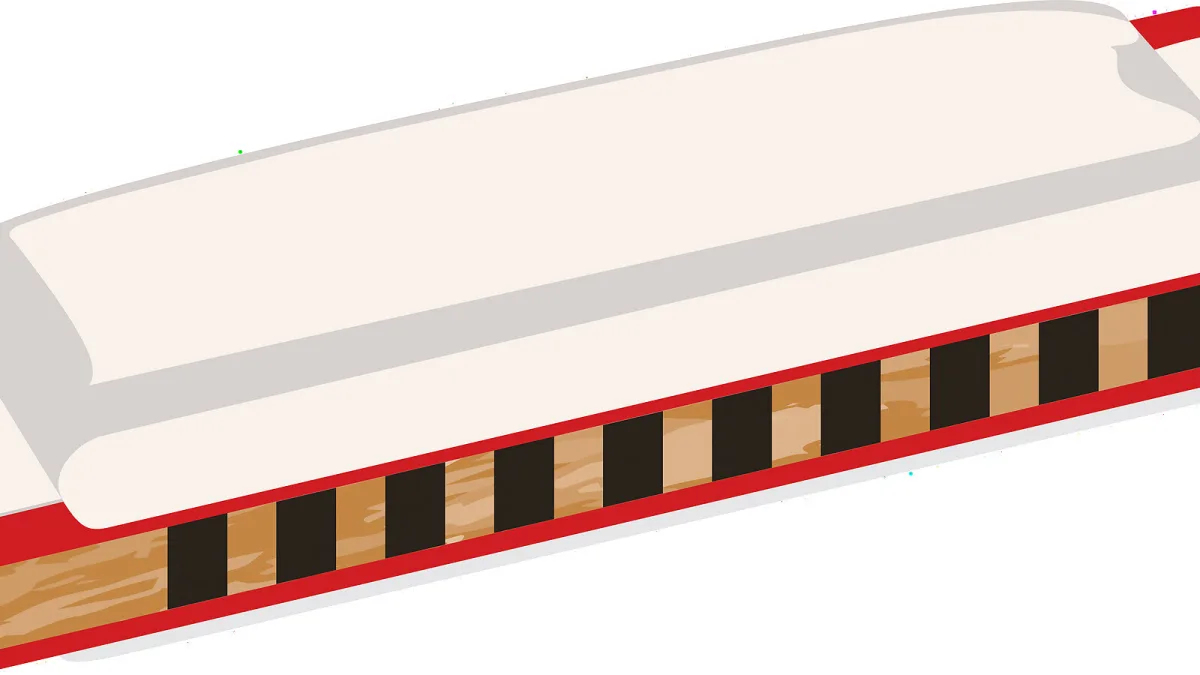
A diatonic harmonica is a ten-hole instrument tuned to a single major key, designed to play the notes of that key by blowing and drawing — exhaling and inhaling — across the holes. Unlike chromatic harmonicas, which cover all twelve semitones via a slide mechanism, a diatonic plays only the notes of one scale in its natural configuration, though skilled players extend its range considerably using bending and overblowing techniques.

How a Diatonic Harmonica Works

Each hole contains two reeds: one that sounds when air flows outward (blow note) and one that sounds when air flows inward (draw note). In the lower holes, the blow notes are lower in pitch than the draw notes; in the higher holes this reverses. The layout follows a repeating pattern based on the key the instrument is tuned to. Bending — adjusting the shape of the mouth and throat to lower the pitch of a reed — allows players to access additional notes between those in the standard tuning, making the instrument far more expressive than its simple appearance suggests.

Keys and Tuning

C is the conventional starting key for beginners and the most common key used in instructional material. G and D are popular for folk and bluegrass playing. Blues harmonica typically uses a technique called cross harp or second position, where a player uses a harmonica tuned a fifth below the key of the song — a G harmonica played in the key of D, for example. This gives access to the draw bend notes that produce the characteristic blues sound.

Common Uses

The diatonic harmonica is the instrument most closely associated with American blues, appearing prominently in recordings from the 1920s onwards. It is also widely used in folk, country, rock and Celtic music. Its compact size and low cost make it one of the most accessible instruments for new players. For guidance on selecting one, the buyer's guide covers the main options by key and price point.


Frequently Asked Questions

What is a diatonic harmonica?

It is a ten-hole harmonica tuned to a single major key, producing blow notes by exhaling and draw notes by inhaling across the holes. Unlike a chromatic harmonica, it plays only the notes of one key in its standard configuration, though bending technique extends its range.

How is it different from a chromatic harmonica?

A chromatic harmonica has a side button that shifts all the reeds up by a semitone, giving access to all twelve notes of the chromatic scale. Without the button, a chromatic sounds similar to a diatonic in its standard layout. The diatonic is simpler, cheaper and the standard choice for blues and folk styles.

What is second position or cross harp?

Second position uses an instrument tuned a fifth below the key of the song, placing the draw notes in the most expressive part of the range. On a C harmonica, second position gives a G blues scale. Most blues harmonica is played in second position because the draw-bend notes in holes 2, 3 and 4 provide the characteristic blues sound.

What is bending on a harmonica?

Bending lowers the pitch of a reed by changing the shape of the mouth cavity and directing the airflow in a way that couples the two reeds in a hole and drops the pitch. Draw bends occur in the lower holes (1 to 6) and are the technique most associated with blues playing. Blow bends occur in the upper holes.

What is the best key for a beginner?

C is the standard first key. Most beginner lesson materials are written in C, and most teachers recommend it as a starting point. G is a common second key, useful for folk and country music. Blues players often buy an A or Bb instrument as a second harmonica once the basics are established on C.

About Louise Watson

Louise grew up in Plymouth, a naval city with a long tradition of brass and marching bands, and that early exposure gave her a lasting love of ensemble playing. She's fascinated by the instruments most pop fans overlook. She writes about brass, wind and orchestral instruments.

Comments

Leave a comment

Comments are read before they appear. Links cannot be published.

Your rating (optional)