


Maracas article
Maracas for Beginners: A Complete Guide
Maracas are accessible but not trivial. Here is how to build the wrist technique, timing, and hand independence that make the instrument work musically.
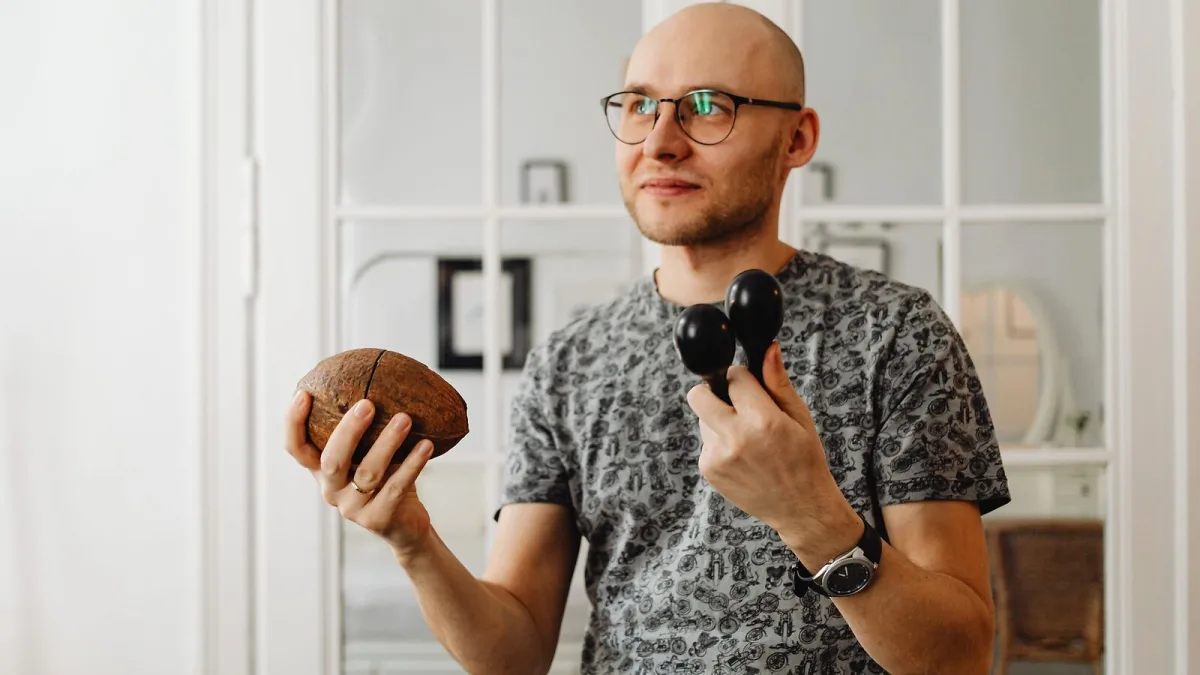
If you have just picked up your first pair of maracas — or you are thinking about it — the good news is that you are looking at one of the most accessible percussion instruments there is. The fundamentals are genuinely learnable in an afternoon. The bad news is that accessible is not the same as trivial, and there is a clear gap between someone shaking maracas and someone playing them musically. This guide helps you close that gap as quickly as possible.
What You Actually Need to Start
Before worrying about technique, make sure you have a pair of maracas worth playing. The instrument matters more here than with some others — a poorly balanced pair with unmatched shells will actively work against you as you develop your playing. Aim for a matched wooden or quality plastic pair from a percussion brand rather than a toy-shop set. You do not need to spend a lot: a decent pair in the £25–£40 range will serve you well through the learning stages and well beyond.
Beyond the maracas themselves, you need nothing special — a bit of space and access to some music you want to play along with. The latter is arguably the most important practice tool a beginner has.
How Maracas Actually Work
Understanding what is happening inside the instrument is genuinely useful when you are learning. A maraca is a hollow shell with a loose filling — seeds, beads, or pellets — that strikes the inner walls when the instrument is moved. The sound you hear is that impact: the sharper and more controlled the movement, the more defined the attack.
This means the maraca is not just a noise that happens when you wave it around. The quality of the sound — crisp or mushy, loud or soft, forward or recessed in the mix — is determined by how precisely you control the direction and speed of each motion. That is the insight that separates a musical maraca sound from a vague rattle.
The Fundamental Technique: Wrist Snap
The most important thing to learn as a beginner is this: maracas are driven by the wrist, not the arm. A full-arm swing is tiring, rhythmically imprecise, and produces a loose, unfocused sound. A controlled wrist snap sends the filling forward in a single direction, striking the front wall of the shell cleanly and giving you a defined attack you can actually time to music.
Here is how to develop the basic motion:
- Hold the handle loosely. A tight death grip kills the resonance of the shell. The handle should sit across the palm with the fingers curled around it — firm enough to control the instrument, loose enough to let the shell vibrate.
- Point the head of the maraca forward. The round head should face roughly the direction you would shake it.
- Snap the wrist forward and stop. A quick downward or forward flick of the wrist sends the filling to the front of the shell. The key is the stop — the abrupt halt is what gives the sound a clear attack rather than a blur.
- Let the hand return naturally. Do not fight the rebound. Let the wrist come back with the filling, ready for the next snap.
Practise this slowly at first, listening carefully to the sound of each snap. You are aiming for a consistent, clean attack each time.
Playing in Time: Where to Start
Once you have the basic wrist motion, the next challenge is placing it in time. Start by tapping along to a simple track — something with a clear, steady beat. Play one maraca stroke on each beat and focus entirely on landing exactly with the music, not rushing ahead or lagging behind.
When that feels comfortable, try playing on every half-beat (the "and" counts between the main beats). This doubles the density and starts to resemble the texture you hear maracas producing in actual Latin music. The difference in feel between on-the-beat playing and off-the-beat playing is large at first — it will click into place with a bit of focused practice.
If you have access to a metronome or a drum machine, use it. Playing along to recorded music is great for feel and context; a metronome is better for building precision and exposing timing gaps.
Left and Right Hand Independence
Traditional maraca playing involves two different parts in the two hands — they do not always move in unison. In Cuban son and salsa, for instance, the maracas typically play a continuous pattern where the two shells alternate, creating a rolling, interlocked texture. Getting the hands to operate independently is a coordination challenge that takes time, but it is the gateway to actually sounding like a maraca player rather than someone keeping basic time.
A good starting exercise: hold one maraca in each hand and alternate single strokes evenly — right, left, right, left — at a slow, comfortable tempo. Once that is smooth, introduce a small accent on every other beat. Gradually increase the tempo as the coordination becomes natural.
Listening as Practice
Listen closely to maracas in recordings of Latin music — salsa, son cubano, cumbia, bossa nova. Notice how the part sits in the arrangement: tight against the rhythm section, locking with the clave or the bass pattern. The maraca player is rarely the most prominent voice in the band, but removing them from the track immediately makes the arrangement feel thinner. That understated locking-in is what you are working towards.
Classic salsa and son recordings are a masterclass in maraca placement and phrasing. Even a few sessions of careful listening will inform your playing more than you might expect.
Common Traps to Avoid Early
A few patterns that beginners tend to fall into, and that are worth heading off now:
- Playing too loud. Maracas at full volume all the time are tiring to listen to and hard to mix around. Practise playing at a controlled, modest volume from day one.
- Using the whole arm. As covered above — keep the motion in the wrist and forearm.
- Rushing the tempo. Excitement tends to push the tempo up. Play with a metronome until steadiness is automatic.
- Neglecting the non-dominant hand. Most beginners play the dominant hand well and the other sloppily. Give the weaker hand extra solo practice to bring it up to speed.
For a more detailed breakdown of what goes wrong — and how to fix it — the Common Maracas Mistakes guide covers the most frequent errors with practical solutions. And when you are ready to buy your first proper pair, the Maracas Buyer's Guide will walk you through every variable that matters at the shop.
The Bottom Line
Maracas reward patient, focused practice. The wrist snap, rhythmic precision, and hand independence are all learnable skills — they just take time to build. Start with a decent pair of instruments, commit to slow and deliberate practice, and listen constantly to music that features maracas well. That combination will take you further than any amount of aimless shaking.




Comments