


Childrens Electronic Drum Kit roundup
Childrens Electronic Drum Kit: A Complete Buyer's Guide
Pad, module, ergonomics, then contents — the order to check things in before you buy a children's electronic drum kit, and the questions worth asking first.
Buying a children's electronic drum kit isn't complicated once you know which specs actually matter and which ones are just marketing padding. This guide walks through the decisions in order — pad, module, ergonomics, contents — so you can compare listings properly instead of choosing on price or pad count alone.
Start With the Pad, Not the Price Tag
The pad is the part your child's hands and feet touch thousands of times a session, so it's the first thing worth understanding.
| Pad material | Feel | Noise | Typical cost |
|---|---|---|---|
| Rubber | Hard, fast rebound | Loudest to strike | Lowest |
| Silicone | Softer, varies by brand | Moderate | Mid-range |
| Mesh | Closest to a real drumhead | Quietest | Higher |
Each pad contains a sensor — usually a piezoelectric trigger — that converts the strike into an electrical signal for the module. On cheaper pads, that's a simple on/off event; better pads track velocity and, on some snares, where the head was struck, which is what lets you eventually play a rim click or a soft ghost note.
Check What the Module Can Actually Do
Two kits with near-identical pads can feel completely different to own because of the module behind them. When comparing options, run through this list:
- Headphone output — non-negotiable for a shared home.
- Metronome — trains timing from the very first session.
- Play-along or coaching modes — gives structure beyond free bashing.
- Auxiliary input — lets a phone feed in a backing track.
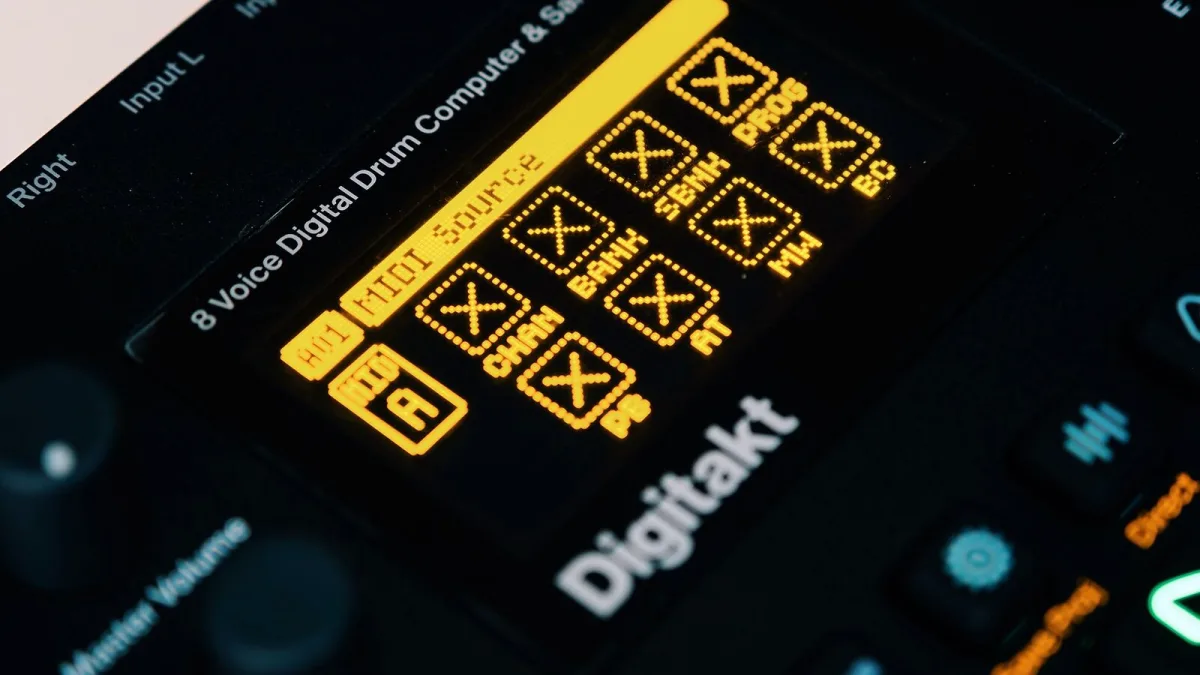
- USB or MIDI — worth having if there's any chance of using practice apps or recording software down the line; MIDI is simply a standard that lets instruments and computers exchange performance data.
- Bluetooth — handy when it's genuinely there, but check whether it covers audio, MIDI, or both — the two aren't the same thing.
A module that buries these behind menus is a real problem for a young player. Simpler and clearly labelled beats feature-packed and confusing.
Ergonomics: The Spec Sheet Won't Tell You This
No listing mentions posture, but it decides whether the kit gets used or ignored. Before buying, work out:
- Whether the rack height adjusts enough for your child to sit with knees near a right angle and the snare around waist height.
- Whether the kick pedal sits close enough that the ankle moves naturally, rather than the whole leg stretching to reach it.
- Whether the frame has room to grow — some racks only extend a little before the geometry stops working for a taller child.
If a child's shoulders rise or their elbows lock while reaching for a pad, the kit is set up wrong, or it's simply the wrong size. Check adjustability before you buy, not after.
What "Complete Kit" Really Includes
This is where buyers get caught out most often. A box marketed as a complete children's electronic drum kit doesn't always include everything you need to actually play it. Confirm the listing covers:
- A drum throne (seat) — genuinely not optional.
- A proper hi-hat pedal, not just a fixed cymbal sound.
- Headphones, or budget for a pair separately.
- A power supply.
- Drumsticks sized for smaller hands.
It's worth adding a thin isolation mat to the shopping list too — it won't silence the kit, but it takes the edge off pedal and rack noise transmitted through the floor.
Stability Matters More Than Spec Sheets Suggest
A rack that flexes or creeps forward under enthusiastic playing is more than an annoyance — it's a genuine safety issue with a young player standing or leaning near it. Where possible, check reviews or in-store demos specifically for rack rigidity, not just sound quality. A kit with a shaky frame will frustrate a beginner long before its module ever does.
Matching the Kit to Your Budget Tier
Prices shift by market and season, so it's more useful to think in tiers than exact figures. At the entry tier, expect rubber or basic silicone pads, a simple module and a smaller footprint — fine for finding out whether a child sticks with it. The mid tier is where compact rack kits with mesh snares and better modules start appearing, and it's usually the strongest value point for a genuine beginner. At the top tier you're paying for full-size pads, more independent components and a module with deeper coaching and connectivity features, aimed at a child already committed to lessons.
Whichever tier you're shopping in, ask about replacement parts. Pads, cables and triggers do wear out, and a kit with no spares available becomes disposable the moment something fails.
Questions Worth Asking Before You Pay
- Does the rack height range actually suit my child now, and in a year's time?
- Are replacement pads, cables or triggers available if something wears out?
- Is the pedal a real hi-hat control, or a fixed cymbal sound?
- What's genuinely included versus sold as an "essential" add-on?
Bottom Line
Buy on pad quality, module usefulness and ergonomic fit — in that order — and a children's electronic drum kit will earn its keep for years rather than gathering dust after a fortnight. If you'd rather see it from a wider angle first, our overview and features guide is a good starting point, and our shortlist of the best kits for the money puts these criteria into practice by tier. Buying for a genuine first-timer? Our beginner's guide covers the softer side of getting started, and it's worth reading common mistakes to avoid before you check out.






Comments