
Drum Rug article
Drum Rugs: A Complete Guide
A complete guide to the drum rug: why drum kits move on hard floors, how a mat prevents it, construction materials, floor protection benefits and what to look for.
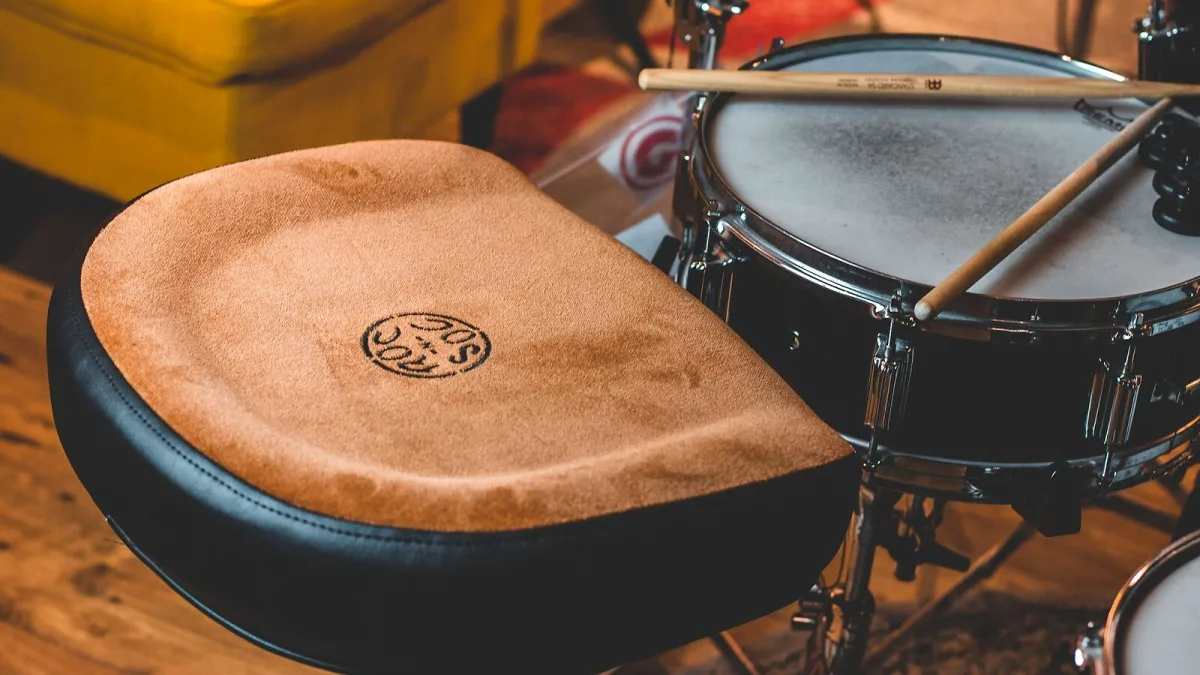
A drum rug is a non-slip mat placed beneath a drum kit to prevent movement across hard or slippery floors. Drum kits generate significant vibration and impact with every stroke, causing bass drums and cymbal stands to creep forward gradually during a performance or practice session. A drum rug addresses this by providing a surface with friction on both sides: the underside grips the floor and the top surface holds the kit components in place.
Why Drum Kits Move
Bass drum pedals, hi-hat stands and kick drum spurs all transfer vibration to the floor. On carpet, the natural texture provides enough resistance to keep most kits stable. On hard floors — wood, laminate, tile or concrete — there is much less friction and equipment gradually slides forward. This changes the position of the kit during a session, forces the drummer to adjust their posture, and can affect timing and technique. A well-specified mat eliminates this problem.
Construction and Materials
Drum rugs are typically made from woven nylon or polyester fibre on the top surface, chosen for its grip and durability. The underside uses a rubber or PVC backing that bonds to the floor without adhesive. Cheaper models use a single thin layer that provides limited grip; better options use a thicker woven pile or multiple backing layers for stronger adhesion. Most commercially available drum rugs are rectangular, ranging from approximately 150×200cm for smaller kits to 200×250cm or larger for full professional setups.
Floor Protection and Acoustic Benefits
Beyond preventing kit movement, a drum rug provides secondary benefits. On wooden or laminate floors it reduces the transmission of vibration and low-frequency sound to the structure below, which matters in home practice environments and shared buildings. It also protects the floor surface from scratches caused by drum spurs and stand feet. Some heavier mats provide a degree of impact absorption that marginally reduces the sound transmitted downward, though purpose-built isolation platforms are more effective for this purpose.
Markings and Setup Aids
Many drum rugs include printed grid lines or dot patterns that help position kit components consistently between sessions. This is particularly useful when breaking down and reassembling a kit regularly, such as in rehearsal rooms or when sharing a practice space. Marked positions eliminate the time spent repositioning stands and pedals to the preferred setup each time the kit is assembled.
What to Look For
The most important factors are size, backing grip strength and pile depth. A mat that is too small leaves kit components at the edge or off the surface. A backing that does not hold firmly on the specific floor type in use defeats the purpose. Heavy pile provides better feel underfoot and grip for stand feet; thin pile is less effective but easier to transport and store. See the buyer's guide for detailed purchasing advice.





Comments