


DJ Lighting article
Common Dj Lighting Mistakes to Avoid

Most beginners make similar mistakes with DJ lighting. The good news is they're almost all fixable. Understanding common pitfalls will accelerate your learning and keep you from expensive or embarrassing gigs.
Mistake 1: Too Much Brightness, All the Time
Beginners often run every fixture at full brightness continuously, thinking more light equals better results. Wrong. A room permanently bathed in full-brightness light is exhausting and actually less interesting than one with dynamic control.
The fix: learn to work with levels. Dim your wash lights to 60% base level. Use your moving heads and effects for moments of intensity. Build energy gradually through a set. The brightness contrast is what creates visual impact, not constant maximum output.
A small rig operated thoughtfully will out-perform a massive rig running flat-out all night.
Mistake 2: Mounting Fixtures at Eye Level
Pointing lights directly at audience faces is uncomfortable and kills atmosphere. Moving heads panning across eye level create an annoying flashing wall instead of interesting visual depth.
Mount wash fixtures above head height pointing downward. Mount moving heads high enough that beams pass above the crowd. Use uplights to create vertical depth from the walls. Eye-level is reserved for specific accent moments, not continuous coverage.
Mistake 3: Buying Random Fixtures Without a Plan
Many DJs accumulate whatever looks cool on sale—a strobe here, a derby effect there, maybe a laser. Then they're stuck with a rig where nothing integrates, control systems don't match, and the whole thing feels disjointed.
Plan your rig systematically. Start with wash lights for base coverage. Add moving heads for movement. Add effects for punctuation. Each addition should make sense within the overall strategy, not just be a cool light you found cheap.
Mistake 4: Sound-Activate Everything
Sound-activation is convenient, but it's genuinely terrible for creating intentional visual flow. Strobes flash on crowd noise. Colours change on speech. Moving heads jerk around unpredictably. Your music tells a story; sound-activation scrambles that narrative.
Learn DMX or at least invest in a wireless remote so you control timing. Yes, it requires more work. Yes, you'll run lights at full brightness sometimes to reduce mental load. But intentional control, even imperfect, beats automatic control every time.
Sound-activate is a backup mode for emergencies or very simple setups. It's not a solution for serious gigs.
Mistake 5: Ignoring the Venue Limitations
Some venues prohibit haze (fire codes), restrict ceiling mounting, or have electrical limitations. Walking in with a rig designed for a club when the venue is a wedding marquee with no rigging points and a single 16-amp circuit is a recipe for disaster.
Check venue specifications before purchasing or designing your rig. Ask about ceiling height, rigging access, electrical capacity, fire code restrictions, and neighbour complaints (regarding haze). Your gear must fit the venue, not the other way around.
Mistake 6: Inadequate Cable Management
Loose, coiled cables behind fixtures get stepped on, kinked and eventually fail. Failed DMX cable mid-show kills your lighting dead. Inadequate power cables can overheat and create fire risk.
Use proper cable runs, cable ties and organization. Coil cables properly (avoid kinking). Carry spares. A £50 investment in extra cables and management supplies saves hours of troubleshooting and prevents catastrophic failures mid-gig.
Mistake 7: Poor Colour Coordination
Clashing colours throughout a set feel disjointed. Constantly cycling through the full RGB spectrum gets exhausting to watch. Every song is a different colour story, not one continuous mood.
Develop a colour palette for a set. Stick with two or three dominant colours, use accents for punctuation. Change colour gradually, not constantly. Let the colour story mirror the musical energy.
Professional lighting operators think in colour palettes, not random RGB values.
Mistake 8: Not Understanding Your Equipment
Buying an expensive moving head and never learning its features is genuinely wasteful. The average DJ uses maybe 20% of their fixture capabilities because they never read the manual or invested time in learning.
Spend time with your gear. Read the manual. Experiment in your practice space. Learn the menu structures and DMX addressing. This knowledge pays dividends forever—it transfers to any system you encounter.
Mistake 9: Inadequate Rigging and Safety
A falling fixture is genuinely dangerous. Inadequate rigging or lack of secondary safety cables is unacceptable. Electrical power distribution that overloads circuits or uses improper cabling creates fire risk.
Take safety seriously. Use proper rigging hardware and secondary cables for any suspended equipment. Distribute electrical load across proper circuits. Never improvise with safety.
Mistake 10: Forgetting the DJ Booth
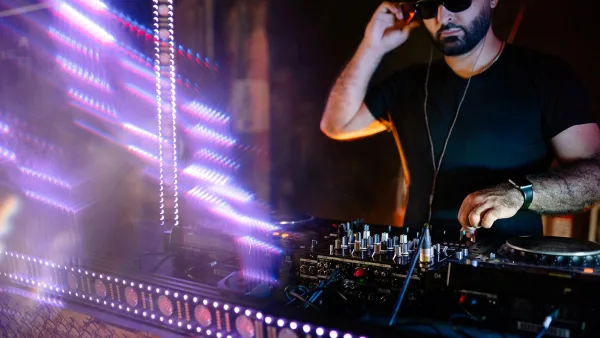
Beginners often light the dance floor but forget the DJ booth needs careful thought too. Under-lit booths hide the DJ and reduce performance energy. Over-lit booths create a blinding wall that prevents the DJ from seeing the crowd.
Use subtle uplighting on the booth. Create separation from the main dance floor without over-emphasizing it. The booth supports the performance; it shouldn't compete with it.
The Meta-Mistake: Trying to Do Too Much
The biggest mistake is attempting complex programming and multiple fixture types before mastering the basics. Start simple. Master two fixtures. Then add a third. Learn control gradually.
Pros didn't build their skills overnight. They started simple and built competence systematically. Do the same, and you'll avoid the frustration that causes most beginners to abandon lighting entirely.




Comments