


Cor Anglais roundup
Cor Anglais: A Complete Buyer's Guide
Choosing a cor anglais is a bigger decision than most instrument purchases. Here is what genuinely matters, and where new buyers most often trip up.
Buying a cor anglais is not like buying a first recorder or even a first clarinet — it is usually a considered, sometimes expensive decision, and it deserves a bit of homework first. Whether you are an oboist adding a second instrument or moving to your very first double reed altogether, this guide walks through what actually matters when choosing one, and where new buyers most often go wrong.
Work Out What You Actually Need First
Before you look at a single instrument, be honest about where you are. Are you a school or college player working through grades, an oboist wanting a second voice for ensemble work, or a professional replacing an existing instrument? The answer shapes everything else that follows — keywork, budget and even where you should be shopping.
- Grade or college level player — a student or intermediate instrument is usually the sensible starting point.
- Oboist adding a second instrument — your existing embouchure and reed habits transfer, but the transposition and the broader reed take some adjustment.
- Professional or conservatoire player — you are likely looking at a full-keywork instrument from an established specialist maker.
Wood or Synthetic Body?
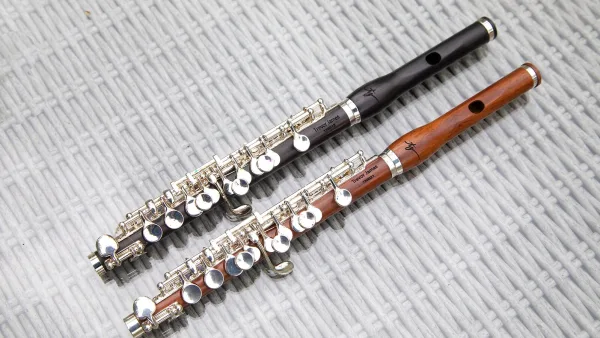
Most professional instruments in this family are made from dense grenadilla wood, prized for its tone and stability once properly seasoned. Some manufacturers also offer synthetic or composite bodies as an alternative.
| Grenadilla wood | Synthetic body | |
|---|---|---|
| Tone | The traditional standard most players expect | Often very good, though players sometimes perceive it as slightly different |
| Stability | Sensitive to humidity and temperature change | Generally more tolerant of climate swings |
| Typical use | Favoured for professional and conservatoire work | Sometimes chosen for touring, teaching or variable conditions |
Neither option is objectively better — it is a genuine trade-off between tradition and practicality, and one worth trying for yourself before you decide.
Testing a Cor Anglais: The Whole Range, Not Just the Easy Notes
A cor anglais can sound perfectly pleasant on a few comfortable middle-register notes and still be a poor instrument overall. When you try one, check:
- Intonation right across the practical range, not only the notes you already play well.
- Response in the low register — low C and B in particular are where a mediocre instrument struggles.
- Stability and colour through the middle register, where most of its character lives.
- How easily the top of the range speaks without forcing or pinching.
Always test with your own reed, or as close to your usual setup as you can manage. One that feels wonderful with the shop's reed can feel entirely different with yours, and vice versa.
Keywork and Comfort
Conservatoire-system instruments carry extended keywork, third-octave keys and trill options aimed at professional repertoire; student and intermediate instruments simplify some of this to keep cost and complexity down. Neither is wrong for its intended level, but check the thumb rest is adjustable and the hand position feels sustainable — you will be holding this instrument through long rehearsals.
Reed and Bocal Compatibility
The bocal, sometimes called the crook, is the curved metal tube connecting reed to body, and it has a real effect on response and pitch. Ask what bocal comes with the instrument, whether spares are available, and how the maker's reeds are generally scaled. This matters more on a cor anglais than on an oboe, because there is no simple tuning slide to fall back on if reed and bocal do not suit each other.
New, Used or Rental?
A rental or a well-maintained used instrument from a reputable specialist dealer is a perfectly sensible way to start, particularly at student level. If buying used, check for cracks in the wood, tight tenon joints and even key regulation, and factor in the cost of a service. Whatever route you choose, buy from a dealer who can service it afterwards — an instrument with no local repair support is a false economy.
Buying Pitfalls Worth Avoiding
- Choosing on price or looks alone without testing the low and high registers.
- Buying without your own reed on hand, then blaming the instrument for a reed problem.
- Ignoring after-sales repair support, especially for a wood instrument that will eventually need servicing.
- Assuming oboe technique transfers perfectly without adjustment — it mostly does, but not entirely.
Once you have narrowed things down, our round-up of the best cor anglais for the money is a good next stop for how the different price tiers actually compare. If you are still getting to grips with the basics, our explainer on how it all works covers the fundamentals, and our beginner's guide is written for players just starting out. It is also worth reading our common mistakes piece before you commit to daily habits on a new instrument.
The Bottom Line
Buying a cor anglais rewards patience far more than impulse. Know what level you are buying for, test the full range with your own reed, and buy from someone who can service it afterwards. Get those three things right and almost any reasonable instrument will serve you well for years.




Comments