


Stradivarius Violin article
Stradivarius Violin Explained: Features, Types and Tips
What makes a Stradivarius a Stradivarius? A clear look at Antonio Stradivari's career, the features experts study, and where you can see one today.
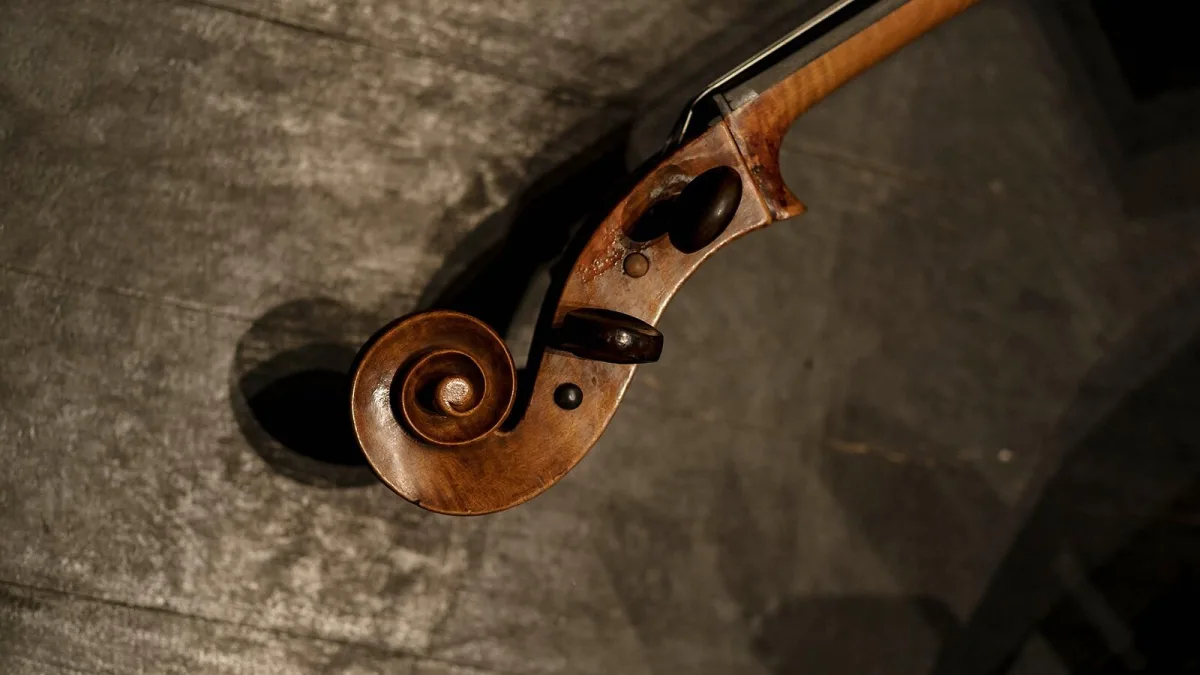
Few names in music carry the mystique of a Stradivarius. The word describes a violin, viola or cello made in Cremona, Italy, by Antonio Stradivari or his workshop between the late seventeenth century and his death in 1737. This guide explains what actually makes a Stradivarius what it is, the different phases of Stradivari's career, and how these instruments are understood, valued and cared for today.
Who Was Antonio Stradivari?
Antonio Stradivari (1644–1737) worked for most of his life in Cremona, a small city in northern Italy that had already produced the celebrated Amati family of instrument makers. He is traditionally thought to have trained in the workshop of Nicolò Amati, though the details of his early years are not fully documented.
Over a career spanning roughly seven decades, he produced more than a thousand instruments, of which around 500 are believed to survive. His sons, Francesco and Omobono, worked alongside him in the family shop, which is why attributing some later pieces precisely to Antonio himself can require specialist analysis rather than a simple label check.
What Makes a Stradivarius a Stradivarius?
There is no single secret ingredient, whatever popular legend suggests. Researchers who study these violins point instead to several factors working together: the outline and proportions of the body, the arching of the top and back plates, the thickness — or "graduation" — of the wood, the choice of timber, the varnish, and the sheer quality of the workmanship.
| Feature | Typical role |
|---|---|
| Soundboard | Usually spruce; converts string vibration into sound |
| Back, ribs and neck | Usually maple; add stiffness and colour to the tone |
| Bass bar and soundpost | Internal spruce fittings that shape response and balance |
| F-holes | Regulate airflow and give access to the interior for repair |
| Varnish | Protective and visual finish; its texture helps with attribution |
None of these materials was exclusive to Stradivari. Spruce tops and maple backs were standard practice among Cremonese makers of the day. What set his finest instruments apart was how precisely he combined them, refined over decades of close observation and small adjustment.
The Golden Period, and Other Phases of His Career
Historians commonly divide his output into broad phases, though the boundaries are useful guides rather than rigid categories. Early instruments lean on Amati-style proportions. From roughly 1700 to 1725 — the so-called golden period — he experimented more freely with outline, arching and plate thickness, and many of his most admired violins date from these years. In his final years, production continued alongside his sons, blending continuity with fresh variation.
A golden-period label does not automatically make one instrument better than another for every player, though. A violinist may find an earlier or later example better suited to their technique, their bow, or the hall in which they perform.
Stradivarius versus Guarneri del Gesù
The other great name from this era is Giuseppe Guarneri, known as "del Gesù" after the religious symbol he added to his labels. His violins are often described as having a more forceful, rugged character, while a Stradivarius tends to be associated with clarity, flexibility and evenness across the strings. These are broad tendencies rather than fixed rules; plenty of players have strong views in either direction, and the truest test remains hearing, or playing, the instrument itself.
"Stradivarius" or "Strad"?
"Stradivarius" is the Latinised form of Stradivari's name that appears on his instrument labels — "Antonius Stradivarius Cremonensis" — and it is not a model name or a brand in the modern sense. "Strad" is simply the shorthand that musicians, dealers and collectors use in conversation. Confusingly, many modern factory violins are also marketed as "Stradivarius" models because they copy his outline, which has nothing to do with authorship. A label alone proves very little; genuine attribution rests on a comparative study of the whole instrument, as our complete buyer's guide explains in more depth.
Where You Can See One Today
You do not need millions of pounds to encounter a real Stradivarius. The Smithsonian Institution in Washington holds several, including the "Ole Bull" violin, while the Library of Congress cares for its own group of Stradivari violins, violas and a cello. Public collections such as these, along with occasional loan exhibitions, are the most realistic way for most enthusiasts to see one up close, and our guide to the most celebrated named examples is a good place to start.
It Still Shares a Violin's Basic Anatomy
Whatever its fame, a Stradivarius still has the same working parts as any acoustic violin: bridge, soundpost, fingerboard, tailpiece and strings. Its condition changes over three centuries of use. Necks are commonly lengthened, fingerboards replaced and old gut strings swapped for modern ones, simply so the instrument can meet the demands of a modern concert hall rather than an eighteenth-century drawing room.
If you are new to the subject and want the full picture without the jargon, our beginner's guide covers the same ground from a gentler starting point, and our piece on common mistakes people make is worth reading before you take anyone's claim about authenticity at face value.
A Few Tips If You Ever Get to Hear One
- Listen live if you possibly can — recordings compress the dynamic range and colour that make these violins distinctive.
- Do not assume a famous name in the programme guarantees a "better" sound than an unfamiliar instrument. Blind listening trials have repeatedly shown that reputation shapes a listener's perception almost as much as acoustics do.
- Read the programme notes. Many soloists play named, historically documented instruments, and knowing an instrument's history adds real context to the performance.
- If you play yourself, remember that a well-made modern violin can suit your technique better than a three-hundred-year-old one. The "best" violin is always the one that responds to your own bowing.
The Bottom Line
A Stradivarius earns its reputation from an unusual combination of design, material, craftsmanship, survival and the musicians who have chosen to play it for three hundred years. No study has isolated one single cause of its sound, and that, in a sense, is exactly what keeps the subject so interesting to players, scientists and listeners alike.






Comments