


Rosin article
Rosin Explained: Features, Types and Tips
An ordinary block of tree resin that makes a silent bow sing. Here's what rosin is, where it comes from, and how to think about choosing it.
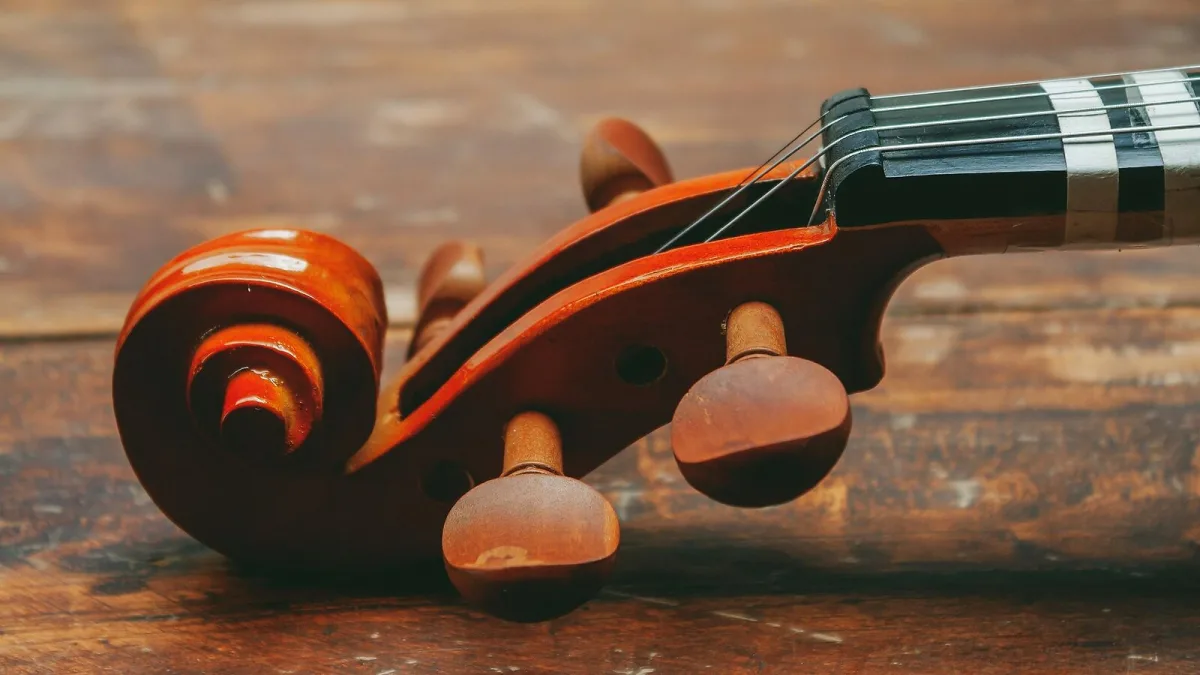
There is something quietly satisfying about a substance this ordinary doing something this essential. Without it, a violin bow would simply glide silently across the strings, producing nothing at all. Here is what this small, unglamorous block actually is, why it comes in so many forms, and how to think about choosing between them.
What Rosin Actually Is
Rosin is the solid residue left once volatile turpentine has been removed from conifer resin. Applied to the hair of a bow, it creates the friction a smooth horsehair strand would otherwise lack, allowing the hair to catch a string, release it, and catch it again in rapid succession. That repeated stick-and-slip motion is what sets a string vibrating and, in turn, produces sound. It is worth noting immediately that it goes on the bow hair, never on the strings themselves.
Where It Comes From
Traditionally, rosin falls into three broad categories according to how the raw resin was obtained: gum rosin, collected from living trees; wood rosin, extracted from pine stumps; and tall-oil rosin, produced as a by-product of paper-pulp manufacture. Manufacturers then purify, heat and blend the resin to produce formulas that differ considerably in hardness, tackiness, dust production and behaviour in different temperatures. The substance has an older name, too — Greek pitch — a reminder of how long musicians have relied on it.
Light or Dark: A Useful Starting Point, Not a Rule
Rosin is often described as light (or amber) versus dark. The lighter kind tends to be harder, less tacky and cleaner-feeling, and is generally associated with violin and viola. The darker kind tends to be softer and more adhesive, generally associated with cello and double bass. That said, colour alone is not a standardised measure of hardness or quality — two dark rosins can behave quite differently from one another, and some modern formulas do not sit neatly inside the traditional categories at all.
Matching Rosin to Instrument
| Instrument | Typical Tendency | Why |
|---|---|---|
| Violin | Light, amber or medium-hard | Thin, higher-tension strings need controlled grip without excess tack |
| Viola | Light to medium | A balance between articulation and slightly larger strings |
| Cello | Medium or medium-soft | Lower strings benefit from more grip and resistance |
| Double bass | Soft, dark, high-tack | Large strings need stronger adhesion to speak efficiently |
These are general tendencies rather than rigid rules, and plenty of players choose differently for solo work, orchestral playing or particular strings.
The Golden Rule: Moderation
Too little rosin and the bow slips, notes start late, and articulation feels weak. Too much and you get visible dust, a harsh or congested tone, and a fine residue settling on the strings and instrument. The right amount depends on the formula, the bow, playing time and the surrounding climate — there is no single correct number of strokes that applies to every situation.
Climate Plays a Real Part
A softer formula can turn unpleasantly sticky in heat and humidity, while a harder one may feel insufficiently grippy in cold, dry air. It is entirely normal for a player to keep more than one formula on hand and reach for whichever suits the season.
Choosing Your Own
None of this is about finding a single objectively "best" option — that claim tends to be marketing rather than fact. It is about matching a formula to your instrument, your climate and your own ear. If you are about to buy your first cake, the complete buyer's guide walks through exactly how to narrow the choice down, and the beginner's guide covers the practical basics of applying it correctly from the start.
A Word on Storage
Keep the cake away from direct heat and sunlight, and out of reach of contamination from dust or grit. A cracked cake is usually still perfectly usable provided the pieces stay securely held in their case; it is loose fragments that become a nuisance. It is also worth avoiding casual sharing between instruments where the formulas or hardness differ significantly — a cake suited to a double bass is rarely the right choice for a violin, and vice versa.




Comments