


Progressive Rock article
The History of Progressive Rock
It's not a story with one hero or one clean ending — it's a genre that reinvented itself at least three times over five decades.
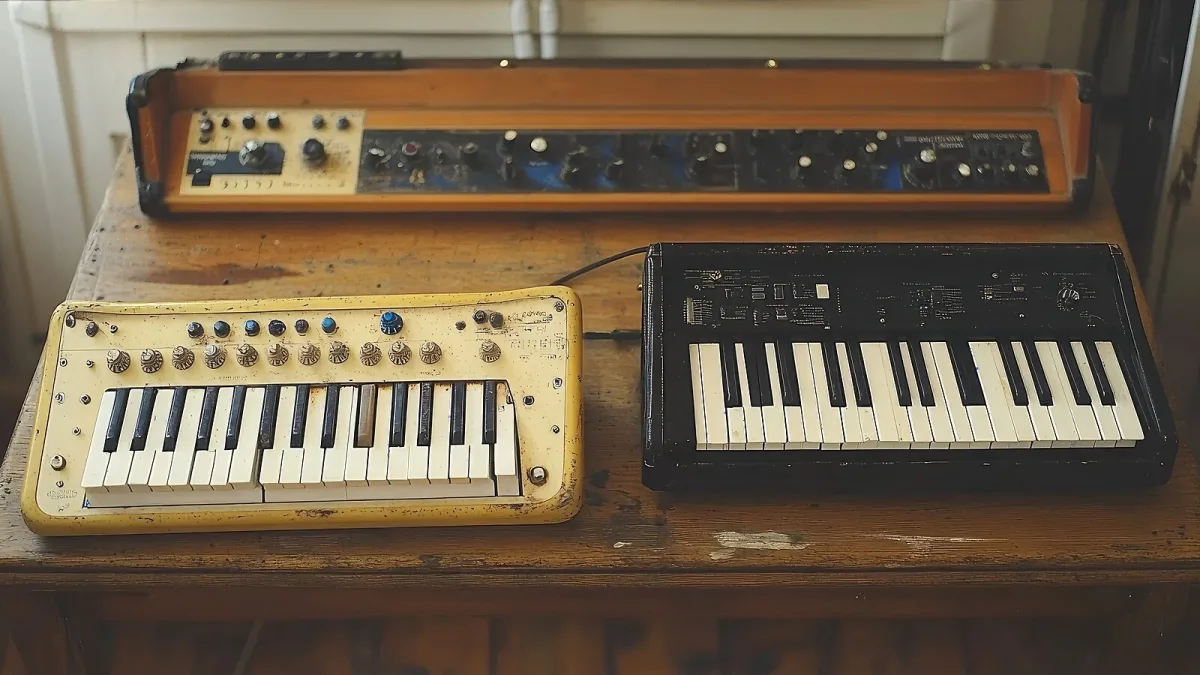
Every genre has a moment people point to as "the start." For progressive rock, it's usually 1969, a King Crimson record, and a decade that turned rock into something closer to a concert-hall art form. But the real story runs longer than one album, and it's a lot more interesting than a single origin point.
Rock Outgrows the Single
By the late 1960s, psychedelic bands had already started pushing past the three-minute pop song — longer tracks, studio effects, structures that didn't just repeat a verse and chorus. British musicians took that further, pulling in ideas from classical orchestration, jazz improvisation, folk's acoustic textures and the emerging tools of electronic music. None of that happened in isolation. It converged.
Crucially, the album itself was changing status. Instead of a handful of singles padded out with filler, it became a canvas — a whole, unified artistic statement.
1969: A Genre Announces Itself
King Crimson's In the Court of the Crimson King is widely treated as the moment progressive rock's vocabulary properly arrived: heavy rock, jazz-derived improvisation, orchestral colour and long-form composition, all on one record. It's frequently described as one of the genre's defining early statements — though no single band invented this sound alone. Several overlapping scenes were reaching similar conclusions around the same time.
The Early 1970s: Everyone Finds Their Own Angle
What's striking about the classic era isn't uniformity — it's how differently each major band interpreted the same basic idea:
| Band | Their Angle |
|---|---|
| Yes | Elaborate arrangements, high-register vocals, symphonic scale |
| Genesis | Theatrical narratives and literary imagery |
| King Crimson | Instability, dissonance, constantly changing lineups |
| Emerson, Lake & Palmer | Keyboard-centred virtuosity, classical adaptations |
| Pink Floyd | Atmospheric production and increasingly sophisticated studio design |
| Jethro Tull | Flute-led arrangements and folk-influenced, satirical writing |
By the early-to-mid 1970s, this had become the genre's commercial and artistic peak — records like Close to the Edge, Selling England by the Pound and The Dark Side of the Moon weren't outliers, they were the mainstream of the movement. For a proper introduction to the people behind these records, see our guide to the best progressive rock artists to know.
Punk Comes for the Excess
By the late 1970s, punk and new wave arrived with a very different set of values: short, fast, stripped-back and deliberately anti-virtuosic. Large-scale productions and lengthy album-length concepts started to look, to a new generation of critics and fans, like exactly what needed tearing down. Record-market tastes shifted, and the genre's commercial dominance faded hard.
It didn't disappear, though. That's the part of the story that often gets left out.
What Actually Happened Next
Rather than vanishing, the sound splintered into several ongoing threads:
- Neo-progressive rock in the 1980s, keeping the ambition while updating the production.
- Progressive metal, adding heavier guitars and a harder edge to the same compositional instincts.
- Contemporary symphonic prog, still working in the classic mould for a smaller, dedicated audience.
- Experimental and post-rock, taking the "album as art form" idea in stranger directions.
- Internet-based independent scenes, which have kept the genre genuinely active without needing major-label backing.
Modern coverage of the genre — ongoing tours from acts like Stick Men, releases from smaller independent projects — shows real, continued activity, even if there's no single dominant movement the way there was in the early 1970s. Our breakdown of the subgenres maps out exactly how these later branches relate to each other and to the classic sound.
Why the Origin Story Resists a Simple Answer
It's worth being honest about one thing historians actually agree on: no single artist can be credited as the sole inventor of progressive rock. Pink Floyd, Jethro Tull and early Genesis all sit comfortably under several labels at once — art rock, psychedelic rock, folk rock — which is exactly why pinning down a strict definition has always been more trouble than it's worth. The most reliable approach treats it as a set of tendencies rather than a rulebook.
If you're coming to all this cold, our beginner's guide is a gentler starting point than this history proper.
The Bottom Line
This isn't a story with one hero, one album or one clean ending. It's a genre that reinvented itself at least three times over five decades — through classical ambition, punk-era collapse, and a quiet, ongoing life in scenes that never needed the mainstream's permission to keep going.




Comments