


Glam Rock article
Essential Glam Rock Albums Explained
Seven records, five years, one enormous cultural moment — the essential glam rock albums explained, and where to start.
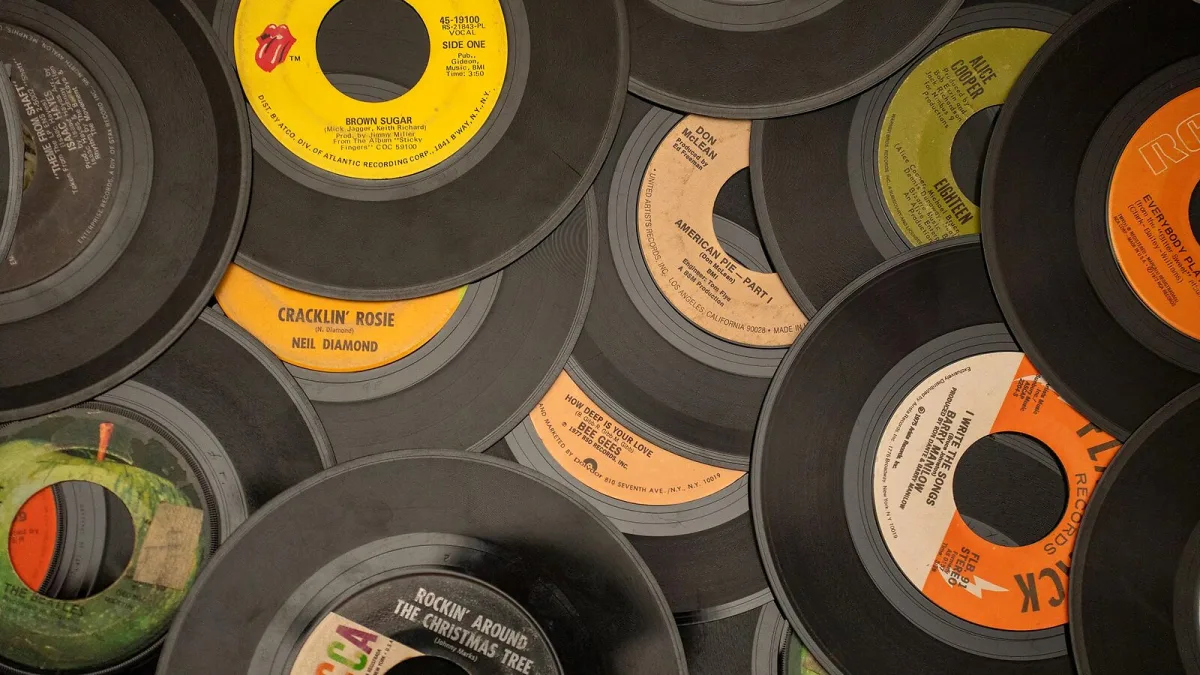
There's something proper joyful about a great glam rock album — the kind of record that struts before it even plays a note. I grew up loving music with a social history behind it, and these seven records aren't just glitter and platform boots; they're the sound of British rock deciding, all at once, that spectacle was worth taking seriously. Here's where to actually spend your listening time.
T. Rex — Electric Warrior (1971)
The record most historians point to as glam rock's real starting gun. Marc Bolan builds entire songs out of small, repeated ideas — a riff, a groan, a hook — and somehow makes it sound like the most confident music ever committed to tape. "Get It On" is the single everyone knows, but the whole album carries that same unhurried swagger.
T. Rex — The Slider (1972)
Bolan's follow-up doubles down on everything that worked, tightening the songwriting further. "Telegram Sam" and "Metal Guru" show a band that had fully worked out its own formula and had no interest in complicating it. Among records built on pure feel over technique, this is close to the platonic ideal.
David Bowie — The Rise and Fall of Ziggy Stardust and the Spiders from Mars (1972)
The most ambitious of all the glam rock albums on this list, and arguably the most important record the genre produced. Bowie doesn't just write songs here — he builds a science-fiction character and lets the whole album tell that character's story, from "Five Years" through to the title track. It's the record that proved glam rock could carry real artistic weight without losing an ounce of its glitter.
Slade — Slayed? (1972)
If Bowie's record is glam rock's art-house wing, Slayed? is its terraced-street party. Loud guitars, chantable choruses, stomping rhythms — this is glam rock built for shouting along in a packed room rather than close listening on headphones, and it's brilliant precisely because it never pretends otherwise.
Sweet — Desolation Boulevard (1974)
Sweet occupy the pop end of the spectrum, but don't mistake that for lightweight. "Ballroom Blitz" and "Teenage Rampage" pair genuinely sharp pop songwriting with a heavier guitar attack than the band get credit for. It's one of the records here that best shows how easily the genre moved between the charts and something rockier.
Roxy Music — Roxy Music (1972)
The odd one out, and the one I'd argue rewards repeat listening the most. Bryan Ferry's controlled vocal persona and the band's genuinely strange, art-school textures on "Virginia Plain" and beyond connect glam rock to avant-garde design in a way none of the others attempt. This is the thinking person's entry on any list like this one.
Mott the Hoople — All the Young Dudes (1972)
Born from a favour — Bowie wrote and produced the title track for a band on the verge of splitting up — this record turned into something with its own loose, streetwise identity. It's proof that glam rock's story runs on generosity and collaboration as much as individual genius.
Quick Comparison
| Album | Artist | Year | Best For |
|---|---|---|---|
| Electric Warrior | T. Rex | 1971 | The founding sound |
| The Slider | T. Rex | 1972 | Pure hook-driven glam |
| Ziggy Stardust | David Bowie | 1972 | Concept-album ambition |
| Slayed? | Slade | 1972 | Terrace-chant energy |
| Desolation Boulevard | Sweet | 1974 | Pop with a heavy kick |
| Roxy Music | Roxy Music | 1972 | Art-school experimentation |
| All the Young Dudes | Mott the Hoople | 1972 | Streetwise, generous rock |
How to Use This List
Don't feel obliged to work through these glam rock albums in strict order. If you want the sound before the concept, start with Electric Warrior. If you want the full theatrical ambition first, go straight to Ziggy Stardust. Either way, once you know the records, the artists behind them make a lot more sense — our guide to the best artists to know fills in the people, and the full history fills in exactly how this handful of records ended up defining an entire era.
New to all this? The beginner's guide is the sensible starting point before you commit to full albums, and if singles suit your listening habits better, we've also rounded up the best songs track by track.
Seven albums, five years, one enormous cultural moment. That's glam rock's whole story told through vinyl — and every one of these records still holds up on its own terms, glitter or no glitter.






Comments