


Krautrock article
The History of Krautrock
Krautrock grew from a specific cultural moment — a generation of West German artists determined to create music that was neither a copy of the past nor an imitation of Anglo-American rock. Here is the story.
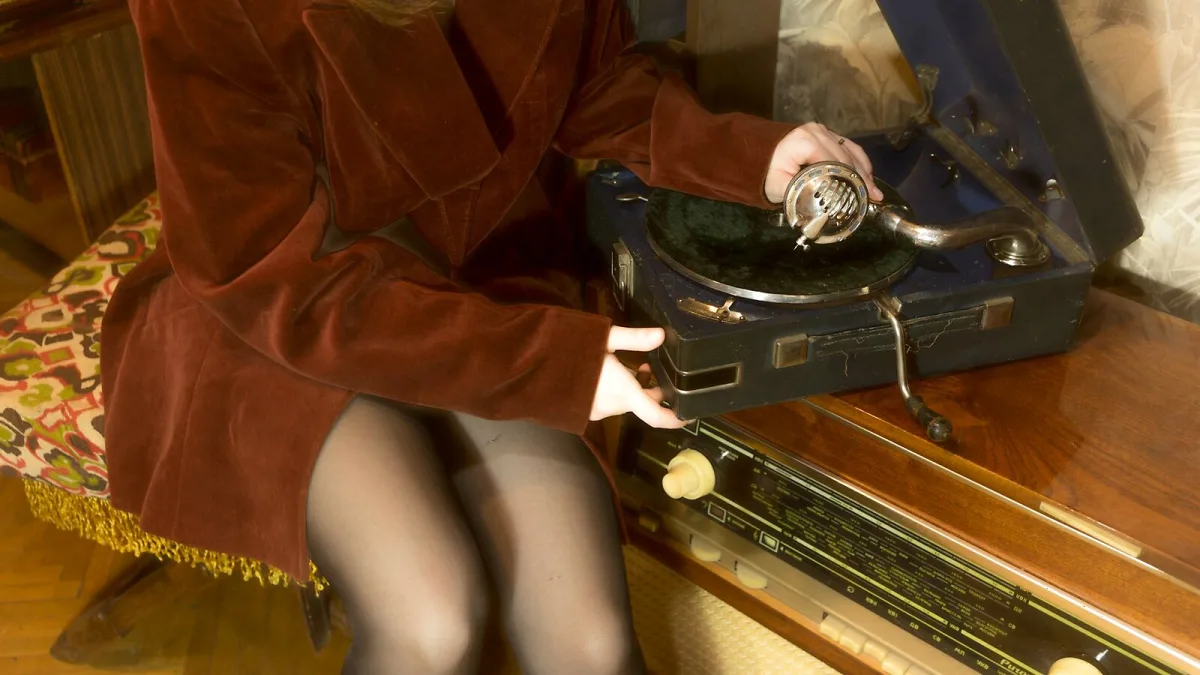
Krautrock did not appear from nowhere. It grew out of a specific moment in West German history — a generation of artists who felt the weight of that history and chose to respond to it through music that had never been made before. To understand why the music sounds the way it does, you have to understand something of where it came from.
Before Krautrock: Post-War West Germany
The artists who would create krautrock were born during or shortly after the Second World War. By the late 1960s they were in their twenties and confronting a cultural landscape they found deeply uncomfortable. The older generation's silence about the Nazi period, the continued influence of pre-war cultural figures, and the dominance of American and British pop music in the mainstream all felt like forms of avoidance.
The response was not primarily political in the traditional sense. Rather than manifesting as protest music, the impulse translated into a determination to create something genuinely new — music that sounded neither like Germany's pre-war past nor like a German imitation of Anglo-American rock. As Louder Sound put it, these bands were keen "to forsake obvious Americanised blues and rock'n'roll clichés and forge a more European, exploratory sound."
The Early Scene: 1968–1971
The first krautrock recordings emerged around 1968–1969, from artists in cities including Cologne, Munich, Düsseldorf and Hamburg. Early groups absorbed influences from psychedelic rock, free jazz, avant-garde composition and rock improvisation and began pushing them in unusual directions.
Composer Karlheinz Stockhausen was a significant cultural figure in this environment. Several of the scene's key musicians had some exposure to contemporary composed music, and his approach to sound as material to be shaped rather than melody to be followed was an influence on how some groups thought about studio work and structure. The extent of direct influence varied, but the general idea that a recording could be a compositional act rather than a performance document was widely absorbed.
The early albums — Can's Monster Movie (1969), Faust's debut Faust (1971), Amon Düül II's Yeti (1970) — were considerably more chaotic and raw than the music that followed. They show artists in the process of finding what they were.
The Classic Period: 1971–1975
The years from 1971 to 1975 represent krautrock's most concentrated creative period. In that span, a remarkable series of records appeared:
- Can's Tago Mago (1971) — extended improvisation, studio editing and the most viscerally powerful drumming on any krautrock record, courtesy of Jaki Liebezeit.
- Neu!'s debut Neu! (1972) — the clearest statement of the motorik approach, recorded by Klaus Dinger and Michael Rother after leaving Kraftwerk.
- Faust's Faust IV (1973) — the most approachable of Faust's albums, still full of collage and noise but with more recognisable song shapes.
- Kraftwerk's Autobahn (1974) — the album that moved Kraftwerk decisively toward electronic pop and gave them their first international chart success.
- Tangerine Dream's Phaedra (1974) — long, slowly evolving synthesiser music that defined a strand of kosmische music separate from rock-based krautrock.
This was also the period in which labels like Ohr Records and Brain Records were central to distributing and presenting the scene's output to a domestic and international audience.
The British Connection
The term "krautrock" was invented not in Germany but in Britain. John Peel championed several of the key acts on his BBC Radio 1 show, and the British music press — particularly Sounds and the NME — used the term to group together artists who were selling very little in their home country but finding an enthusiastic audience of record collectors and progressive-music fans in the UK.
This relationship shaped the canon in ways that still affect how the music is discussed. Certain acts — Can, Neu!, Kraftwerk, Faust — became standard reference points partly because they were the ones the British press most actively championed. Other significant artists, including Cluster, Harmonia, Popol Vuh and Klaus Schulze, received less international attention at the time but are now recognised as equally important.
Divergence and Legacy: After 1975
By the mid-1970s the original scene was fragmenting. Kraftwerk's Trans-Europe Express (1977) and The Man-Machine (1978) completed their transformation into something closer to electronic pop. Can lost Damo Suzuki in 1973 and gradually moved in a more funk-influenced direction. Faust became increasingly difficult to categorise.
The legacy, however, was growing. David Bowie recorded his influential "Berlin Trilogy" — Low, Heroes and Lodger — with producer Brian Eno, who had been an engaged listener of the scene. Joy Division, Public Image Ltd and the nascent post-punk movement absorbed the motorik influence. Later, artists including Stereolab, Sonic Youth and Tortoise cited the scene explicitly.
The most consequential long-term inheritance, though, may be in electronic and dance music. The repetitive structures, the groove-based approach of Can and Neu!, and the synthesiser landscapes of Tangerine Dream and Klaus Schulze all anticipate ideas that techno, ambient and minimal electronic music later developed independently or with direct knowledge of these originals.
For a complete list of the acts behind this history, see the best krautrock artists to know. The albums that defined the classic period are examined individually in essential krautrock albums explained. New to the genre entirely? Start with the beginner's guide to krautrock.






Comments