


Hyperpop article
A Beginner's Guide to Hyperpop
Pop music turned up past a sensible limit: here is a clear, honest beginner's guide to what the genre actually is and where to start listening.
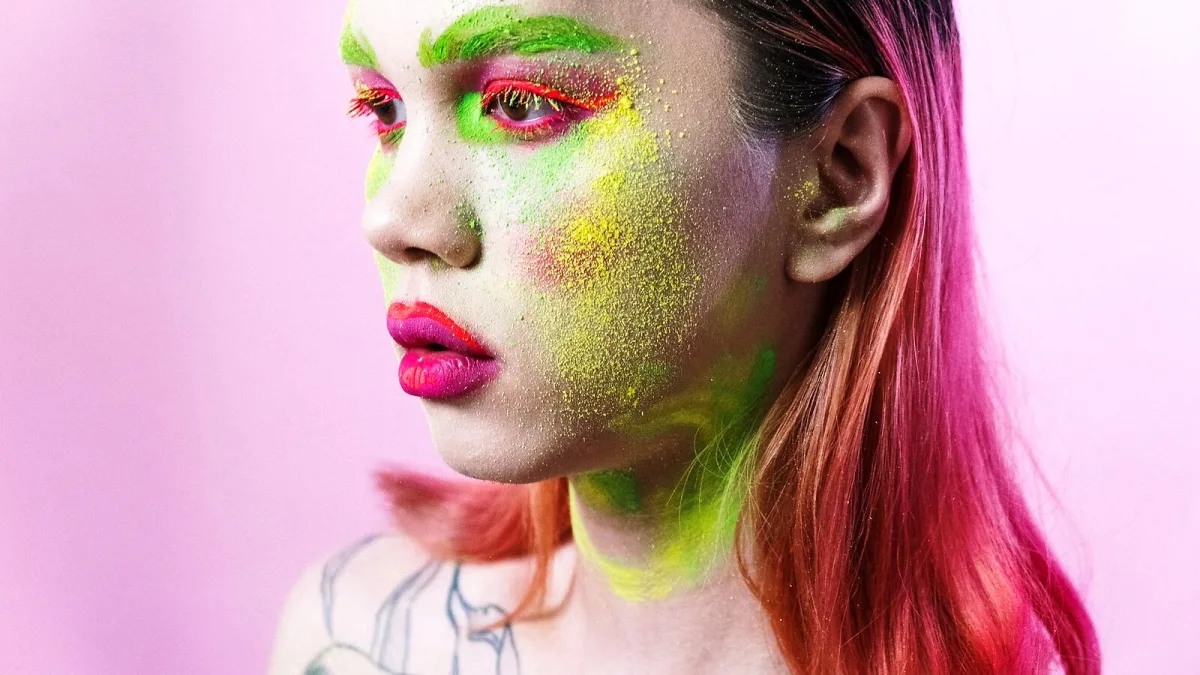
If you have ever heard a pop song that sounds like it is melting, speeding up and celebrating all at once, there is a good chance you have already met hyperpop without knowing its name. It is one of the strangest, most argued-about labels in modern music — and also one of the easiest to actually enjoy once someone explains what you are hearing. Let's start from the very beginning.
So, What Actually Is It?
Hyperpop is best understood as a method of intensifying pop music, rather than a fixed set of rules. It takes familiar pop songwriting and pushes it through electronic music, hip-hop, punk, emo, trance and internet remix culture, coming out the other side heavily processed, bright, distorted and often gleefully chaotic. There is no single required tempo or vocal style. What ties it together is an attitude: pop conventions treated as raw material to be exaggerated rather than smoothed over.
The Sound: What to Actually Listen For
A few genuinely useful things to train your ear on:
- Vocals: Auto-Tune used as an obvious, audible effect rather than hidden correction, plus extreme pitch shifts and chopped syllables.
- Synths: bright, metallic and artificial-sounding, often deliberately harsh rather than warm.
- Drums: loud, clipped, and borrowed from trap, EDM and punk in equal measure.
- Arrangement: sudden genre changes, fake-outs and abrupt cuts instead of smooth transitions.
- Distortion: clipping treated as part of the actual sound, not a mixing mistake.
Where It Came From, in Brief
The roots trace back to early-2010s UK electronic pop, particularly the label PC Music, founded by A. G. Cook in London in 2013, alongside nightcore's sped-up internet edits and bubblegum bass's glossy synthetic textures. The term itself only became widely known after Spotify launched a Hyperpop editorial playlist in 2019, which helped tie together artists — most famously the duo 100 gecs — who had been circulating through adjacent online scenes. Our full history covers this properly if you want the whole story.
Five Starting Points
Rather than a full artist guide here, a genuinely useful shortcut is to start with 100 gecs' breakout album 1000 gecs, the late producer SOPHIE's radically inventive sound design, PC Music's early exaggerated pop releases, Dorian Electra's theatrical maximalism, and Charli XCX's more mainstream-facing work with PC Music-associated producers. That handful covers most of the range the genre actually spans.
It Isn't Just One Thing
Ask three people what the term means and you may get three different, equally defensible answers. Narrowly, it describes the 2019–2021 wave tied to that Spotify playlist and 100 gecs. More broadly, it describes an ongoing production style built around exaggeration and digital excess. Critically, some see it as a platform-generated umbrella term that helped streaming services file away music that did not fit neatly elsewhere. All three readings are reasonable, and knowing that upfront will save you a lot of confusion in comment sections.
A Few Things Worth Un-Assuming
Before you go in, it helps to drop a few common misconceptions: hyperpop does not require sped-up, chipmunk-style vocals, it does not require distortion on every single track, and it is not simply another name for PC Music, digicore, nightcore or EDM. “More extreme” also does not automatically mean “more hyperpop” — songwriting and attitude still matter more than raw intensity.
Bigger Than the Underground
What started in niche online scenes did not stay there. Its influence has spread into mainstream pop production, vocal design and visual identity, well beyond the original PC Music-adjacent releases that kicked things off. Charli XCX is often discussed as the clearest bridge between that early experimentation and chart-facing pop, carrying the aesthetic's fingerprints — bright synthetic textures, audible Auto-Tune, maximalist production — into far more mainstream spaces.
Not Everyone Loves the Label
Worth knowing before you dive in: not every artist grouped under this banner is comfortable with the term. Some found the label a useful shorthand for otherwise hard-to-describe music; others felt it flattened genuinely distinct scenes and communities into one marketable playlist category. That tension is part of the story, not a footnote to it, and it is worth keeping in mind when you see an artist push back against being filed under the tag.
Where to Go Deeper
Once the basics click, there is a lot more worth exploring. Our guide to the best artists to know introduces the key names properly, essential albums explained walks through the records that actually matter, and the best songs right now is a great next stop if you just want to hit play. If the family tree of related styles interests you, the subgenres explained untangles digicore, glitchcore and nightcore from the main thing.
The Bottom Line
Hyperpop rewards curiosity more than expertise. Approach it as pop music turned up past a sensible limit — exaggerated, distorted, occasionally absurd, and often genuinely moving underneath all the noise — and the rest of the genre's arguments about definitions become a lot more fun than frustrating.





Comments