


Bebop article
A Beginner's Guide to Bebop
Bebop can sound intimidating from the outside. This guide breaks down what it actually is, how it sounds, who built it, and exactly where to start listening.
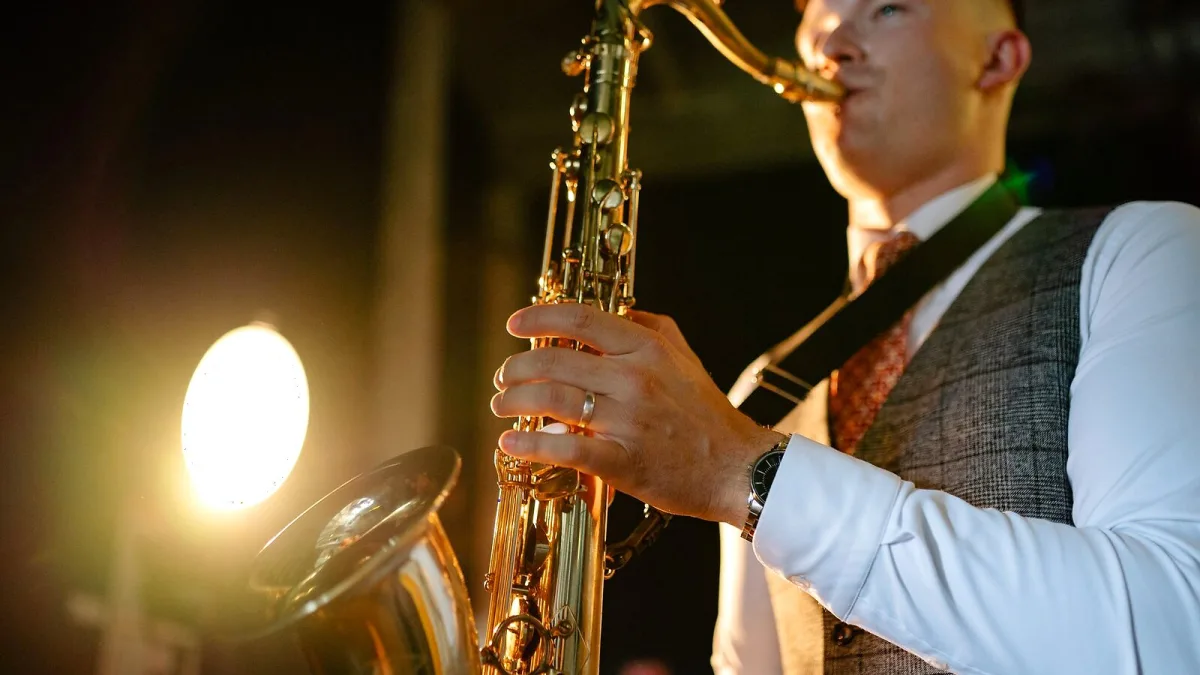
If the word “bebop” makes you think of fast, tangled saxophone lines you can’t quite follow, you’re not alone — and by the end of this guide, you will follow them. Think of this as a first lesson rather than a lecture: we’ll cover what it is, how it came to sound the way it does, who built its language, and where to listen next. No prior jazz knowledge required.
What Is Bebop, Exactly?
Bebop is a style of jazz that took shape in the early-to-mid 1940s, mostly among Black musicians playing in small groups in New York. Before this, jazz was dominated by big swing bands built for dancing, with arranged sections and short, polite solos. It turned that on its head. It shrank the band down to four or five players, sped up the tempo, and put the spotlight on long, inventive improvised solos built over sophisticated chords.
It helps to think of it less as one fixed sound and more as a shared musical language — a set of habits around rhythm, harmony and phrasing that a whole generation of musicians learned together, largely through late-night jam sessions rather than formal lessons.
How the Music Actually Sounds
Once you know what to listen for, it stops sounding chaotic and starts sounding thrillingly precise. Here is what your ear is picking up:
- A walking bassline — the double bass plays a steady note on every beat, giving the music its forward motion.
- The ride cymbal pulse — the drummer keeps time on the ride cymbal rather than hammering the bass drum, freeing the kit up for sharp accents.
- Fast, angular melodies — tunes leap around more than a singable pop melody would.
- Dense harmony — chords change quickly, and soloists often imply extra chords the rhythm section hasn’t even played.
- Long improvised solos — the tune (or “head”) is often just a launchpad for extended, spontaneous invention.
Where It Began
Bebop grew out of after-hours jam sessions at Harlem venues such as Minton’s Playhouse, where musicians tested new ideas away from the pressures of a paying dance-hall crowd. It wasn’t invented by one person on one night; it emerged collectively, shaped by economics (touring big bands had become expensive) and by a younger generation who wanted music that rewarded close listening rather than just keeping couples on the dance floor. For the fuller story, including the recordings that first captured this new sound on record, see the full history of bebop.
The Musicians Who Built the Language
A handful of players did most of the inventing, and their instruments and personalities still define how it is taught and understood today.
| Musician | Instrument | Known for |
|---|---|---|
| Charlie Parker | Alto saxophone | Blistering, blues-soaked improvisation; the style’s defining voice |
| Dizzy Gillespie | Trumpet | Wide interval leaps, high-register command, later fused bebop with Afro-Cuban rhythm |
| Thelonious Monk | Piano | Angular, dissonant compositions and a wholly personal touch |
| Bud Powell | Piano | Translated Parker’s horn-like speed onto the keyboard |
| Kenny Clarke & Max Roach | Drums | Moved timekeeping to the ride cymbal, turning drums into a conversational voice |
Each of these musicians deserves proper introduction on their own terms — you’ll find that in our guide to the essential bebop artists.
The Building Blocks: Chords, Scales and Contrafacts
You don’t need music theory to enjoy this music, but a little goes a long way toward understanding why it feels so busy.
- The ii–V–I progression is a three-chord harmonic move that turns up constantly in jazz; these soloists learned to navigate it fluently and quickly.
- The bebop scale is an ordinary major or dominant scale with one extra chromatic passing note added, so the strong beats land neatly on chord tones.
- A contrafact is a brand-new melody written over the chords of an existing song — Charlie Parker’s “Ornithology” borrows its harmony from “How High the Moon” this way.
- Rhythm changes refers to the 32-bar chord sequence from George Gershwin’s “I Got Rhythm,” reused as the harmonic skeleton for dozens of tunes in this style.
Where It Led
The style didn’t stay still for long. Within a decade its vocabulary had branched into hard bop, cool jazz and even an Afro-Cuban strand nicknamed “Cubop,” pioneered by Dizzy Gillespie. If you want to trace exactly how those branches differ from the original sound, our piece on bebop’s subgenres and offshoots lays it out clearly.
Your First Listening Session
The best way to understand it is still simply to listen, ideally to a handful of landmark tracks before anything else. We’ve put together a properly ordered starting point in Bebop for Newcomers: Where to Start, and once you’re ready to go deeper, our essential albums guide and our guide to the songs that define the style will keep you busy for months.
The Bottom Line
Bebop is jazz stripped down to its most demanding and rewarding form: small groups, fast tempos, rich harmony and genuinely spontaneous invention. Learn to hear the walking bass and the ride cymbal, follow a soloist through a chorus or two, and the rest — the history, the artists, the theory — will start falling into place on its own. That is, in the end, exactly how the musicians who invented it learned it too: by listening closely, again and again.




Comments