


New Techno article
A Beginner's Guide to New Techno
New techno can look like a maze of subgenres from the outside. Here is the calm, unhurried version: what it means, how it works, and where to start.
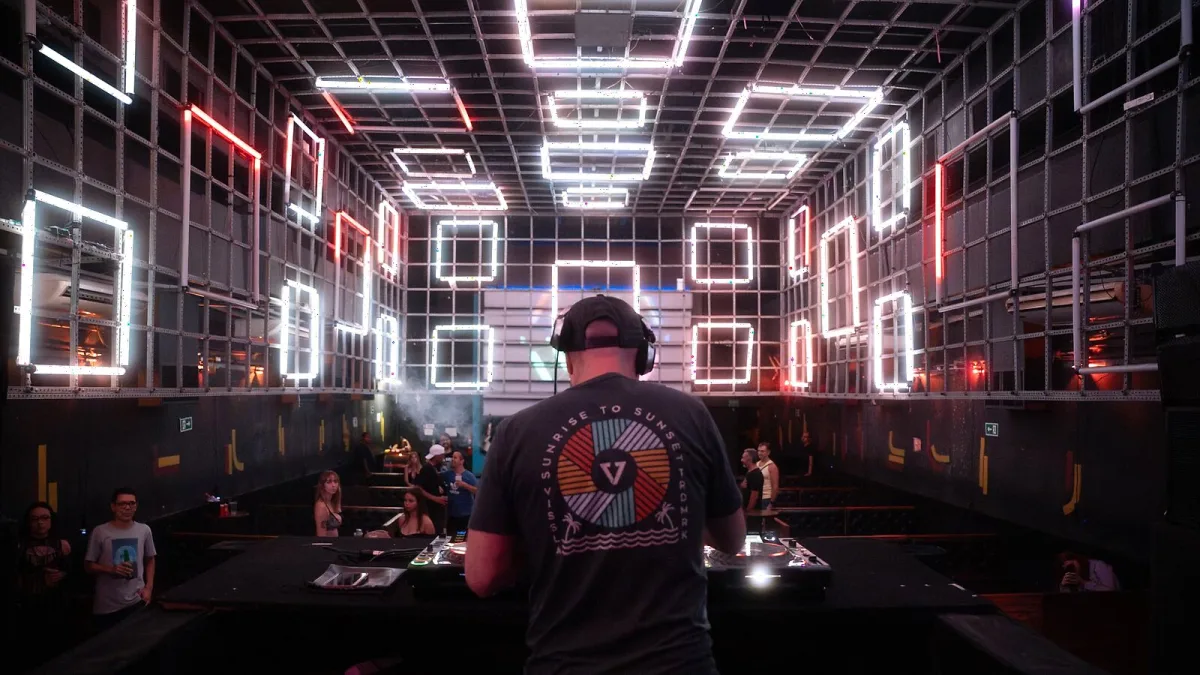
If you have gone looking for new techno and come away more confused than when you started, you are not alone. The word "techno" now sits over a whole family of different sounds, and no two people seem to draw its edges in quite the same place. This guide takes it slowly: what it actually means, the handful of traits that tie it together, and a calm route into listening for yourself.
What "New Techno" Actually Means
There is no dated certificate that says a track officially crossed over into it on a given afternoon. The phrase is best read as shorthand for the present-day techno landscape — everything being made and played right now that still answers to the name. It is not one genre with fixed rules, but a wide, overlapping ecosystem of hypnotic, peak-time, hard, industrial, minimal, acid and dub approaches, all borrowing a little from electro, trance, rave and even ambient music along the way.
Think of it less as a single room and more as a house with several doors. Walk in through any one of them and you are still in the same building, but the view is different depending on which door you chose.
The Building Blocks: What Makes Techno, Techno
Whichever door you pick, a few structural features tend to hold true across the genre. They are worth learning first, because everything else — the subgenre labels, the club culture, the production choices — sits on top of these:
- A steady four-to-the-floor kick — a bass drum hit on every beat, the engine room of the track.
- Repetition that evolves — patterns repeat, but small elements shift, fade in or mutate over long stretches rather than changing every few seconds.
- Syncopated percussion — hi-hats, claps and shakers placed off the obvious beat to create groove.
- Machine-like, functional timbres — sounds built to work on a club system, more about texture and pressure than melody.
- Long-form arrangement — tracks are built to be mixed together over many minutes, not consumed as a three-minute pop single.
None of this is exclusive to this scene — house music shares some of it too — but this particular combination, with the emphasis on hypnotic repetition and physical weight, is what gives techno its identity.
A Little History, in Brief
None of this appeared from nowhere. It grows out of techno's original lineage in 1980s Detroit, where Juan Atkins, Derrick May and Kevin Saunderson — often called the "Belleville Three" for the Michigan suburb they grew up in — fused funk, disco and the icy futurism of Kraftwerk into something new. From there the sound travelled to Berlin and beyond, picking up new textures at every stop. If that origin story interests you, our full history of new techno follows that journey in far more detail than there is room for here.
The Many Faces of New Techno
Once you know the shared foundation, the differences between styles become much easier to hear. This is a simplified map, not a rulebook — plenty of tracks sit between two of these columns.
| Style | What you will notice |
|---|---|
| Hypnotic / deep | Subtle, restrained, built for immersion rather than drama |
| Peak-time | Bigger kicks, brighter hooks, an obvious build-and-release structure |
| Hard techno | Faster, harsher, closer to rave and industrial roots |
| Industrial | Metallic, noisy percussion and dark, abrasive atmospheres |
| Acid | Squelching, resonant basslines descended from the Roland TB-303 |
| Minimal | A small palette where tiny changes carry all the interest |
| Dub | Spacious delay, reverb and low-end depth over the same pulse |
For a proper breakdown of how to tell these apart by ear, our guide to new techno subgenres goes through each one in turn.
Where to Start Listening
Rather than trying to absorb all of it at once, pick one substyle and follow it for a week. A sensible method:
- Choose two or three artists or labels rather than a scattergun playlist.
- Listen to a full DJ mix or label compilation, not just isolated singles — techno is designed to be heard across a transition.
- Note the tempo, the character of the kick, how busy the percussion is, and how the track changes over its length.
- Use platforms built for the genre — Bandcamp, Resident Advisor, NTS and Boiler Room are all reliable places to explore beyond the algorithm.
If you would like names to start with straight away, our roundup of techno artists worth knowing is a good next stop, and this newcomer's starting guide lays out the practical first steps in more detail.
The Bottom Line
New techno is not a trick question with one correct answer. It is a living, changing continuation of a genre that has always absorbed new influences and technology. Learn the shared foundation — the kick, the repetition, the long-form build — and the rest sorts itself into place as you listen. Give it time, follow your ear rather than a chart, and the genre's different rooms will start to feel familiar rather than bewildering.



Comments