


Ambient Music article
The History of Ambient Music
Not invented on one date by one artist — here's how several separate traditions converged into ambient music, and where it branched from there.
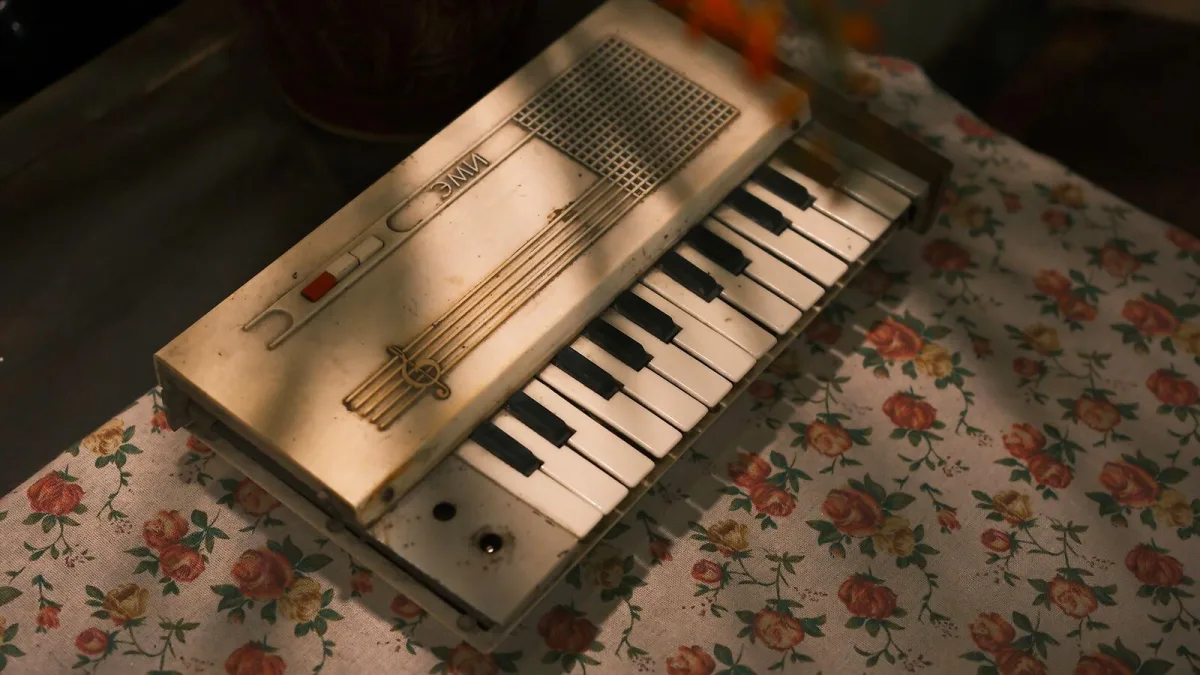
Every genre likes a clean origin story, and ambient music resists one more than most. It wasn't invented on a single date by a single artist so much as gathered together — named, framed and popularised by one composer after decades of separate traditions had already been quietly heading in the same direction. Here's how that actually happened.
Before It Had a Name: Satie's "Furniture Music"
Long before synthesizers existed, the French composer Erik Satie proposed the idea of musique d'ameublement — "furniture music" — sound intended to exist as part of an environment rather than something demanding an audience's full attention. It's frequently cited as ambient's earliest conceptual precursor: the notion that music could furnish a room the way a chair or a lamp does, present without insisting on being the centre of anything.
Tape, Concrète and Repetition
Through the mid-twentieth century, several separate strands developed techniques ambient would later absorb. Musique concrète built compositions directly from recorded and manipulated sound rather than notated instruments. Minimalism contributed repetition, gradual process and a comfort with limited musical material stretched over long durations. And Jamaican dub production, with its heavy use of echo, reverb and spatial separation in the mix, showed how much atmosphere a recording studio itself could generate.
German Electronic Music Opens Up Space
As electronic instruments became more accessible through the 1960s and 70s, German groups and composers — Tangerine Dream and Klaus Schulze prominent among them — began building long-form, sequencer-driven music with a genuinely cosmic, exploratory feel. Sustained tones and slowly evolving synthesizer timbres, difficult to achieve with acoustic instruments, suddenly became straightforward, and that technical shift mattered enormously to the ambient music that followed.
1978: Brian Eno Names the Genre
All of that groundwork came together when Brian Eno coined the term "ambient music" in 1978, framing it as music designed to create atmosphere while rewarding both casual and concentrated listening equally. His album Ambient 1: Music for Airports became the genre's defining early statement, though it had a direct predecessor: Discreet Music (1975) had already explored tape loops and slowly shifting textures years earlier. Eno's own description of the goal — music that "must be as ignorable as it is interesting" — remains the clearest single articulation of what ambient is actually trying to do.
The Ambient Series Continues
Eno's original numbered Ambient sequence expanded the idea across several releases: Ambient 2: The Plateaux of Mirror, made with Harold Budd, transformed sparse acoustic piano through sustain and spacious production; Ambient 3: Day of Radiance brought zither player Laraaji's bright, improvisatory sound into the series; and Ambient 4: On Land pushed further into environmental sound and ambiguous, less conventionally "musical" texture. Together they mapped out just how differently the same underlying principles could sound. Our guide to essential ambient albums looks at several of these in more depth.
Ambient Meets Club Culture
Through the 1980s and 90s, ambient expanded well beyond its meditative origins. The Orb connected ambient textures with dub-derived effects, sampling and dance music, while Aphex Twin's Selected Ambient Works 85–92 became a major reference point for ambient techno and home-produced electronic music alike. The KLF's Chill Out pushed the form into a sample-based, travelogue-like listening experience. Related strands of ambient music — isolationism, new age, drone and dark ambient — all took shape in this same stretch, each pulling the core principles in a different direction. Our guide to ambient's subgenres untangles how those branches actually differ from one another.
The Bottom Line
Ambient music's history isn't a straight line from one inventor forward — it's several traditions converging, then branching out again once they'd been given a name. Understanding that lineage makes the genre's current variety, from meditative drone to dancefloor-adjacent ambient techno, feel like a natural continuation rather than a set of unrelated scenes. For where to actually start listening, our guide for newcomers and our piece on essential artists are the natural next stops.




Comments