


Ernie Ball Strings roundup
The Best Ernie Ball Strings for the Money
Best value isn't the cheapest set on the shelf — it's the right tier for how you play. Here's how the range actually stacks up on cost-per-play.
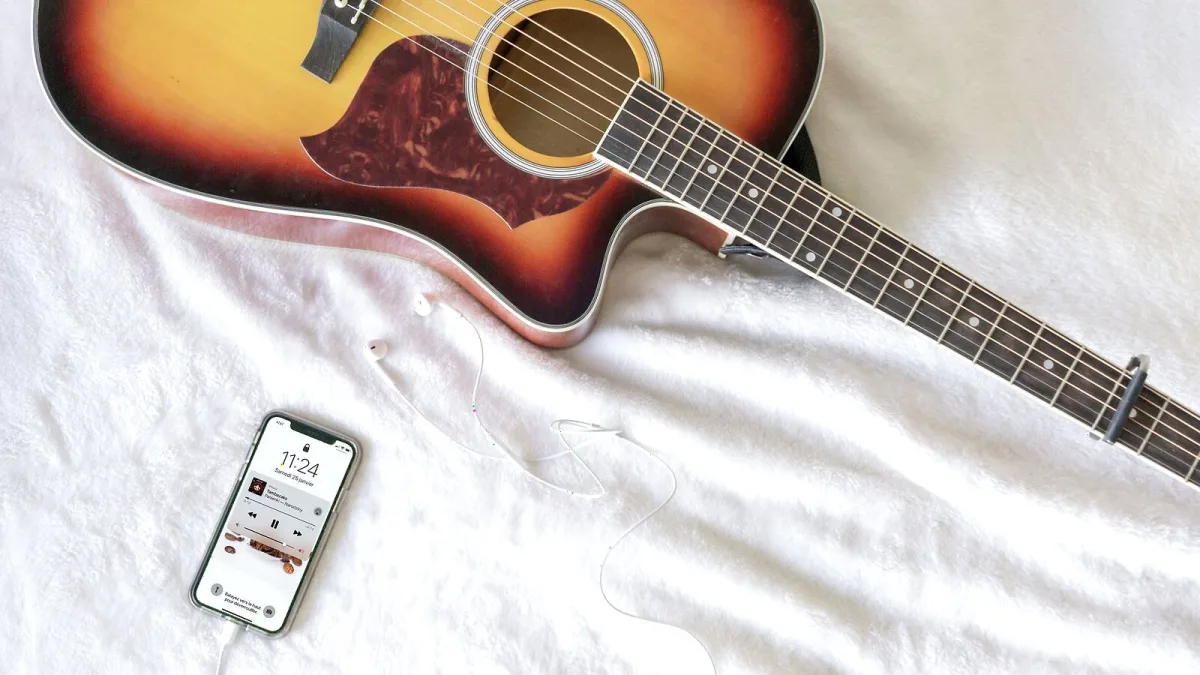
"Best for the money" is a phrase that gets thrown around a lot, so let's define it properly first: it means the lowest cost per useful hour of playing, not the lowest price on the shelf. A cheap set that snaps in a week isn't good value, and an expensive set you don't actually need isn't either. Here's how the different Ernie Ball strings ranges stack up once you do that maths properly.
Why Value Depends on What You're Actually Doing
Every string in this range shares the same basic engineering — a hex-shaped steel core, wrap wire wound around it, a brass ball end — so the cost differences between sets come down to the wrap material and any extra processing, not some hidden quality gap. That means the "best" pick genuinely depends on how hard you play, how often you change strings, and what you're listening for tonally. Treat everything below as tiers of value for different needs, not a ranked league table.
Best All-Rounder: Super Slinky Nickel Wound
For most electric guitarists, the standard .009–.042 Super Slinky nickel set is the best value in the entire line-up, simply because it's the one you're least likely to need to replace with something else. Nickel-plated steel wrap wire gives a balanced tone that works across clean and driven amp settings, and the .009 gauge is light enough for comfortable bending without feeling flimsy. There's no premium here, no gimmick — just a well-proven design that's been refined since 1962.
Best Budget Approach: Buy the Standard Sets in Multiples
If you're purely optimising for pence-per-string on Ernie Ball strings, the trick isn't finding a cheaper brand — it's buying standard nickel-wound sets in three- or ten-packs rather than singly. The per-set cost usually drops noticeably, and because you're not paying for coating, reinforcement or a signature name, you get the same core engineering as the premium ranges for less. This is genuinely the best value option for anyone who changes strings often and doesn't need extra durability.
Best Upgrade for String-Breakers: Paradigm
Here's where the technical case for paying more actually holds up. Paradigm strings use reinforced plain strings and higher-strength core wire, with Ernie Ball citing up to 35% greater tensile strength and up to 70% greater fatigue strength than its standard construction. If you genuinely snap strings — mid-gig, mid-practice, wherever — the maths works in your favour even at a higher unit price, because you're not buying a replacement set as often. If you rarely break a string, this upgrade buys you nothing.
Best Value for Tone-Chasers: Cobalt
Cobalt wrap wire produces a brighter, higher-output signal into magnetic pickups than standard nickel, without the premium that a lot of "boutique" wrap materials carry elsewhere in the market. If you've been eyeing a pickup upgrade purely for more clarity and output, trying a cobalt set first is the cheaper experiment — same core construction, different metallurgy, and a genuinely audible difference through most amps.
Best Bass Value
Bass players get the same logic. Super Slinky Bass (.045–.100) and Regular Slinky Bass (.050–.105) nickel sets are the sensible default, covering most tunings and playing styles without pushing you toward flatwound or cobalt options you may not need. Flatwounds are worth the extra outlay only if you specifically want that smoother, quieter feel for jazz or soul lines — otherwise you're paying for a texture you won't use.
Best Acoustic Value
Acoustic buyers get a similar spread across the Ernie Ball strings catalogue, and the same principle applies: pick the alloy for the tone you want, not the most expensive tin on the shelf.
For acoustic players, standard Earthwood phosphor-bronze sets (roughly 92% copper, 7.7% tin and 0.3% phosphorus by Ernie Ball's own figures) deliver a warm, balanced tone at a sensible price. The newer Bell Bronze line, developed with John Mayer, is a genuinely different alloy rather than a re-badged version of the same string — worth trying once you know you like the standard range, but not the place to start on a budget.
Where the Premium Doesn't Pay Off
The 2026 signature sets for Slash and for Metallica's James Hetfield are well engineered, but they're built around specific gauges and constructions chosen for those players' hands, not yours. Unless that exact spec happens to match what you already play, you're paying a name premium for a technical difference you may never feel. For most players, a standard or Paradigm set in the right gauge gets you 95% of the way there for considerably less.
If you'd rather work out gauge and material from first principles before you buy, our buyer's guide covers that in detail, and our full overview has the history behind the whole range. New to all this? Start with our beginner's guide instead, and if a set keeps letting you down, our piece on common mistakes is worth a read before you spend more.
The Bottom Line
Value isn't a single set — it's matching the right tier of Ernie Ball strings to what you actually need. Get that match right, and the "cheap" nickel set is often the best-value pick in the whole range; get it wrong, and even the most expensive signature set is money spent solving a problem you didn't have.






Comments