


Parlour Guitar article
Parlour Guitar for Beginners: A Complete Guide
Small, comfortable and honest about your technique — here's why a parlour guitar can be a brilliant first instrument, and how to pick a good one.
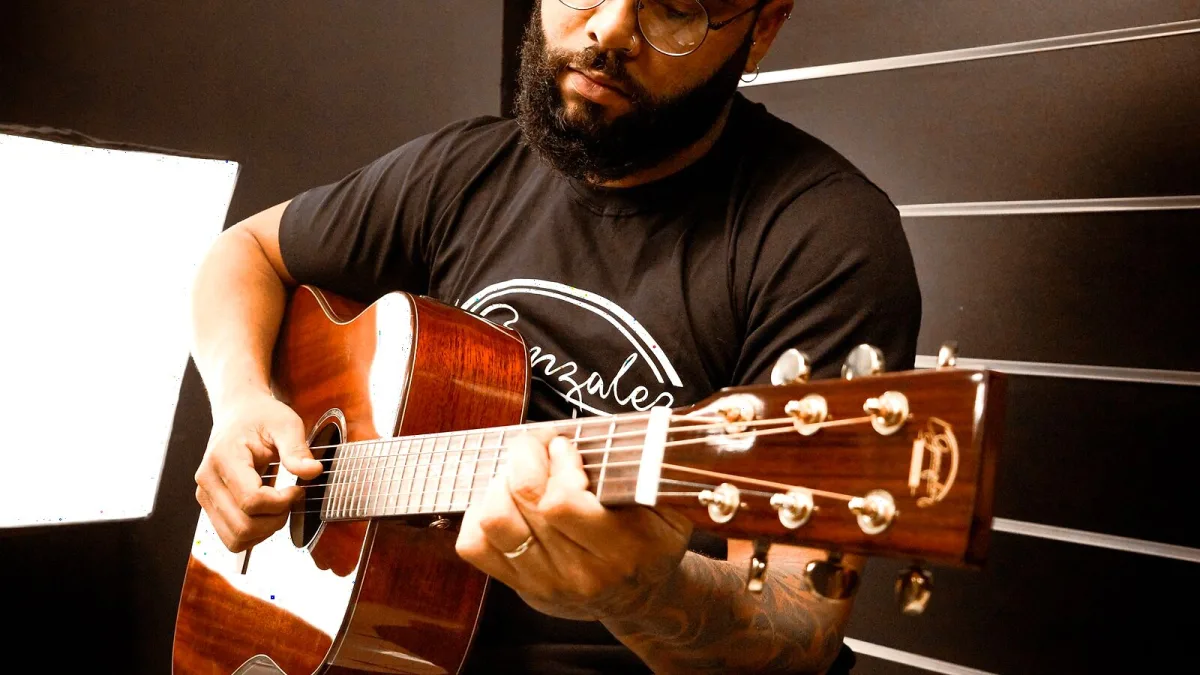
Starting guitar and wondering whether a parlour guitar is the right first step? Here's the honest answer: it can absolutely be a brilliant beginner guitar, and there are a few really good reasons why — but nobody tells you the bits that actually matter when you're picking one up for the very first time. Let's fix that.
Why a small body is genuinely great for beginners
A parlour guitar is a small-body acoustic — narrower waist, smaller lower bout, altogether a more compact instrument than the big dreadnought shape most people picture when they think "acoustic guitar." That size difference isn't just cosmetic. If you've got a smaller frame, shorter arms, or you're introducing a younger player to guitar, a full-size dreadnought can genuinely feel like wrestling furniture. A parlour sits on your knee properly, doesn't dig into your forearm, and lets you actually focus on your left-hand shapes instead of fighting the instrument's size.
The shorter scale length helps too — parlours often run around 24 to 25 inches versus the 25.4 inches on a lot of full-size steel-strings. Shorter scale means the frets sit a little closer together, which can make early chord shapes and stretches noticeably less of a fight on fresh fingers.
Don't assume small automatically means easy
Here's the bit that catches people out, though: a smaller body doesn't automatically mean a slim, beginner-friendly neck. Nut width and neck profile are completely separate specs from body size, so two parlours that look identically dinky can feel totally different under your fretting hand. If you can, go and physically hold a few before buying — and if you're ordering online, actually read the neck width in the spec sheet rather than assuming "small guitar = small neck."
What you'll actually hear
Manage your expectations on sound, and you'll love what you get. A parlour isn't going to boom like a dreadonought — it trades raw volume and deep bass for something else: a focused, clear midrange and genuinely lovely note separation. Every note you play stays distinct rather than blurring into a wash, which is honestly a gift when you're still learning to hear your own mistakes. You'll notice sloppy fretting or a muted string far more clearly on a parlour than you would buried in a bigger, boomier guitar — which sounds like a downside but is actually brilliant for building good technique early.
Your first few weeks: what to actually do
- Get it properly set up. A cheap guitar with a good setup plays better than an expensive one that's never been touched. Ask the shop to check the action before you take it home.
- Learn open chords first. The focused midrange of a parlour makes basic open chords — G, C, D, Em — sound genuinely satisfying early, which keeps you motivated.
- Try fingerpicking sooner than you think you're ready. Parlours are brilliant for fingerstyle because of that note separation, so don't wait until you're "good enough" — start experimenting with picking patterns from week one.
- Tune it properly, every single time. A guitar out of tune sounds bad regardless of body size — get a clip-on tuner and use it religiously.
12-fret or 14-fret — does it matter for a beginner?
You'll see parlours described as either 12-fret or 14-fret, referring to where the neck joins the body. Honestly, for your first few months this barely matters — you'll be living in open position down near the nut regardless. A 12-fret neck gives a slightly warmer, more centred tone; a 14-fret neck gives you a bit more room if you start venturing up the neck sooner. Don't let this spec decide things for you at beginner level — comfort and setup quality matter far more.
Common beginner worries, sorted
| Worry | Reality |
|---|---|
| "It's too quiet to practise properly" | It's quieter than a dreadnought, not silent — plenty loud enough for bedroom practice and small-room playing |
| "It looks like a toy guitar" | Small isn't the same as cheap or child-sized; plenty of serious, all-solid parlours exist at every price point |
| "I'll outgrow it" | You might want a bigger guitar eventually for volume, but you won't outgrow the format itself — plenty of experienced players keep a parlour for life |
Where to go from here
Once you've got the basics down and you're ready to actually shop for one, our complete buyer's guide to parlour guitars breaks down solid top versus laminate and everything else worth checking before you spend your money. And if you want the fuller story of where this guitar shape comes from and why it sounds the way it does, our ultimate guide to parlour guitars is a genuinely fun read.
The bottom line
A parlour guitar makes a fantastic first guitar for a lot of players — comfortable to hold, encouraging to play, and honest about your technique in a way that actually helps you improve faster. Just don't buy on size alone: check the setup, check the neck, and get stuck into those first chords. And once you've settled in, take a look at our guide to common parlour guitar mistakes to avoid — it'll save you from a few habits that are much easier to avoid early than fix later.






Comments