


Pick Up Humbucker article
Pick Up Humbucker for Beginners: A Complete Guide
You don't need a physics degree to buy and set up a humbucker properly. Here's what genuinely matters first.

If you've just heard the words "Alnico," "PAF" and "coil-splittable" all in one sentence and felt your eyes glaze over, welcome — you're exactly who this guide is for. You do not need a physics degree to understand a humbucker well enough to buy the right one and set it up properly. Let's strip it right back to what actually matters first.
The Only Two Things You Need to Decide About a Humbucker First
Before anything else, work out two things: which position (neck or bridge) you're dealing with, and roughly how much output you want. That's genuinely most of the decision. A neck one is usually warmer and lower output; a bridge one is usually brighter and hotter. If you play rock, blues or classic styles and don't yet know what you love, a medium-output pickup in a calibrated set — meaning the neck and bridge are designed to balance each other — is the safest, most forgiving place to start.
Ignore the Humbucker Magnet Debate for Now
You'll see endless arguments online about Alnico versus ceramic magnets. Broadly, Alnico tends toward a rounder, more dynamic character, while ceramic tends toward a firmer, more immediate one — but plenty of pickups break that pattern entirely. As a beginner, don't let this decide your purchase; pick based on output and position first, and let your ear tell you about magnets once you've actually got more experience comparing pickups directly.
Setting Pickup Height: Your First Real Skill
Once it's installed, height is the one adjustment that changes tone, volume and feel the most — and it's something you can learn to do properly yourself with nothing more than a ruler and a screwdriver.
- Fret the low and high strings at the highest fret on the neck.
- Measure the gap between the string and the top of the pickup's pole pieces.
- Start at the manufacturer's recommended height rather than guessing.
- Raise it slightly for more output and attack.
- Lower it slightly for a more open sound, cleaner bass and less magnetic pull on the string.
- Balance the neck and bridge volumes against each other by ear, adjusting a little at a time.
Go slowly and change one side at a time. Raising a humbucker too close to the strings can cause a strange, warbling sustain as the magnet's pull fights against the string's natural vibration — if that happens, back it off a touch.
Humbucker Words You'll Keep Bumping Into
| Term | What it actually means |
|---|---|
| PAF | "Patent Applied For" — shorthand for a vintage-style, moderately wound pickup |
| Alnico / Ceramic | The two common magnet types, generally rounder versus firmer in character |
| DC resistance | A rough winding indicator, not a reliable measure of output on its own |
| Coil split | Using only one coil of a two-coil pickup for a thinner, single-coil-like sound |
| F-spaced | Wider pole-piece spacing for guitars with a wider string spread at the bridge |
None of this needs memorising up front. It'll click naturally the first few times you actually bump into each term while shopping or adjusting your own guitar.
Ask Before You Solder
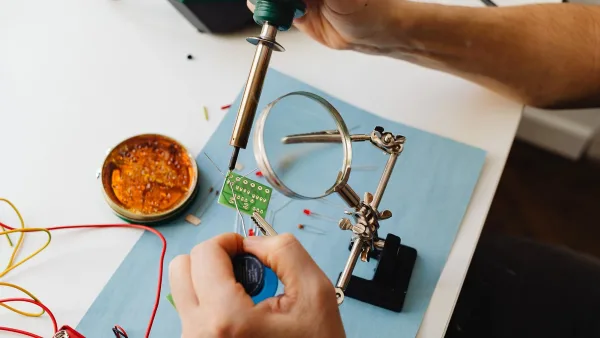
If your guitar is worth anything to you, don't treat a humbucker installation as a casual weekend job unless you're genuinely confident with a soldering iron and know your way round basic guitar electronics. A poor solder joint or a mixed-up wire can cause hum, dead switches or worse, and a professional install is usually inexpensive compared with the cost of the pickup itself. There's no shame in leaving this bit to someone experienced while you're still building confidence.
You Don't Need the Fanciest Option
A well-regarded mid-range humbucker from an established maker will serve you brilliantly while you're still working out what you actually like. Save the boutique, hand-wound options for later, once you've got enough hands-on experience to know exactly what you're chasing. Our full humbucker explainer is worth reading once the basics feel comfortable, and our buyer's guide is there when you're ready for an actual purchase decision.
Don't Worry About Getting It "Wrong"
A humbucker swap is rarely a disaster — most changes are reversible, and even a "wrong" choice teaches you something real about what you actually want next time. Our piece on common humbucker mistakes to avoid is worth a read before you buy, purely to skip a few of the more annoying, avoidable ones.
The Bottom Line
Start with humbucker position and output, ignore the magnet arguments until you've got more experience, and learn to set your own pickup height properly — that's genuinely most of what separates a confident humbucker buyer from an overwhelmed one. Everything else in this corner of guitar gear builds on those basics.





Comments