


Tanglewood Guitars roundup
Tanglewood Guitars: A Complete Buyer's Guide
What to actually check before buying a Tanglewood, and how to avoid paying for specs you won't use.

Buying an acoustic guitar isn't complicated, but it's easy to get distracted by series names and finish photos before checking the things that actually matter. This is a practical, criteria-first way to shop for Tanglewood guitars: what to check, what the specs actually mean, and how to avoid paying for features you won't use.
Start With What You'll Actually Use It For
Before comparing any specs, work out the job. A guitar for quiet bedroom practice has different priorities from one you'll gig with. If you're plugging into a PA, an electro-acoustic model with reliable electronics matters more than tonewood pedigree. If it's staying at home, you can put more of the budget into the top wood and less into onboard electronics you'll never switch on.
Solid Top or Laminate? Why It Actually Matters
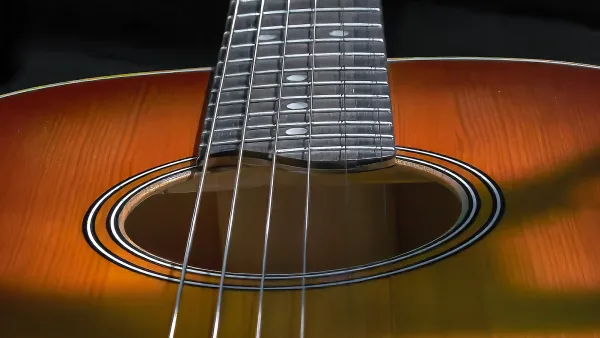
This is the technical detail worth understanding properly, because it explains most of the price difference between Tanglewood guitars at different levels. A solid spruce top is thin, resonant and responds well across a wide dynamic range — quiet fingerpicking and hard strumming both come through clearly, and the tone tends to open up as the wood ages. A laminated top is more stable, cheaper to produce, and more forgiving if you can't keep it in a perfectly controlled environment.
Back and sides follow similar logic: mahogany emphasises midrange and note fundamentals, giving a warm, direct sound, while rosewood is traditionally associated with more low-end and treble extension. Neither is objectively better — they're different tools for different playing styles.
Body Shape Changes the Sound of Tanglewood Guitars More Than You'd Think
A dreadnought gives you volume and low-end punch, which suits strummers and anyone playing without amplification in a group. A folk or Super Folk body is more balanced and comfortable for extended playing sessions, often at a slight cost to raw projection. A jumbo adds even more air and bass. If you've only ever played one shape, try a couple of others before assuming your first guitar's shape is the right one for you.
Electronics: Do You Actually Need Them?
Where fitted, Tanglewood has used electronics from suppliers including Fishman and LR Baggs, and the exact preamp and pickup combination varies by series and by model year — don't assume the series name alone tells you what's inside. If you'll only ever play unplugged, paying extra for electronics is money spent on a feature you won't use. If you're playing anywhere with a PA, test the onboard tuner, the volume and tone controls, and the output jack in person rather than trusting a spec sheet.
A Practical Checklist Before You Buy
- Confirm whether the top is solid or laminated, and check the back and sides separately — they're not always the same.
- Sight down the neck for obvious warping, and check the action isn't uncomfortably high.
- Look for bridge lifting, doming ("bellying") around the bridge, or cracks near the neck joint.
- On an electro-acoustic, test every control, including the onboard tuner.
- Confirm the truss rod turns smoothly if you're able to check it.
- Check fret wear carefully on any used instrument.
- Compare the actual guitar in front of you against the model's current official spec — regional versions can differ.
Budget a little extra for a professional setup, especially on lower-priced or second-hand Tanglewood guitars — it makes a bigger difference to playability than most people expect.
What You Get at Each Price Level
At the lower end, expect laminated construction, simpler finishes and fewer frills, which is entirely reasonable for a first guitar. Moving up, you'll typically find a solid top paired with laminated back and sides — a sensible middle ground. Further up again, ranges such as Premier and Sundance move to all-solid construction, generally with more attention paid to setup and finishing detail. None of that means you must spend more than you need to — it just tells you what you're paying for at each step.
The Bottom Line
Buying Tanglewood guitars sensibly comes down to matching the specification to what you'll actually do with the instrument, not chasing the most expensive series you can justify. For a wider view of how the whole range fits together, our complete guide to Tanglewood guitars is a good companion piece, and our common buying mistakes article covers the specific errors this checklist is designed to prevent.




Comments