


Music Man article
Music Man Explained: Features, Types and Tips
From the StingRay's game-changing active EQ to a guitar range built almost entirely around artist collaborations: what the name really covers.
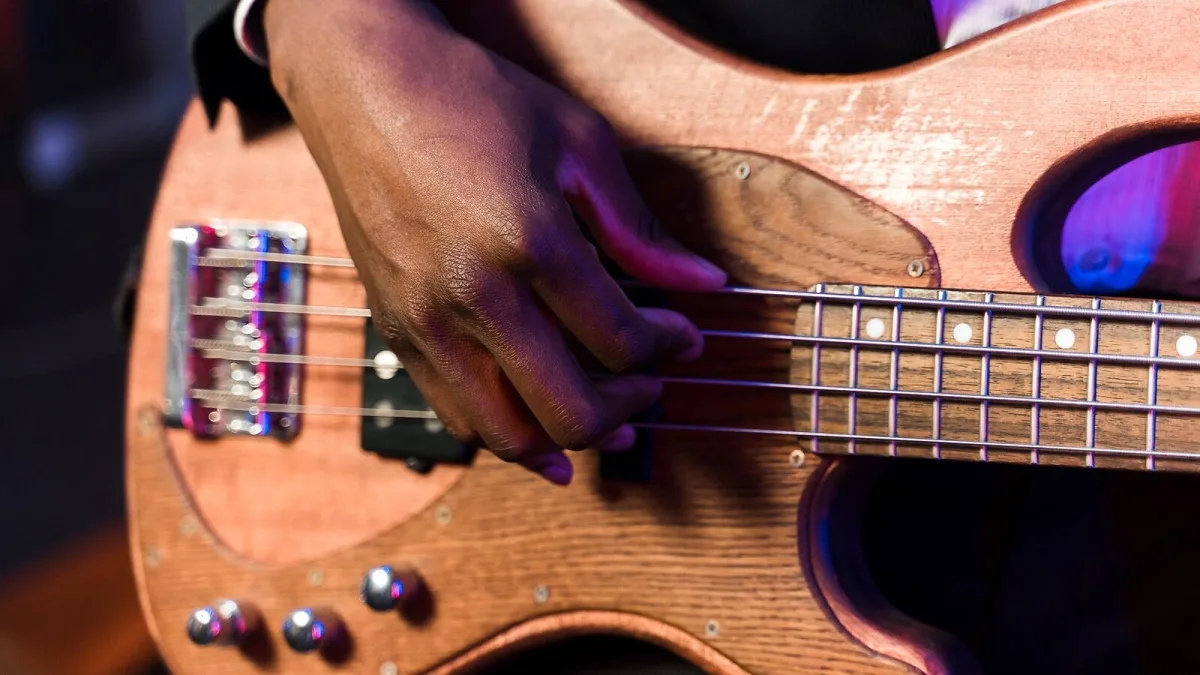
Say "Music Man" to most guitarists and one thing snaps to mind: that unmistakable StingRay bass tone, all bark and punch. Say it to a bassist, though, and you'll get an equally passionate answer about neck feel, active electronics and build quality. Both are right — this brand has been quietly shaping how guitars and basses are built for over fifty years. Here's what the name actually covers, how the instruments work, and why players stay loyal for decades.
What Is the Brand, Actually?
Music Man was founded in 1972 by Tom Walker and Forrest White, with Leo Fender himself involved once his Fender non-compete period had run its course. Ernie Ball bought the company in 1984, and the modern brand is properly styled Ernie Ball Music Man — though most players still just shorten it in conversation. That history matters, because it explains why the instruments carry a very specific pedigree: Fender-adjacent engineering thinking, built to a noticeably higher standard than the mass-market instruments most of us start on. It also explains the slightly confusing naming: you'll see the full brand name, the shortened version, and the abbreviation "EBMM" used more or less interchangeably across reviews, forums and the manufacturer's own materials, and they all point at the same California-built instruments.
The StingRay: The Bass That Built the Reputation
If this brand has one defining product, it's the StingRay bass, launched in 1976. It was among the first production four-string basses with onboard active equalisation — a battery-powered preamp built into the instrument that boosts or cuts specific frequency bands, rather than relying purely on passive tone controls. Paired with a chunky bridge-position humbucker, that combination gives the StingRay its signature sound: punchy, articulate, and impossible to lose in a busy mix. It's why the StingRay became the go-to choice for funk, disco, pop and session bass work almost from day one. Modern versions, including the StingRay Special, have kept that same basic recipe while lightening the hardware and reworking the preamp — evolution rather than reinvention, which is exactly what you want from a design this well proven.
Basses and Guitars: Genuinely Different Stories
It's a common mistake to assume the name means one sound or one instrument. It doesn't. The current bass range runs from the original StingRay through the StingRay Special, StingRay Short Scale, Bongo, Cutlass and DarkRay — each with its own electronics and ergonomics. The guitar side is arguably even more varied, built almost entirely around named collaborations with individual players. There's no single unified tone on the guitar side the way there arguably is on bass.
Signature Names Worth Knowing
Much of the current guitar range exists because of long-running artist partnerships, and knowing the names helps you navigate the range fast:
| Model | Associated player | What it's built for |
|---|---|---|
| Luke | Steve Lukather | Versatile switching, session and studio work |
| Majesty | John Petrucci | High-gain playing, extended upper-fret access |
| Valentine | James Valentine (Maroon 5) | Modern construction, broadly usable pickups |
| Kaizen | Tosin Abasi | Multi-scale, extended-range technical playing |
| St. Vincent | Annie Clark | Compact body, unconventional ergonomics |
None of these are cosmetic badge jobs, either — scale length, pickup architecture, switching and neck shape genuinely differ from model to model. Tosin Abasi's Kaizen is a good example of how far that can go: a multi-scale fretboard, a thin double-cutaway body and an "infinity radius" concept aimed at changing how the fretboard feels under the fingers as you move across the strings. If you're weighing up which of these actually suits you, our complete buyer's guide goes through the practical side of choosing.
Sterling by Music Man: The Accessible Sibling
Not every instrument carrying the name is built in California. This more affordable line is licensed under the same name but built to a different specification and in a different facility. It shouldn't be assumed to share identical materials, electronics or fretwork with the US-built range — think of it as inspired by the flagship instruments rather than a budget clone of them, built to bring the shapes and general playing feel within reach of a much wider budget.
A Few Terms Worth Knowing
- Active electronics — a battery-powered onboard preamp that boosts or cuts frequencies, giving more tonal control than passive circuitry alone.
- Humbucker — a pickup design using two coils to cancel unwanted hum, generally fuller and punchier than a single-coil.
- Finger ramp — a raised surface near the pickup that supports consistent fingerstyle bass technique.
- Multi-scale — a fretboard where each string has a slightly different scale length, aimed at improving tension and feel across the whole range.
The Bottom Line
Music Man earned its reputation the unglamorous way: solid engineering, genuine artist collaboration, and one genuinely era-defining bass design. Whether you're drawn in by the StingRay's growl or a signature guitar built around a specific player's needs, it's worth understanding just how different the models really are before you commit. New to all this? Our beginner's guide is the friendlier starting point, and our common mistakes to avoid piece is worth a read before you spend anything.






Comments