


Active Subwoofers roundup
Active Subwoofers: A Complete Buyer's Guide
Buying one properly means resisting the urge to chase the biggest driver or the highest wattage number on the box. Here's what actually matters.
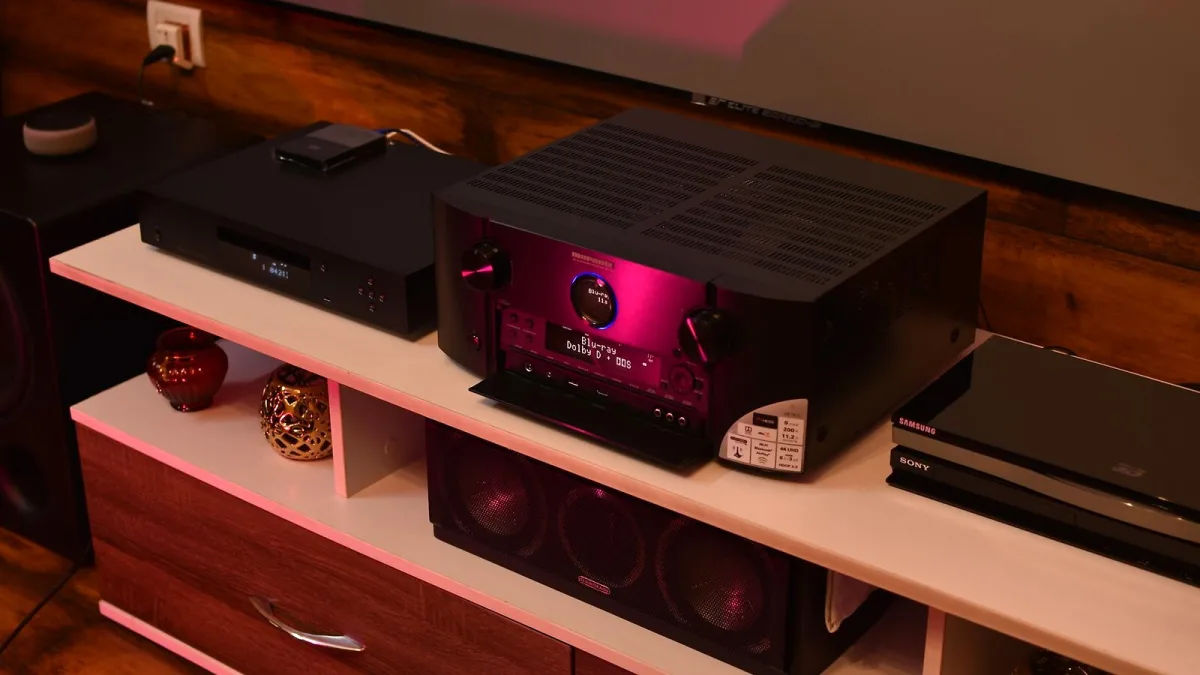
Buying a subwoofer properly means resisting the urge to just chase the biggest driver or the highest wattage number on the box. What actually matters for a subwoofer shifts depending on whether you're extending a pair of nearfield monitors, filling a small venue, or building a home cinema — and getting that context right first will save you from an expensive mismatch.
Match the Subwoofer to the Job First
| Application | Prioritise |
|---|---|
| Home hi-fi and cinema | Low noise, compact size, adjustable crossover and phase, auto-on behaviour |
| Music-production studio | Flat documented response, low distortion, accurate crossover integration, a bypass switch for checking mixes without deep bass |
| DJ and small live systems | Maximum SPL, limiter behaviour, rugged build, crossover presets, PA compatibility |
| Touring and larger live sound | Output and headroom, reliability, rigging provisions, networked DSP, cardioid options |
Reading a Subwoofer Spec Sheet Properly
- Frequency response. A stated tolerance like ±3 dB tells you far more than a bare number range. "20 Hz to 200 Hz" alone doesn't say how flat that response actually is.
- Driver size. Compact 6.5 to 8-inch drivers suit nearfield and small rooms; 12, 15 and 18-inch drivers move more air for larger spaces. Diameter alone doesn't determine output — enclosure volume, excursion and amplifier power all matter just as much.
- Amplifier power. Peak, program and continuous/RMS figures aren't directly comparable across brands unless you know the measurement conditions. Look for accompanying maximum SPL, distortion figures and limiter behaviour instead of trusting wattage alone.
- Crossover, phase and delay. These determine how cleanly it hands over to your main speakers, and arguably matter more for real-world sound quality than any single headline spec.
Connections: Check Before You Buy, Not After
Typical options include balanced XLR, TRS on some studio-oriented models, unbalanced RCA on consumer gear, and speaker-level inputs on certain hi-fi units. A common studio signal path routes your interface or monitor controller into the unit first, then out to your main monitors already high-passed — so check that your chosen subwoofer actually supports that routing before assuming it'll slot neatly into your existing setup.
One or Two?
A pair of subwoofers can produce more consistent bass across a room by exciting room modes from different positions, though that's not a guarantee of smooth response on its own — placement and alignment still matter. In live sound, multiple units increase output and coverage, but how they're physically arranged matters more than simply adding more boxes; closely spaced or properly arrayed units generally behave more predictably than widely separated ones.
Don't Skip Placement in Your Buying Decision
It's tempting to treat this purely as a spec-sheet decision, but placement and room interaction affect the result at least as much as the subwoofer itself. Before buying, think honestly about where it will actually sit — corner placement boosts output but can worsen unevenness, while a front-wall position or a measured placement often behaves more predictably. Our piece on common mistakes to avoid covers the placement and setup errors that trip people up most.
New or Secondhand?
A used subwoofer can be genuinely good value, particularly for studio use where the underlying design ages slowly. Check the driver for visible damage, listen for rattles or buzzing at moderate volume, and confirm the amplifier and any DSP still power on and behave properly. Beyond that, a subwoofer that's been sensibly looked after has no reason to perform worse than a new one of the same model.
The Checklist Before You Buy
- Confirm the application priorities above actually match how you'll use it.
- Check frequency response tolerance, not just the headline range.
- Compare maximum SPL and distortion rather than wattage alone.
- Verify your connection format is genuinely compatible with your existing gear.
- Think about placement and room size before committing to driver size.
The Bottom Line
Buy your subwoofer for your actual application, then let frequency response, connections and placement narrow the field — not the biggest number on the box. If all of this still feels like a lot, our beginner's guide strips it back to basics, and our full explainer is worth reading for the complete picture of how these systems actually work.






Comments