


Tanglewood Acoustic roundup
Tanglewood Acoustic: A Complete Buyer's Guide
Once you know it isn't just one guitar, the next question is how to pick the right one. Here's the practical version, not the marketing copy.
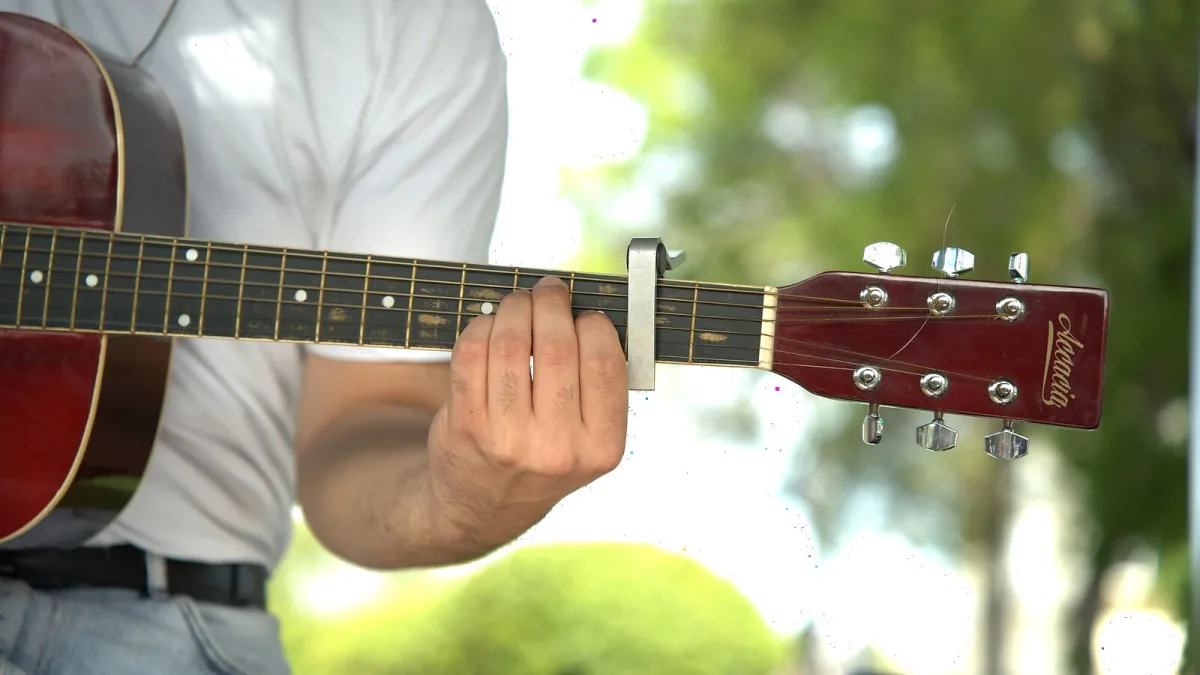
Once you know a Tanglewood acoustic isn't just one guitar, the next question is obvious: how do you actually pick the right one out of such a sprawling catalogue? Here's the practical version, built around what genuinely matters rather than the marketing copy on a hangtag.
Start With Body Size on a Tanglewood Acoustic
This is the single biggest decision, and it's about feel and sound rather than status. A dreadnought gives you strong projection and bass, great for strumming and accompaniment. Orchestra and folk shapes trade a bit of that low end for balance, which tends to suit fingerstyle and vocal accompaniment better. Parlour bodies are smaller still, with a focused midrange and genuinely vintage character. If portability matters more than volume, look at the travel-sized models instead.
Read the Wood Spec Properly
Don't take "solid top" and "all-solid" as interchangeable — they're genuinely different products. A solid spruce top generally gives a broad, articulate response, while solid mahogany tops lean warmer and more compressed. Laminated back and sides are common on the mid-range and keep costs sensible without ruining the tone; only the Premier and Tanglewood Great Britain lines commit to all-solid construction throughout.
What Real Specs Actually Look Like
It helps to see an actual example rather than generic marketing language. The TW40-O-AN, a documented Sundance-family model, pairs a solid spruce top with laminated mahogany back and sides, a rosewood fingerboard and bridge, scalloped X-bracing and a 25.6-inch scale. A comparable Java-series orchestra model has gone further with solid mahogany top, back and sides, plus a B-Band pickup and onboard three-band EQ. Two guitars can share a general body shape and price bracket while differing enormously in wood, electronics and country of manufacture — which is exactly why checking the actual spec sheet matters more than the series name.
Electronics: Compare, Don't Assume
If you want an electro-acoustic model, look past the word "pickup" and compare what's actually fitted — Fishman and B-Band systems both appear across the range, sometimes with a built-in tuner, EQ and presence control, sometimes with a simpler setup. Treat "electro-acoustic" as a category, not a guarantee of any particular feature set.
Matching Model to Player
| Player or use | Suitable direction |
|---|---|
| Beginner on a budget | Discovery, Strada or affordable Crossroads |
| General strumming | Dreadnought or Sundance folk/dreadnought |
| Fingerstyle and vocals | Orchestra, folk or parlour |
| Travel | Java or other compact models |
| Vintage tone and looks | Crossroads or Sundance Historic |
| Regular amplified performance | Electro-acoustic Sundance, Java or Premier |
Never Skip a Setup Check on a Tanglewood Acoustic
Action, neck relief, fret condition and saddle height affect playability more than almost any spec on paper, particularly on lower-priced instruments. Try before you buy wherever possible, and if buying online or second-hand, budget for a professional setup as part of the real cost.
Want the full backstory on the brand and its ranges first? Our complete guide covers that, and our value round-up is there once you've narrowed things down. Brand new to acoustic guitar? Our beginner's guide is the gentler starting point, and our common mistakes piece is worth a read before you buy.
The Bottom Line
Buying well here means reading the actual specification, not the series name. Match body size, wood and electronics to how you genuinely play, and the huge range stops being overwhelming and starts being useful.






Comments