


Guitar Knobs article
Guitar Knobs Explained: Features, Types and Tips
Guitar knobs do more than they look like — here is a clear rundown of types, materials, shaft fitting and what actually matters when choosing one.
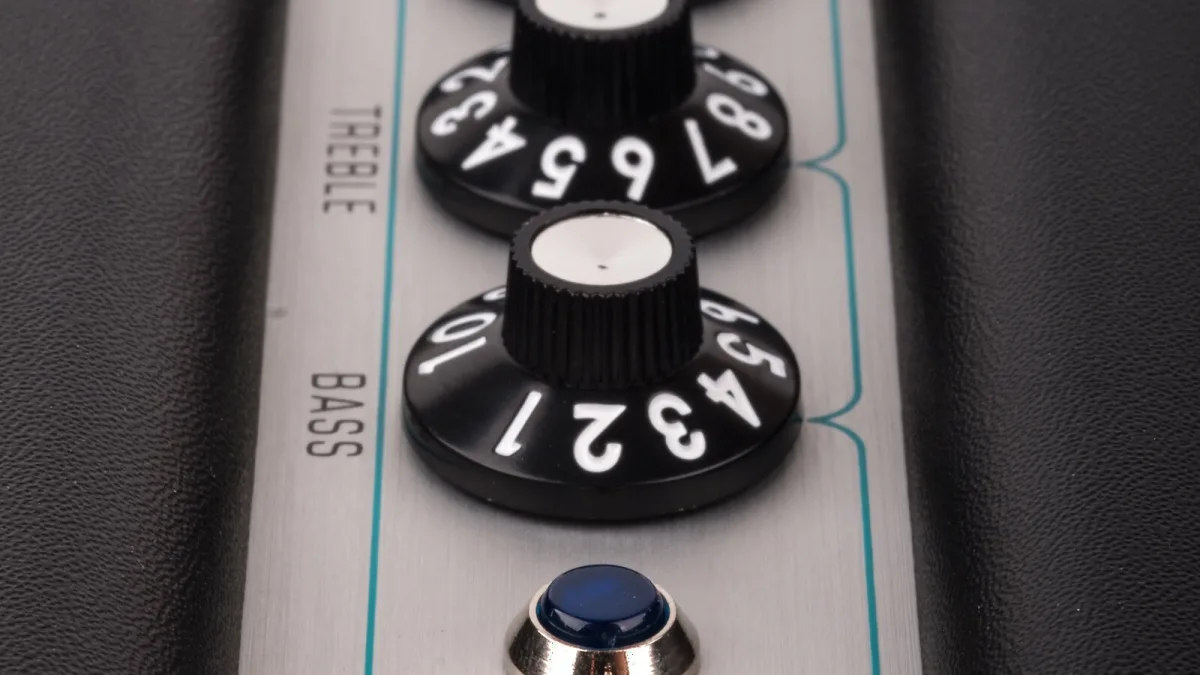
Guitar knobs are easy to overlook — they sit there on your guitar's body, you tweak them occasionally, and most players never give them much thought. But understanding what they actually do, what types exist and how to choose the right ones is genuinely useful, whether you are upgrading your instrument or just curious about the controls you have been poking for years.
What Guitar Knobs Do
Guitar knobs are the control knobs attached to the potentiometers (pots) on your guitar's control plate or body. Most electric guitars have at least one volume knob and one tone knob; many have more. Turning the volume knob adjusts the output signal level from the pickups. Turning the tone knob adds resistance that rolls off high frequencies — rotating it towards zero progressively darkens and mellows the sound.
The knob itself is just a physical interface — a cap that fits onto the pot shaft. The pot is the component doing the actual electronic work; the knob is what your fingers interact with. But the feel, size and look of the knob affects how you use the controls in practice, which is why they are worth knowing about.
Types of Guitar Knobs
The most common styles are:
- Dome knobs — a rounded, smooth profile, most associated with vintage Fender Stratocasters and Telecasters. They have a single marker line on the side and a clean, unfussy look. Easy to grip and adjust mid-play.
- Speed knobs — taller with a flared skirt and a larger diameter. Common on modern guitars, particularly those with high-output humbuckers. The skirt makes them easier to grab for quick, precise sweeps.
- Bell knobs (top-hat knobs) — flared, taller, with a visible pointer on the top surface. Classic on early Gibson Les Pauls and similar instruments. Tend to have a more substantial feel.
- Witch hat knobs — a variant of the bell knob with a more pronounced conical shape. Associated with Les Paul copies and certain vintage American electrics.
- Barrel knobs — small, cylindrical, often metal. Found on vintage instruments and certain boutique builds. Require more precision to adjust but have a compact, tidy appearance.
Materials
Control knobs are most commonly made from plastic (ABS or similar) or metal (aluminium, brass or chrome-plated steel).
- Plastic knobs — lightweight, inexpensive, available in every style and colour. The standard on most production guitars. They can crack over time but are cheap to replace.
- Aluminium knobs — heavier, more premium feel, common on higher-end and boutique instruments. They do not crack and hold their finish well. Some players feel the weight improves how the knob seats and responds.
- Brass knobs — heavier still, with a warm metallic appearance. Less common but popular in certain vintage-correct builds.
Fitting: Shaft Types
This is the part most people overlook when buying replacement knobs. There are two main pot shaft types, and you need to match your knob to your shaft:
- Split shaft (spline shaft) — the shaft has serrated ridges. Knobs push on without tools. Common on Fender-style guitars and most American-market instruments. Uses a push-on knob with a friction fit.
- Solid shaft — the shaft is smooth. Knobs attach using a set screw on the side of the knob. Common on Gibson-style instruments and most European pots. These knobs can be adjusted to a specific position.
Fitting a push-on knob to a solid shaft (or vice versa) will not work — or at least not reliably. Check your guitar's pot shaft type before ordering replacements.
Knob Indicator Positions and Markings
Most control knobs have some form of position indicator — a line, dot or number system. Some just use a marker line on the side; others have numbered dials (typically 1–10). Numbered knobs give you a precise reference for settings, which is useful in studio contexts where you want to recreate a particular sound. For live playing, the marker line is usually enough.
If you are thinking about upgrading or replacing your knobs, the complete buyer's guide covers everything to look for. Beginners should also read the beginner's guide for a gentler overview.
The Bottom Line
Guitar knobs are small but more consequential than they look — they affect tone, usability and aesthetics simultaneously. The two things that actually matter when replacing them are style (dome, speed, bell, etc.) and shaft fit (split or solid). Get those right and the upgrade will feel instantly at home on your instrument.





Comments