


Fender Guitar article
The Ultimate Guide to Fender Guitar
Seventy-odd years on, a handful of Fender shapes still cover almost every style of guitar music going. Here's the full picture.
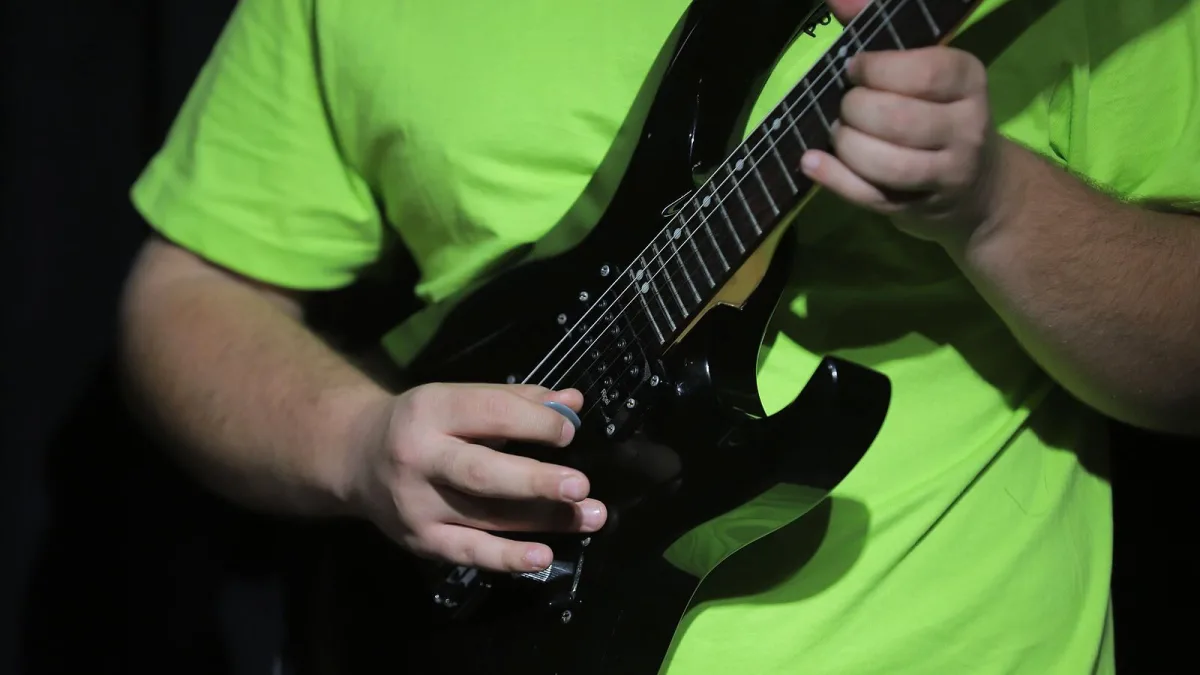
Ask a room full of guitarists to name the most influential brand in the instrument's history and you'll get one answer more than any other. A Fender guitar isn't just a piece of gear — it's the sound of country twang, Hendrix-era psychedelia, surf reverb and indie jangle, all coming out of a handful of shapes that have barely changed in seventy-odd years. Here's the full story, and how it all fits together.
From Amp Repairs to a Guitar Empire
Leo Fender founded his company in Fullerton, California, in 1946, originally building and repairing amplifiers. His background wasn't as a guitarist but as a practical engineer, and that mindset shaped everything that followed. In 1950 came the Esquire, an early single-pickup solid-body; by 1951 it had evolved into the Telecaster, initially known during development as the Broadcaster, and Fender calls it the first commercially mass-produced solid-body Spanish-style electric guitar. The Stratocaster followed in 1954, the Jazzmaster in 1958, and the Jaguar in 1962. CBS bought the company in 1964, before a group led by Bill Schultz took it back into independent hands in 1985 as Fender Musical Instruments Corporation.
The Line-Up: Five Shapes You Should Know
| Model | Pickups | Feel | Known for |
|---|---|---|---|
| Telecaster | Two single coils | Full scale, firm attack | Country, rock, blues, punk, indie |
| Stratocaster | Three single coils | Contoured body, tremolo | Blues, funk, rock, pop |
| Jazzmaster | Two wide single coils | Offset body, floating vibrato | Surf, indie, alternative, shoegaze |
| Jaguar | Two pickups, extensive switching | Shorter scale, offset body | Surf, garage, punk, alternative |
| Mustang | Two pickups | Short scale, compact | Beginners, smaller hands, alternative |
The Telecaster's slab body and bolt-on neck made it cheap and quick to build and repair, a sharp contrast to the carved, set-neck instruments it competed against. The Stratocaster added a third pickup and a contoured body for comfort and range. The Jazzmaster, oddly, was pitched at jazz players who mostly ignored it, before surf and later indie and shoegaze musicians made it their own instead.
What Actually Makes a Fender Sound Like a Fender
Traditional single-coil pickups are the common thread: clear, dynamic and articulate, though prone to hum in some electrical environments. Noiseless single coils aim to keep that character while cutting the hum, and humbucker or HSS layouts trade some of that clarity for extra output and thickness. Most traditional Fender electrics use a 25.5-inch scale length, with the Jaguar and Mustang running shorter for a different feel under the fingers. A bolt-on maple neck, whichever body it's attached to, remains the mechanical backbone of the whole range.
The Artists Who Shaped Its Reputation
A Fender guitar has never belonged to one genre. Jimi Hendrix, Eric Clapton and Stevie Ray Vaughan built very different careers on the Stratocaster; Bruce Springsteen and Keith Richards leaned on the Telecaster's directness; Dick Dale's surf sound and Kurt Cobain's grunge both passed through Jaguar and Mustang territory. Worth remembering, though: an artist's tone comes from amplifier, effects and technique as much as the guitar itself, so no single model deserves all the credit.
Where the Range Sits Today
Modern Fender guitars are organised broadly by price and origin: Squier covers entry-level instruments using Fender designs, Player and Player II are mainstream Mexican-made guitars, American Professional II and American Ultra II step up to US manufacturing and higher specifications, and the Custom Shop produces detailed vintage reissues and masterbuilt instruments. The Acoustasonic range takes a different approach entirely, blending acoustic and electric voices through onboard modelling. If working out which tier actually suits your budget sounds daunting, our complete buyer's guide breaks it down properly.
Still Going Strong at 75
2026 marked the 75th anniversary of the Telecaster and the Precision Bass, marked with commemorative activity including a documentary on the Telecaster's story. Seventy-five years on, the same basic formula — a solid body, a bolt-on neck and a couple of honest pickups — is still the backbone of the range. For newer players wondering where to start, our beginner's guide and our guide to the best value across the range are the natural next stops.
The Bottom Line
A Fender guitar earns its reputation through consistency rather than gimmickry: a handful of genuinely different shapes, refined rather than reinvented, that between them cover almost every style of guitar music going. Know your Telecaster from your Jazzmaster, and the rest of the range starts to make a lot more sense.





Comments