


Fretless Bass Guitars article
Fretless Bass Guitars Explained: Features, Types and Tips
Take the frets off a bass and you lose the safety net — here's what fretless bass guitars actually give you in return.
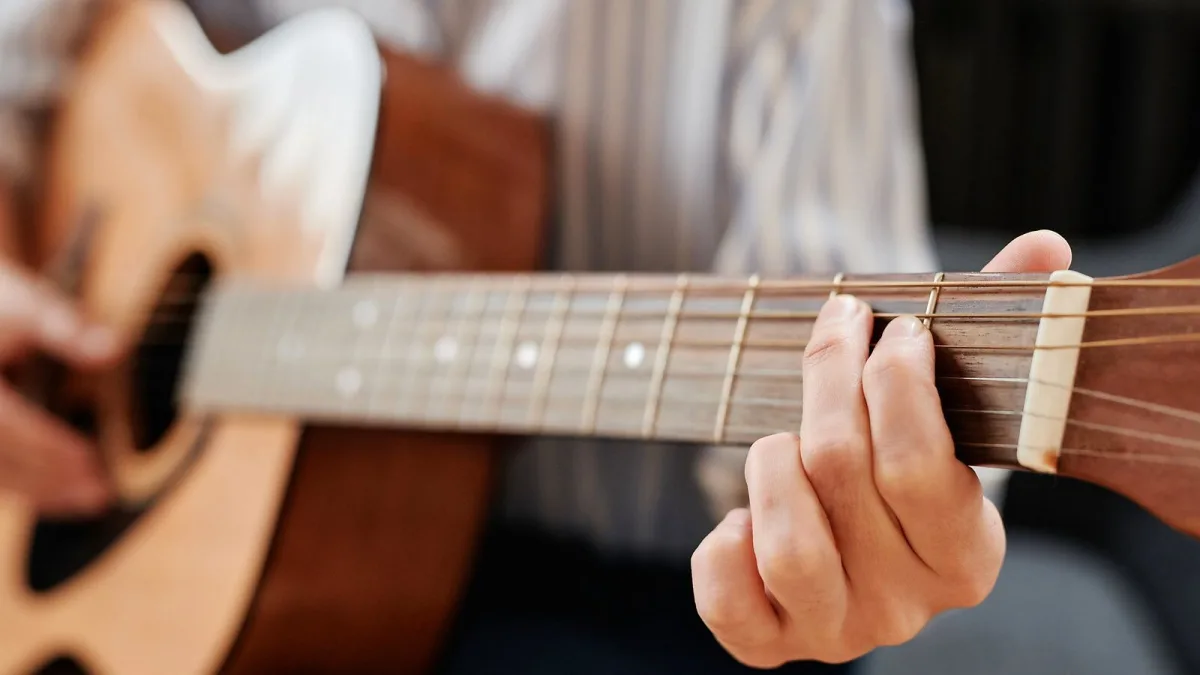
Take the frets off a bass and you don't just lose a few metal strips — you lose the safety net. What's left is an instrument that can slide, sing and croon in a way a fretted bass simply can't. Here's what fretless bass guitars actually are, how they work, and why players who fall for them rarely go back.
What Makes a Bass "Fretless"
On an ordinary bass, metal frets divide the fingerboard into fixed semitone steps — press behind a fret and the note is decided for you. On fretless bass guitars, there's nothing there. The string is stopped directly against bare fingerboard, and the player has to place each fingertip exactly where a fret would have been, by ear and by eye. It's the same basic principle as playing a double bass, cello or violin.
What That Actually Buys You
- Continuous pitch: you can glide smoothly between notes instead of stepping between them.
- Real vibrato: rolling the fretting finger moves the pitch above and below centre, cello-style.
- A vocal, singing tone: the string meeting wood rather than metal softens the attack.
- Microtonal inflection: you're not locked to the semitone grid at all, if you don't want to be.
The trade-off is obvious the first time you pick one up: nothing corrects you if your finger lands in the wrong place. Intonation becomes entirely your responsibility.
Lined or Unlined?
| Type | What it offers | Watch out for |
|---|---|---|
| Lined fretless | Visible position markers, easier orientation for newer players | Easy to start "looking" instead of listening |
| Unlined fretless | Clean traditional look, encourages pure ear-led playing | Much less forgiving without strong intonation skills |
A Very Short History
Player modifications came first — Bill Wyman has claimed he stripped the frets off a cheap Japanese bass back in 1961. Ampeg's AUB-1, launched in 1966, is widely cited as the first commercially available fretless electric bass, with Fender following in 1970 with a fretless Precision Bass. But the player who really changed how the world heard the instrument was Jaco Pastorius, who removed the frets from a Fender Jazz Bass around 1969-70 and turned fretless into a genuine musical voice across jazz, fusion and funk. As Pastorius himself put it: "The fretless is just having to hit the notes in tune." Everything else about playing it, he reckoned, was close to a fretted bass.
Strings, Wood and Wear
String choice changes the character enormously: roundwounds bring brightness and that vocal "mwah," flatwounds sound smoother and darker, and tapewounds lean toward a muted, upright-style thump. Whatever you choose, repeated string contact marks a bare fingerboard over time, which is why some builders use harder woods or a protective coating rather than leaving the wood exposed.
Is It Right for You?
It usually pays to start on a fretted bass and bring fretless in later, once your ear and your left hand are both ready for the extra responsibility. If you're genuinely drawn to the sound already, our beginner's guide walks through exactly how to start without bad habits creeping in, and our buyer's guide covers what actually matters when you go shopping.
The Bottom Line
This instrument trades the safety of fixed pitch for a genuinely expressive, singing voice that a fretted instrument can't fully match. It asks more of your ear, but for a huge number of players, that's exactly the point.





Comments