


Electric Bass Yamaha roundup
Electric Bass Yamaha: A Complete Buyer's Guide
Family, scale length, electronics and string count — here's the practical checklist for buying the right Yamaha bass for how you actually play.
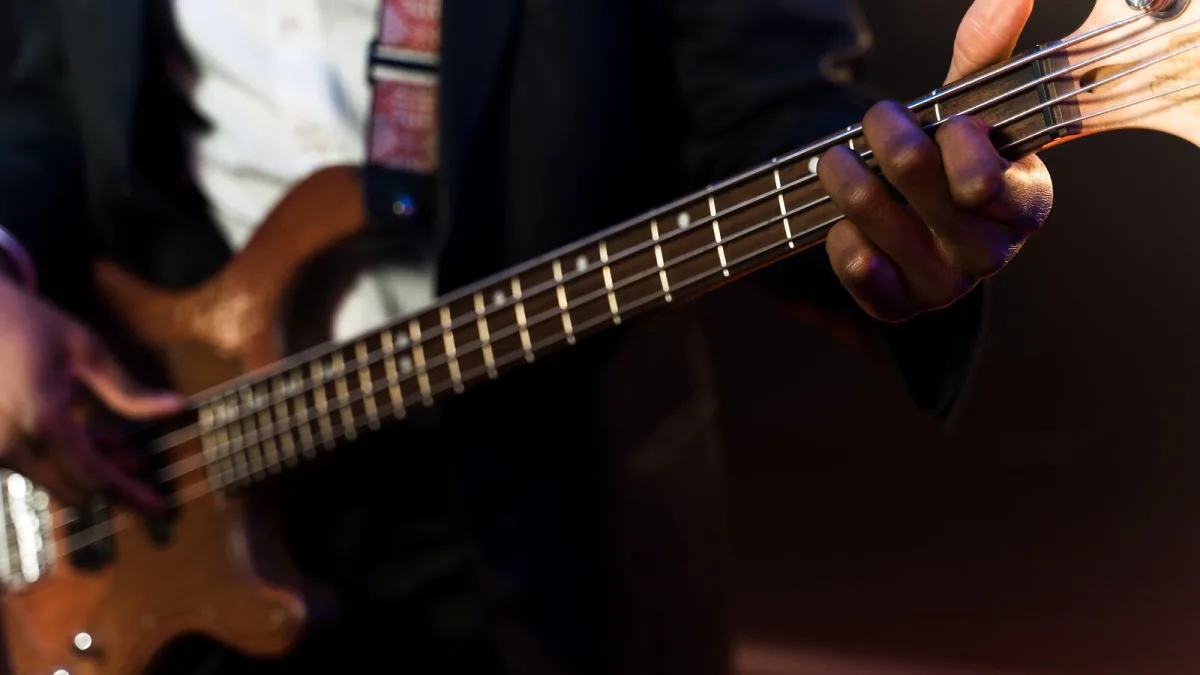
Buying a Yamaha bass isn't one decision, it's several small ones stacked together: which family, how many strings, what electronics, and what construction. Get those right and almost any Yamaha bass in a given family will serve you well. This is a practical walkthrough of each choice, so you know what you're actually paying for before you hand over any money.
Step One: Pick the Right Family
| You mainly want... | Yamaha family | Why |
|---|---|---|
| A traditional, professional-feeling instrument | BB | Established 1977 design, alder/maple bodies, six-bolt miter neck joint on many models |
| Extended range and tonal reach | TRB | 35-inch scale, active EQ, four- to six-string configurations |
| Accessible, flexible, everyday use | TRBX | Entry-level through advanced options in one family, active/passive switching on higher models |
| A distinctive, performance-specific instrument | Attitude | Billy Sheehan signature features like scalloped frets and dual outputs |
Most first-time buyers land in the TRBX or BB families; the TRB and Attitude ranges make more sense once you already know you need what they specifically offer. Whichever you choose, every current Yamaha bass in that table is built to a genuinely playable, gig-ready standard — the differences are about character and range, not basic quality.
Scale Length: 34-Inch Versus 35-Inch
Standard Yamaha BB and TRBX models use a 34-inch scale, which is the industry-standard length most players are used to. The TRB range moves to a longer 35-inch scale, which increases string tension and generally tightens up the low-B response on five- and six-string models. That's a genuine practical benefit if you're playing extended-range instruments regularly, but it also means a slightly longer reach up the neck — worth trying in person rather than assuming it'll feel identical to a 34-inch instrument.
Passive, Active or Active/Passive?
This decision affects your amp settings more than most beginners expect. A passive bass relies entirely on your amplifier for tone shaping; an active bass has an onboard preamp that boosts and cuts frequencies before the signal even leaves the instrument. Several Yamaha models — the TRBX504 and TRBX600 series among them — offer true active/passive switching, which means the bass keeps working in passive mode if the battery dies mid-gig. That switch is a genuinely useful safety net, not just a marketing tick-box, and I'd weight it fairly heavily if you're gigging regularly.
How Many Strings Do You Actually Need?
- Four strings — standard E-A-D-G tuning, and still the right default for rock, pop, blues and most studio work.
- Five strings — adds a low B, useful for metal, gospel, modern pop and any style that wants extra downward range.
- Six strings — adds both the low B and a high C, mainly relevant for fusion, solo bass and chordal playing.
Yamaha's model-numbering convention often signals string count in the final digit (a BB2004 is a four-string, a BB2005 a five-string), though it's still worth confirming the actual specification rather than assuming from the model name alone.
Construction: What's Actually Under the Finish
Bolt-on necks are the norm on TRBX and standard BB models — easier to service, and generally associated with a direct, punchy attack. Some BB models use a six-bolt miter neck joint, which keeps a bolt-on neck feeling close to as rigid as a glued or neck-through design. Genuine neck-through construction, historically used on models like the BB1200, threads a single length of wood through body and neck for extra sustain, though it's less common on current mainstream models. Body woods on current BB specifications typically run to alder or alder/maple/alder laminates — alder for a balanced, predictable midrange, maple layers for added stiffness and attack.
What to Physically Test Before You Buy
- Play the low B string on any five- or six-string model and check it stays even in volume and stays in tune up the neck.
- Check neck relief, fret condition and pickup height rather than judging purely by the spec sheet.
- Weigh the instrument in your hands, especially if you'll be standing for long sets.
- Plug into an amp similar to what you'll actually use, not whatever's nearest in the shop.
- Confirm the exact model is available in your region — Yamaha's catalogues for a given Yamaha bass model differ noticeably between markets.
Bottom Line
Buying a Yamaha bass well comes down to matching family, scale, electronics and string count to how you actually play, rather than chasing whichever model looks the most impressive on a shop wall. For the full picture of how the BB, TRB and TRBX ranges came about, our complete guide to the Yamaha electric bass range is worth reading alongside this one. If you want specific recommendations by budget, see our round-up of the best Yamaha basses for the money, and if this is your first bass, our beginner's guide covers the fundamentals this piece skips over.






Comments