


Positive Grid roundup
The Best Positive Grids for the Money
Spark 2, Spark MINI or BIAS software — here's which Positive Grid product is actually worth your money, and why.
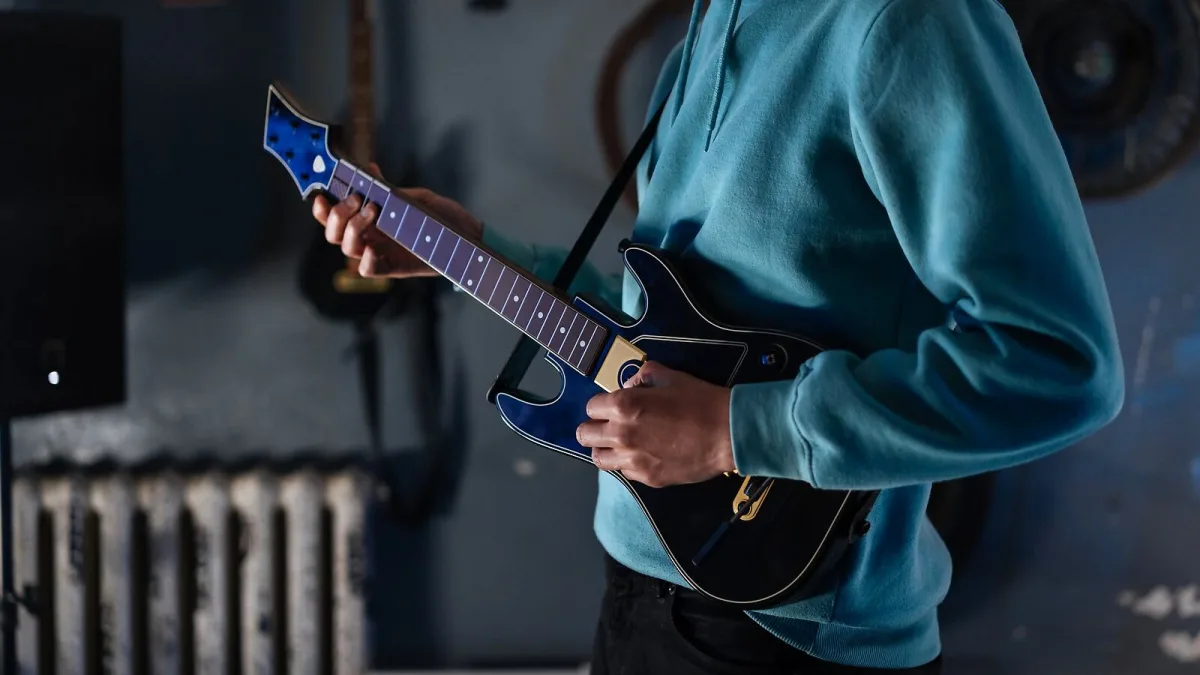
A friend of mine spent a whole evening in a guitar shop trying to decide between a "proper" tube combo and one of these little Positive Grid boxes, and left with the Positive Grid — not because it was cheaper, but because he could see himself actually using it every night after work, backing track and all. That's the thing about this range: it's less about chasing the single best amp on paper and more about which one earns its keep. Here's where I'd put my money, depending on who you are.
The One Most People Should Buy: Spark 2
If you only read one section of this, make it this one. The Spark 2 is a 50-watt combo with two angled full-range speakers, which sounds like a spec-sheet detail but actually means the same little amp can do your guitar, your mate's bass, an acoustic run-through and a Spotify backing track without missing a beat. It carries 33 amp models and 43 effects, an onboard looper for building up ideas on your own, and Wi-Fi so it stays current without any faff. For most people reading this — someone who wants one really good amp for home, not a stage rig — this is the one. It genuinely feels like the range built around this model, and everything else is either smaller or software.
If Space Is Tight: Spark MINI
Not everyone has a spare corner of a room for an amp, and that's exactly who the Spark MINI is for. It keeps the same basic idea — app control, Bluetooth streaming, the Positive Grid ecosystem — in a genuinely small, portable shell. I'd point a student in halls, or anyone who needs to pack an amp away after every session, straight at this one. You lose some of the bigger unit's headroom and extras, but you're not paying for space you can't offer it anyway.
If You Already Live on Your Laptop: BIAS FX 2
Some players never touch a hardware amp at all anymore — everything happens through headphones and a DAW, and that's a perfectly valid way to work. For that crowd, BIAS FX 2 is the pick, not a Spark. It's a full virtual pedalboard and amp rig built for recording, with BIAS AMP and BIAS PEDAL sitting alongside it for anyone who wants to go deeper still into building custom amps and pedals from scratch. If your studio is entirely inside a screen already, this fits straight into that world rather than adding a box you'll rarely switch on.
The Extras Worth Actually Budgeting For
A couple of add-ons genuinely change how you use these amps day to day, rather than just padding out the box.
| Extra | Why it's worth it |
|---|---|
| Battery pack | Turns the Spark 2 into a properly portable amp — reportedly around eight hours untethered, which covers a whole rehearsal or a garden session. |
| Foot control | Lets you change presets or trigger the looper hands-free, which matters the moment you're actually playing rather than tapping a screen. |
Neither is essential on day one, but both are worth knowing about before you assume the base unit is the whole story.
A Word on What It Actually Sounds Like
Specs are one thing, but the first thing anyone notices plugging in is that these amps don't sound quite like the combo they grew up with, and that's worth knowing before you're stood in the shop expecting a like-for-like swap. The full-range speakers inside the Spark range aren't dedicated guitar speakers — they're built to handle everything from a guitar tone to a bass line to a Bluetooth playlist evenly, which is exactly why one small box can double as a backing-track speaker on a Tuesday and a practice rig on a Wednesday. It's a genuinely different flavour, not a worse one, and most people I've spoken to stop noticing the difference within a week of regular use.
That versatility is also why I'd happily recommend the Spark 2 to a bass player or someone who mostly plays acoustic through a pickup, not just electric guitarists — the same speaker design copes with all three without needing a second amp in the house.
What I'd Actually Buy
If someone handed me the budget today and said "sort me out with a Positive Grid setup", I'd go Spark 2 first, full stop — it's the most complete, most capable version of what this brand does well. I'd only steer someone to the MINI if space genuinely forced the issue, and I'd only recommend BIAS software to someone who'd already told me their whole rig lives inside a laptop. It's less about a single "best" product and more about being honest with yourself about how you'll actually use it — which, if my mate in the guitar shop is anything to go by, is usually the deciding factor anyway.
Want the fuller rundown of features before you commit? Our Positive Grid explainer covers the whole range, and our buyer's guide gets into the spec-by-spec detail. If this is your very first amp of any kind, our beginner's guide is the gentler place to start.
The Bottom Line
For the money, the Spark 2 is the one that makes the whole range click — versatile, well-featured and built to actually get used. The MINI is the sensible choice when space rules, and BIAS software is there waiting for the day your rig moves entirely into the box. Buy for how you'll really play, not for the longest spec sheet.






Comments