

Phaser Pedal article
Phaser Pedal for Beginners: A Complete Guide
A phaser pedal is one of the most approachable effects in the guitar world. Here is everything a first-timer needs to know — what the knobs do, where to start, and three sounds to try right away.
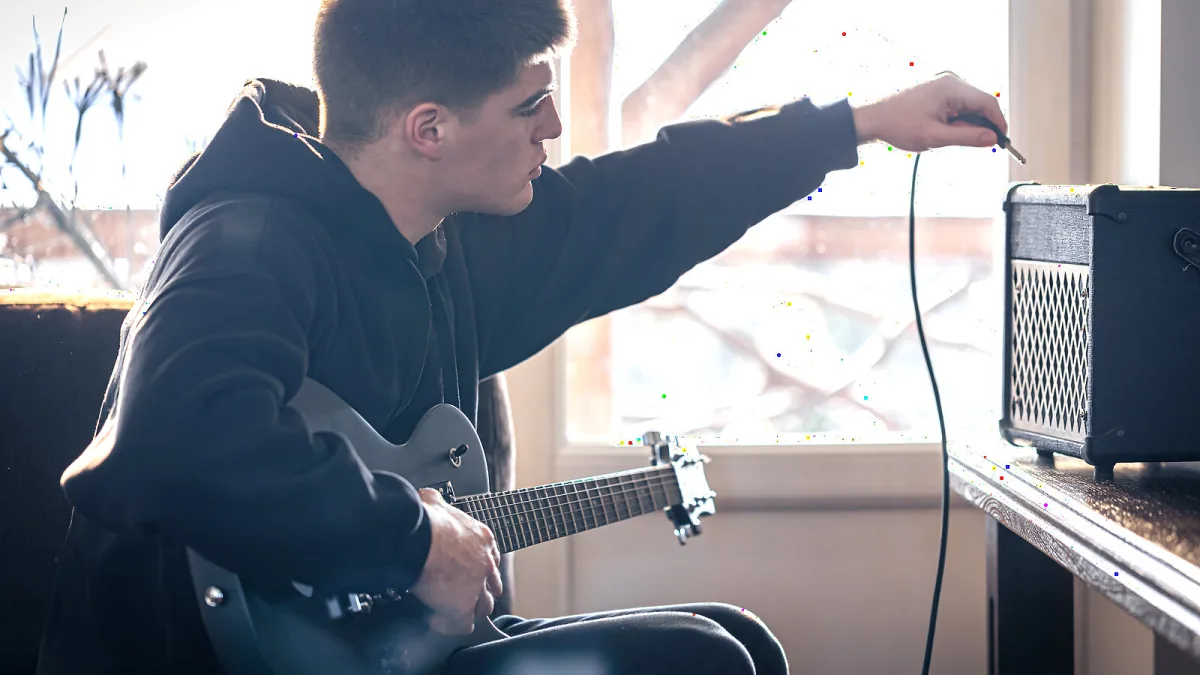
If you have just picked up your first phaser pedal, do not worry — it is simpler to use than it looks, and you will start getting usable sounds out of it within minutes. This guide tells you exactly what the controls do, how to set them for a decent starting point, and what to expect as you experiment further.
What a Phaser Actually Does
A phaser pedal adds a sweeping, whooshing movement to your guitar sound. It works by splitting your signal, shifting the phase of certain frequencies, then mixing the result back with the original. The effect sounds like the audio is slowly spinning or rippling. You will recognise it immediately if you have heard any funk guitar from the 1970s, Eddie Van Halen's earlier recordings, or the intro to Shuggie Otis's "Strawberry Letter 23".
That is really all you need to know to start. The details of all-pass filters and LFO waveforms can wait.
Your First Five Minutes: What to Turn First
Most phaser pedals have two or three main knobs. Here is what they do in plain English:
- Rate (sometimes labelled Speed): this controls how fast the swooshing sweeps back and forth. Turn it all the way down and the effect barely moves. Turn it up and it becomes rapid and almost vibrato-like. Start in the middle and adjust from there.
- Depth: how strong the effect is. At low depth, the phaser is subtle — a gentle shimmer. At high depth, it is much more obvious. For a first experiment, try it at around halfway.
- Resonance (also called Feedback or Color): not all phasers have this knob, but if yours does, it adds an intensity to the sweep. Keep it low to start — cranked up it can get quite sharp and piercing.
A decent starting point for most players: Rate at about 9–10 o'clock (slow), Depth at noon (halfway), Resonance (if present) at 8–9 o'clock (low). Play some clean chord strums and listen to what happens.
Using a Phaser With Clean Versus Dirty Sounds
A phaser pedal behaves differently depending on what else is in your signal chain. With a clean sound it is at its most transparent and musical — the sweep sits nicely under the notes and adds movement without taking over. With overdrive or distortion, the effect becomes more dramatic and can sometimes get muddy if both the drive and phaser settings are too heavy.
As a beginner, start by using it clean. Once you are comfortable with the sounds it makes, experiment with adding light overdrive in front of it. The order you plug things in matters: the standard approach is to run the phaser after drive pedals, before any delay or reverb.
Where to Put It on a Pedalboard
If you have more than one pedal, put the phaser after your tuner and any drive pedals, but before your delay and reverb. That said, there is no rule you cannot break — plenty of players run pedals in unusual orders and find sounds they like. But the conventional chain (tuner → compression → drive → modulation → delay → reverb) is a solid default to start from.
Sounds Worth Trying
Here are three settings to get you started:
- Slow funk rhythm: Rate at 8 o'clock (very slow), Depth at noon. Strum clean chord stabs — the phaser adds a subtle pulse that suits groovy, rhythmic playing.
- Classic rock lead: Rate at 10–11 o'clock (medium-slow), Depth at 2 o'clock (fairly high), Resonance around 10 o'clock if present. Play single notes with light overdrive and you will start to hear why this became such a go-to sound.
- Ambient texture: Rate at 8 o'clock (slow), Depth at maximum. Combine with reverb and play long, held notes. The sweep becomes a feature rather than a background texture.
Common Questions Beginners Have
Does it work on bass guitar?
Yes — phasers work fine on bass. The slow-sweep setting is particularly effective on funk or soul-influenced bass lines. Just watch the depth setting, as heavy phasing can make the low end feel looser in a full band mix.
Do I need to run it on batteries or a power supply?
Most phaser pedals accept a standard 9V centre-negative power supply (the Boss-style connector). Some also accept a 9V battery. For reliability, especially at gigs, a dedicated power supply is the better option.
What if the effect sounds too strong?
Bring the Depth down and slow the Rate. The most common beginner mistake is setting the phaser too extreme and then wondering why it sounds odd in a mix — a subtle setting is often far more effective in practice than what sounds wild at bedroom volume on its own.
When you are ready to think about buying your next one or upgrading, take a look at our phaser pedal buyer's guide for a breakdown of what matters at different price points. And if you want to understand the electronics behind what you are hearing, the full phaser pedal overview covers the technical detail without getting too deep into it.
The Bottom Line
A phaser pedal is one of the most player-friendly effects you can add to a setup. The controls are intuitive, the sounds are immediately recognisable, and there is a wide range of musical contexts where it fits. Start slow, keep the settings modest, and give yourself permission to experiment. You will find your settings faster than you think.






Comments