


Boss Katana 50 article
Boss Katana 50 Explained: Features, Types and Tips
A little combo that surprises people with a proper 12-inch amp sound. Here's what's actually going on inside a Boss Katana 50, in plain English.
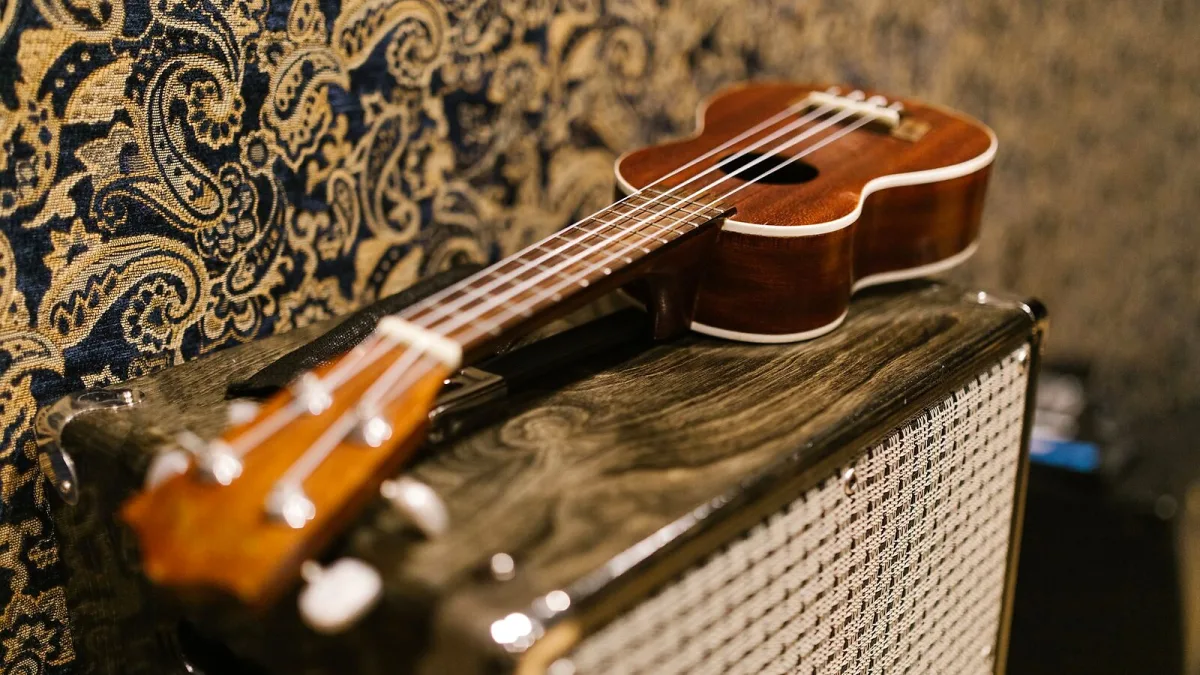
There's a particular sound a rehearsal room makes when someone plugs in a Boss Katana 50 for the first time — a little surprised laugh, because a box that size shouldn't really put out a 12-inch speaker's worth of proper amp tone. I've heard that laugh more than once. Here's what's actually going on inside it, and how to get the best out of one.
What the Boss Katana 50 Actually Is
It's a 50-watt solid-state combo amp built around a single 12-inch speaker, made by Boss (Roland's effects and amp arm). "Solid-state" just means it uses transistor circuitry rather than valves — don't let anyone tell you that makes it lesser, it just makes it lighter, more reliable, and considerably cheaper to run. The idea behind the Katana range was always to give you a proper amp feel on the front panel, with a lot more depth available underneath if you want to go looking for it.
Meet the Generations
Like most long-running amps, this one has evolved. There have been three generations so far, and knowing which one you're looking at (especially secondhand) actually matters:
| Generation | Connectivity | Notable addition |
|---|---|---|
| Original Katana-50 | USB-B | The concept that started it all |
| Katana-50 MkII | USB-B | More amp variations, Power Amp In, cab-emulated outputs |
| Katana-50 Gen 3 (current) | USB-C | Bloom response circuit, optional Bluetooth adaptor |
Gen 3's "Bloom" is Boss's name for a response tweak meant to make the amp feel a bit more alive under your fingers — more sensitive to how hard you pick and how you roll off your guitar's volume knob. It's a feel thing, not a feature you'd necessarily notice on a spec sheet.
The Six Amp Types, in Plain English
Rather than naming its voicings after specific vintage amps, Boss gives the Katana six categories that sit in familiar tonal territory:
- Acoustic — full-range and clean, aimed at acoustic-electric guitars
- Clean — plenty of headroom, a lovely blank canvas for pedals
- Pushed — just starting to break up, touch-sensitive
- Crunch — proper classic rock and blues-rock grit
- Lead — higher gain, more sustain, more compression
- Brown — the modern, saturated, metal-adjacent voicing
Each one also has a Variation switch, which nudges the character slightly without leaving the category — a handy way to get two usable tones from every amp type instead of one.
Power You Can Actually Use
Fifty watts sounds like a lot for a bedroom, and it can be — which is exactly why the power control switch exists. You've got Standby, 0.5W, Half and Max. Here's the bit people miss: dropping to 0.5W changes more than the volume. It changes how the speaker and power stage respond, so it's worth adjusting your gain and master volume properly for the lower setting rather than just twisting the power knob down and leaving everything else where it was.
Recording and Headphones
The Gen 3 model connects to a computer over USB-C (the MkII uses USB-B, worth checking if you're buying secondhand), which covers both direct recording and deeper editing through Boss Tone Studio, the companion software. The headphone output is genuinely useful for quiet, late-night practice, though it's worth knowing headphone tone and the sound coming off the actual 12-inch speaker aren't identical — that speaker moves a lot more air than most bedroom setups are used to.
How Your Guitar Changes the Story
One thing that catches people out is expecting a patch to sound identical no matter what they plug in. It won't. A single-coil guitar and a humbucker-loaded one will push the same amp type in noticeably different directions — brighter and glassier from single coils, thicker and warmer from humbuckers. Where you place the amp matters too: on the floor pointing up at your shins gives a very different impression to raising it toward ear height on a stand, since that's genuinely how far the sound has to travel before it reaches you properly.
A Few Tips From Everyday Use
Don't judge the amp purely on its factory presets — they're built to show off features rather than hand you a gig-ready sound. Spend twenty minutes building your own small set (a clean, an edge-of-breakup, a crunch and a lead) and you'll get a lot more out of it. And if a high-gain patch starts sounding muddy rather than heavy, it's very often too much bass and gain stacked together — back both off slightly before reaching for anything more drastic.
The Bottom Line
The Boss Katana 50 earns its reputation by being genuinely flexible without demanding you learn software before you can enjoy it — plug in, pick an amp type, and you're playing. If you're trying to decide whether to actually buy one, our Boss Katana 50 buyer's guide walks through the generations and what to check. And if this is your very first amp, our beginner's guide takes things at a gentler pace.






Comments