


Left Acoustic Guitar article
A Guide to Left Acoustic Guitar
Playing left-handed does not mean settling for second-best. The market for left acoustic guitar has expanded, and there are quality options at every level.
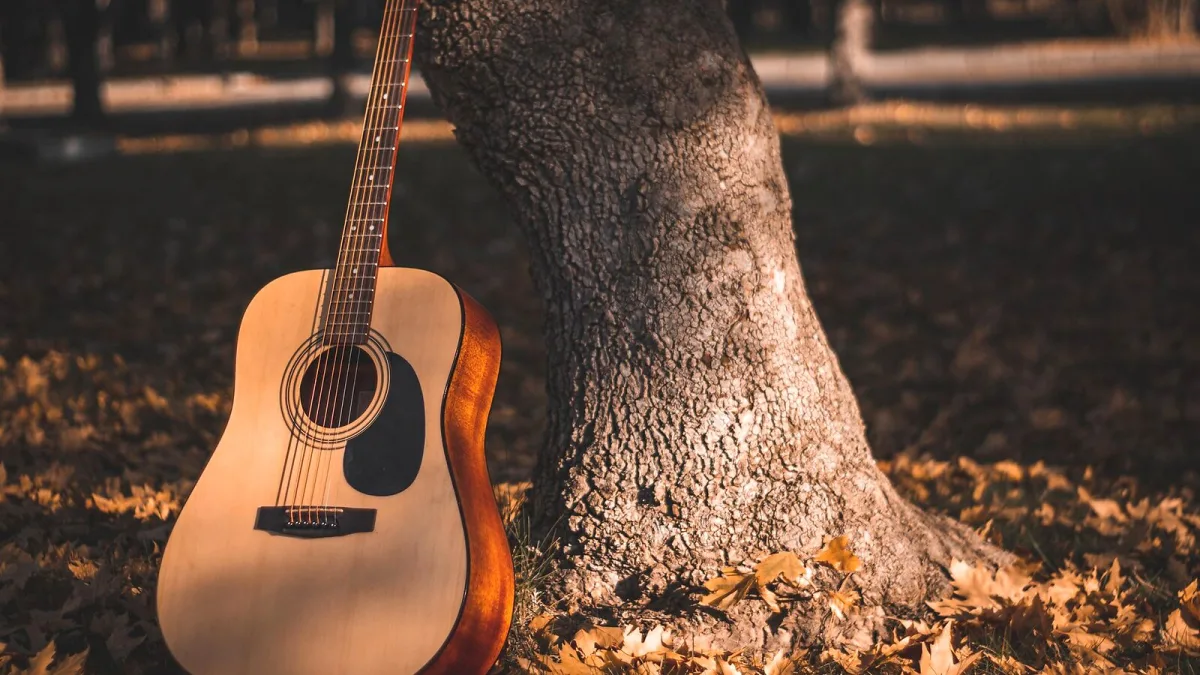
Playing a left acoustic guitar is not a compromise — it's the natural starting point for anyone whose dominant hand is the left. The market has expanded significantly over the past decade, and you no longer have to settle for a handful of entry-level models or wait months for a special order. Here is what you need to know about how these instruments work, what distinguishes them from simply flipping a right-handed guitar, and where the real options are.
Why a Dedicated Left-Handed Guitar Matters
A right-handed guitar reversed and restrung can work — but it is not the same as a purpose-built dedicated instrument. Several components are directional:
- Nut slots: Cut for specific string diameters. A reversed string order leaves thick strings sitting in narrow slots and thin strings rattling in wide ones. Intonation and playability both suffer.
- Saddle compensation: Steel-string acoustic saddles are deliberately angled and offset to correct intonation across the scale. A reversed saddle produces inaccurate pitch up the neck.
- Internal bracing: Most acoustic guitars use asymmetrical scalloped bracing tuned to load the top in a particular direction. A mirror-image instrument routes that load correctly for a left-handed strumming hand.
- Pickguard and cutaway: A right-handed pickguard protects the wrong area; a right-handed cutaway provides upper-fret access on the wrong side.
For these reasons, a purpose-built instrument is preferable whenever practical. The difference matters most at higher price points, where construction tolerances are tighter and proper compensation has a clearer audible effect.
A Brief History of Left-Handed Guitar Playing
Left-handed guitar has a complicated history because left-handed production was historically negligible. Most left-handed players either learned right-handed or adapted instruments. Elizabeth Cotten — the influential American folk and blues guitarist — used a right-handed guitar reversed, playing what observers described as upside down. Her approach, which places the bass strings on the wrong side relative to conventional technique, is closely associated with her distinctive piece "Freight Train" and demonstrates that unconventional setups can produce groundbreaking results.
Jimi Hendrix, though primarily an electric player, often used right-handed Stratocasters restrung for left-handed playing. Paul McCartney and Kurt Cobain are among other well-known left-handed players. Their visibility helped normalise left-handed guitar and encouraged manufacturers to expand dedicated left-handed production.
Body Shapes Available
Left-handed versions are now available across most major body shapes:
- Dreadnought: Strong projection and bass response; the most common shape for strumming, singer-songwriting and folk. Can feel large for smaller players.
- 000 / auditorium / concert: More balanced and comfortable for fingerstyle. A popular all-purpose choice.
- Grand auditorium: Sits between dreadnought and auditorium in projection and comfort; versatile for mixed styles.
- Travel and parlour: Compact, easier to carry, and good for smaller players or those who prioritise portability. Less low-end volume than a full dreadnought.
- Cutaway acoustic-electric: Adds upper-fret access and amplification. Common for players who perform live or need a signal for recording.
Brands with Strong Left-Handed Programmes
Taylor has the most comprehensive approach in the premium segment: the company states that almost any Taylor acoustic can be ordered in left-handed form, with most Builder's Edition models as exceptions. This includes instruments from the Gold Label, Somos and Legacy collections. Martin offers left-handed versions across several families, including travel-size LX models and full dreadnoughts. Yamaha's FG800L and FG820L are among the most widely recommended entry-level options. Fender, Ibanez, Seagull and Epiphone all maintain left-handed acoustic ranges, though specific models vary by market and model year.
Confirming You Have the Right Guitar
Before buying, check that it is explicitly marked LH or left-handed, that the string order is correct when the instrument is held in the left-handed playing position, and that the nut, saddle and bracing are factory-fitted for left-handed use. Some product photographs show the right-handed equivalent — do not rely on images alone. If buying online, request confirmation of orientation from the seller before payment.
What Connects All the Angles
The left-handed market is genuinely stronger than it was ten years ago. Quality instruments exist at every price point, and the major manufacturers take left-handed production seriously. For a full buying breakdown, see the left acoustic guitar buyer's guide. For recommended specific models by budget, the best value guide covers the current options.






Comments