


Mandolin article
Mandolin Explained: Features, Types and Tips
Eight strings, a violin's tuning and a tone that carries across any session room — the mandolin is a remarkable acoustic instrument with a rich history and a wide musical life.
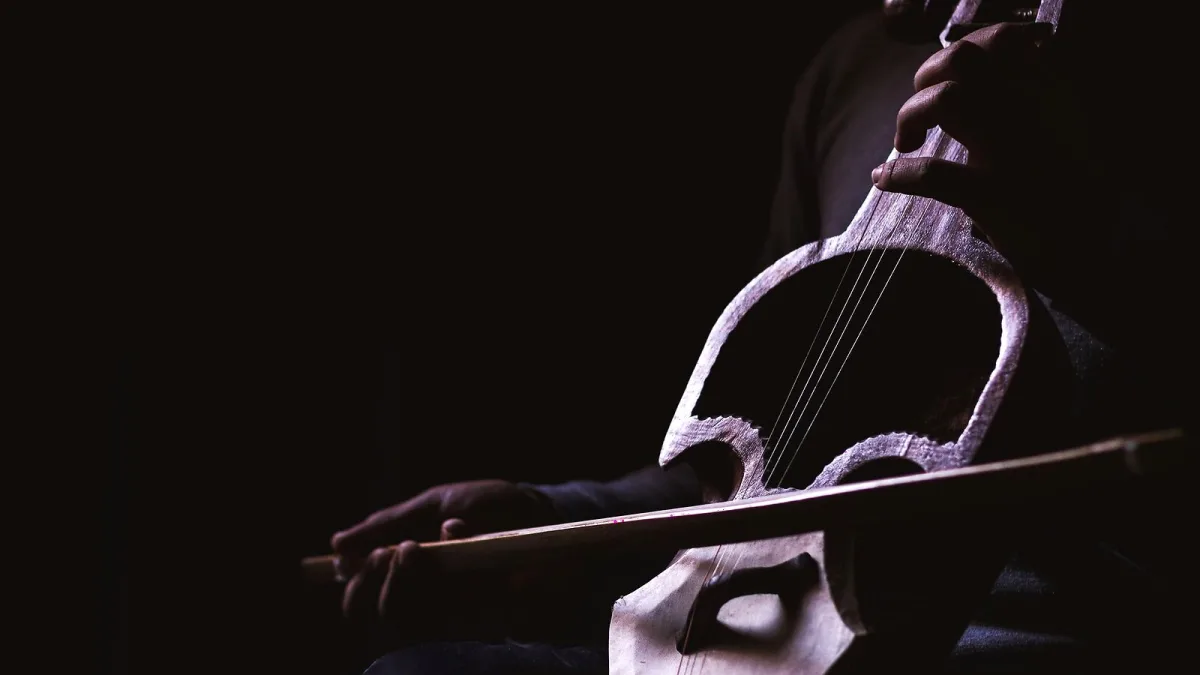
The mandolin occupies a peculiar and wonderful place in the world of acoustic instruments. Small enough to carry under one arm, it produces a bright, cutting tone that carries across a session room or a festival field without any help from electronics. Eight strings, tuned in pairs, strung across a body that fits neatly between a violin and a guitar — this is an instrument built for music that moves.
What a Mandolin Is
At its core, it is a plucked string instrument with four pairs of strings (called courses), each pair tuned in unison. The standard tuning is G–D–A–E, identical to a violin or fiddle, which means fiddle players can transfer tunes directly to the instrument. Unlike the guitar, the strings are usually played with a plectrum rather than fingerpicked, and the paired courses create a chorus-like shimmer on sustained notes.
The short scale length — typically around 13.875 inches — gives it its characteristic brightness and quick response. Chords are formed close together, and single-note runs speak with a clarity that cuts through ensemble texture well.
Body Styles
A-Style
The A-style body is teardrop-shaped and simpler in design. It tends to be more affordable and is well-suited to folk, Irish traditional and country music. The rounded profile is comfortable to hold and makes these instruments practical for long sessions. Most beginners start here.
F-Style
The F-style features a decorative scroll on the upper bass bout and two pointed extensions on the body. It is the dominant design in bluegrass — Bill Monroe, who essentially invented the genre as a distinct form, played an F-style Gibson. The scroll and points are largely cosmetic, though F-style instruments do tend to have more wood mass and a slightly fuller sound in the lower mids.
Bowlback
The bowlback — sometimes called a Neapolitan or roundback — is the older European design, with a deep, rounded back built from multiple staves of wood. Less common today, but the sound is distinctive: warm, projecting and closely associated with classical and Italian folk traditions. They are harder to hold, which is partly why flat-backed designs became dominant in America.
Electric
Electric versions exist, ranging from semi-hollow thinline bodies to fully solid designs. Used in rock, jazz and country contexts where a more sustained, amplified tone is wanted. Less common than acoustic types, but a meaningful part of the instrument's wider repertoire.
Tuning and Strings
Standard mandolin tuning — G–D–A–E — runs from the lowest pair (G) to the highest (E). The violin connection is not coincidental: the instrument evolved partly from the Neapolitan mandoline and was adapted for both classical and folk contexts across Europe and America. String gauges are lighter than guitar strings, and the short scale length means lighter tension is needed to achieve proper pitch.
String changes are more frequent than on a guitar, partly because the doubled courses amplify the effect of worn strings and partly because the brightness of the tone — so central to the instrument's character — fades quickly as strings age.
Genres and Playing Contexts
The mandolin appears across a remarkably wide range of musical traditions. Bluegrass is perhaps its most prominent home in the UK and America — the instrument defines the genre alongside the banjo and flat-top guitar. In Irish traditional music, it sits alongside fiddles, tin whistles and bouzoukis. Celtic and folk sessions welcome it easily. Classical mandolin repertoire is substantial and largely underexplored by modern players. Jazz — particularly Django Reinhardt-era swing — has its own mandolin tradition. Country, old-time and even some rock contexts have incorporated it.
For a detailed look at buying one, the buyer's guide covers what to assess at each price point. If you are just starting out, the beginner's guide explains what to expect in the early stages.
The Bottom Line
The mandolin is one of the most versatile small instruments in the acoustic tradition. Whether you are drawn to the drive of bluegrass, the lilt of an Irish session or the warmth of a folk circle, it rewards the time taken to learn it with a sound that is genuinely its own.






Comments