

Celtic Harp roundup
The Best Celtic Harps for the Money
Value in the lever harp market comes from matching instrument capability to actual use. Here is how the field breaks down by price level.
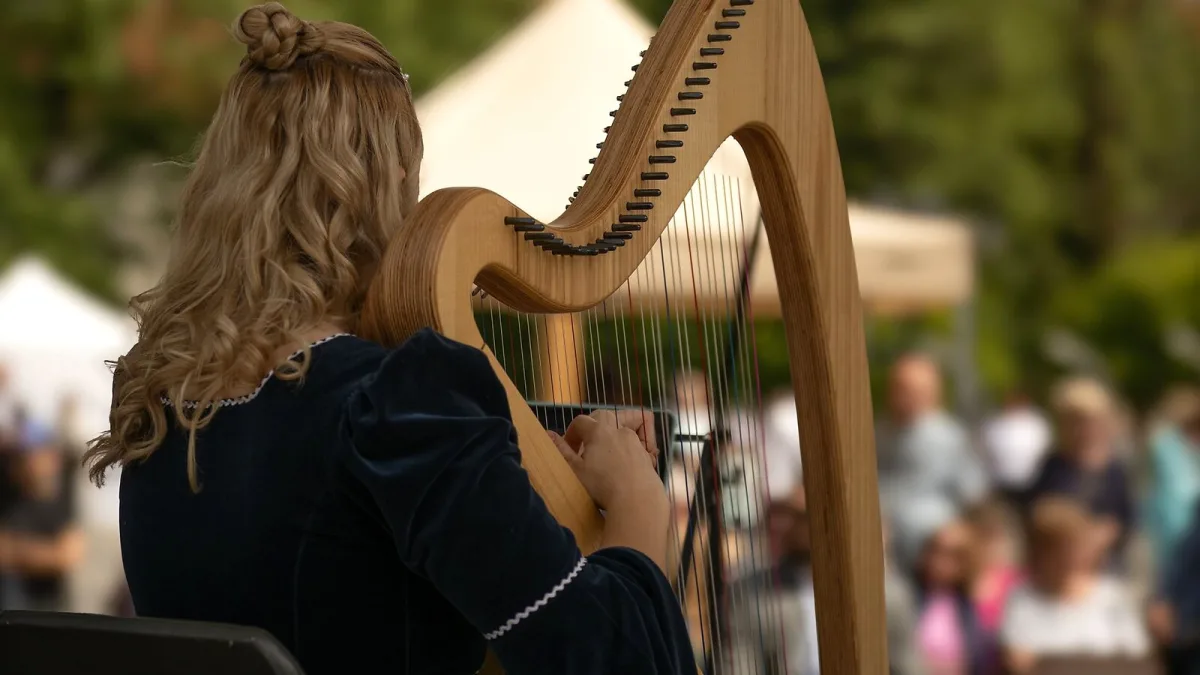
Choosing a celtic harp by value means matching instrument capability against actual use, not simply identifying the most prestigious name or highest string count at a given price. The lever harp market spans a wide range of quality, and the instruments that offer the best return at each level are the ones where construction, lever accuracy and string spacing align with the needs of the intended player.
Entry Level: Building the Foundation
At the entry level, instruments from makers such as Roosebeck, Rees and smaller Asian manufacturers appear regularly in beginner-oriented buying lists. The main caution with any entry-level celtic harp is lever quality: many affordable instruments come with partial or lower-grade lever sets that create real-world limitations on key changes. If the instrument will be used for lessons, folk sessions or accompaniment in anything beyond a single key, a partial lever set becomes a practical constraint quickly. At minimum, buyers at this level should verify that the levers installed cover the strings most commonly required in C, G and F major: the F strings and all C strings.
Mid-Range: Where Value Concentrates
The mid-range — broadly speaking, instruments from roughly £1,000 to £3,000 — is where the market rewards careful selection most clearly. Salvi and Camac both offer lever harps in this bracket with solid or composite soundboards and reliable lever systems. Dusty Strings, an American maker with a strong reputation in the lever harp community, produces 26- and 34-string models that are well-regarded for consistent string spacing and responsive soundboards. Pilgrim Harps, a British maker, offers instruments built with structural integrity specifically suited to UK conditions. At this level, what matters beyond string count is lever regulation (do they engage accurately and cleanly?) and after-sales support from a local dealer or the maker directly.
Professional Level
Professional celtic harp instruments from Camac, Salvi and Lyon & Healy represent the upper end of the lever harp market. These are instruments built for sustained professional use and capable of holding pitch and lever regulation over years of concert and session work. The investment is substantial, but depreciation on quality harps can be comparatively slow, and a well-maintained instrument from an established maker retains value better than budget alternatives. For most players, a professional-level instrument is not necessary at the start — skill, repertoire and technique develop faster than most players exhaust a well-built mid-range instrument.
What the Best Models Share
Across price levels, the instruments that consistently draw positive feedback from players and teachers share a few characteristics: a frame that holds its geometry over time, levers that regulate cleanly and stay in regulation, string spacing appropriate to the player's hand, and a soundboard that responds clearly without excessive buzz or dead notes. Brand name alone is less reliable than these functional qualities. A well-made instrument from a smaller regional builder may outperform a larger brand's entry-level offering in every respect that matters for daily playing. For a detailed explanation of what each specification means, the celtic harp buyer's guide covers the technical choices. If you are just starting, the beginner's guide addresses technique and practice.





Comments